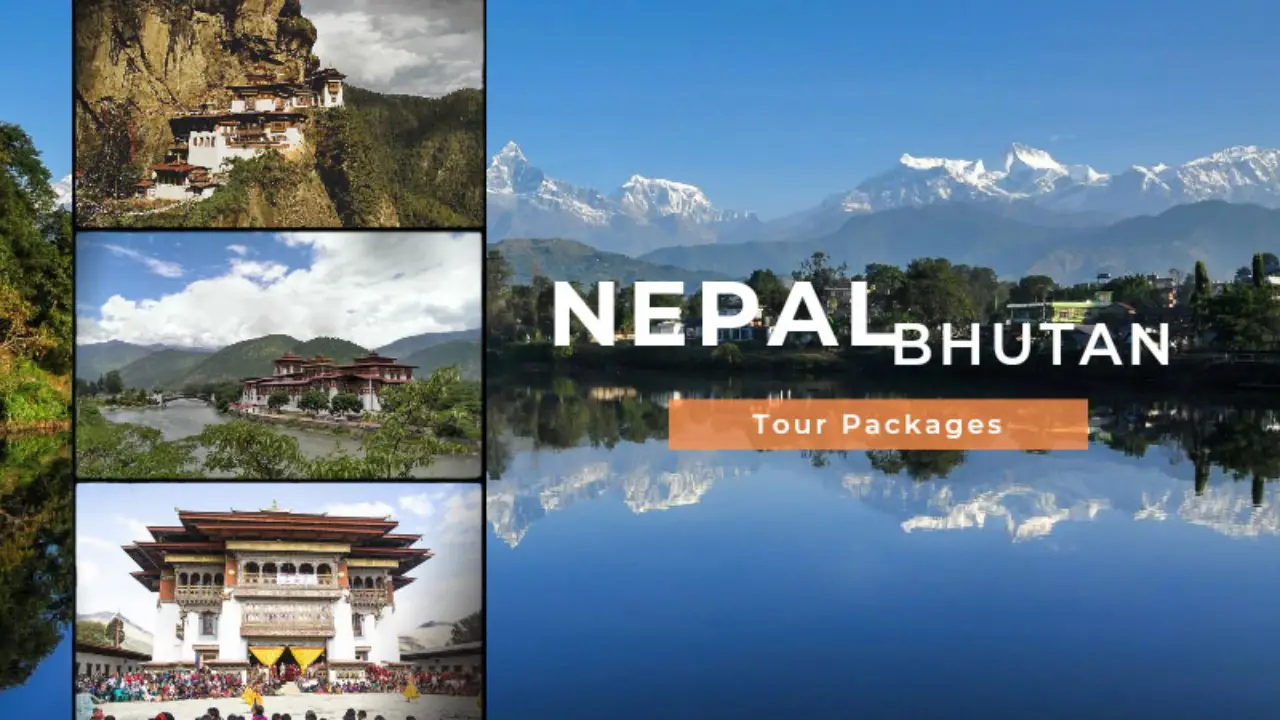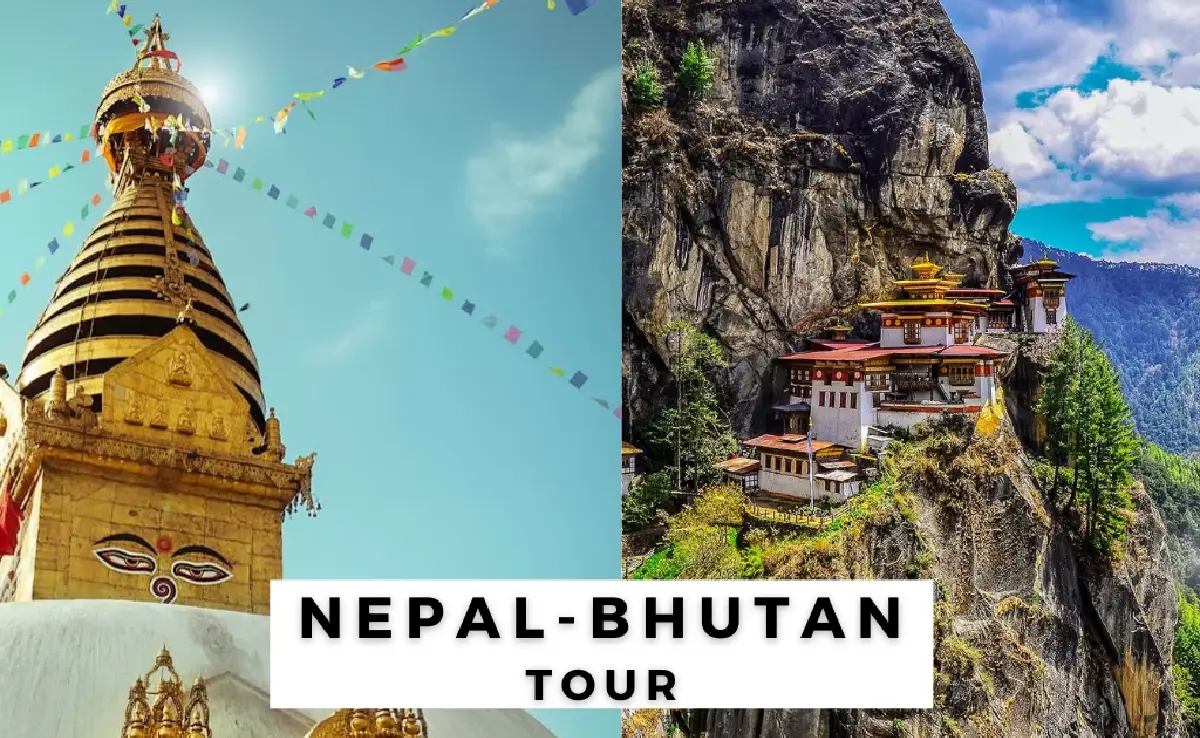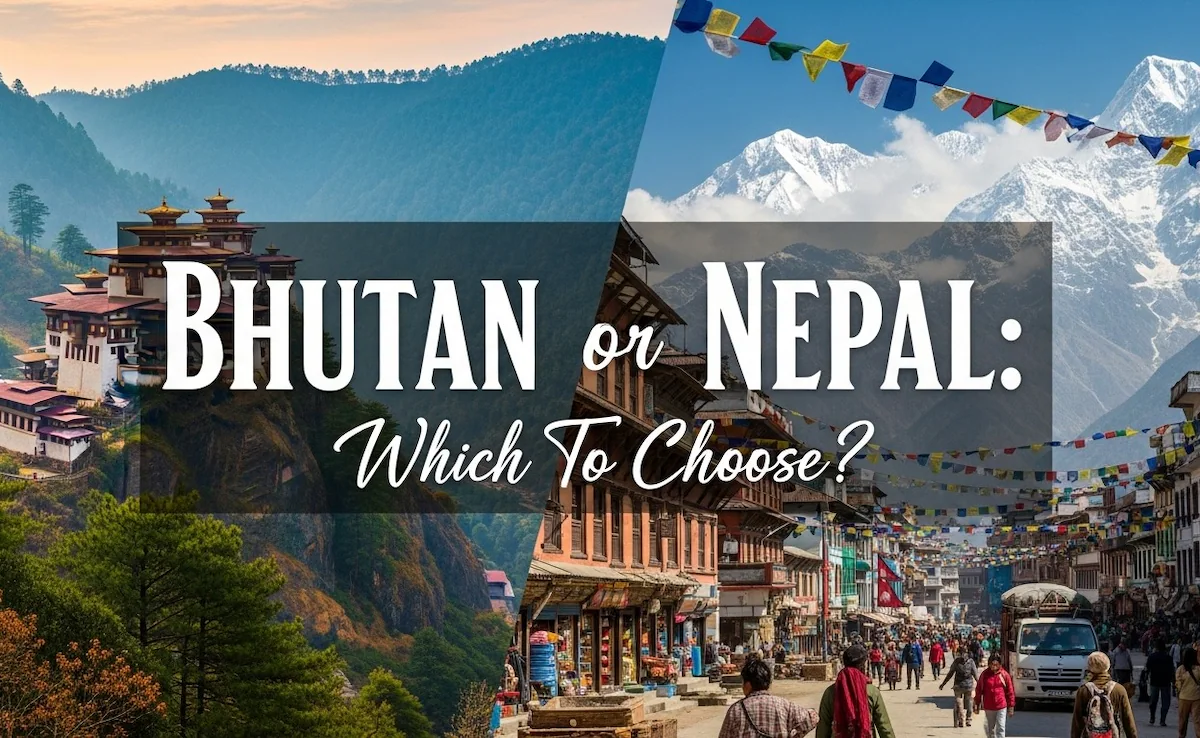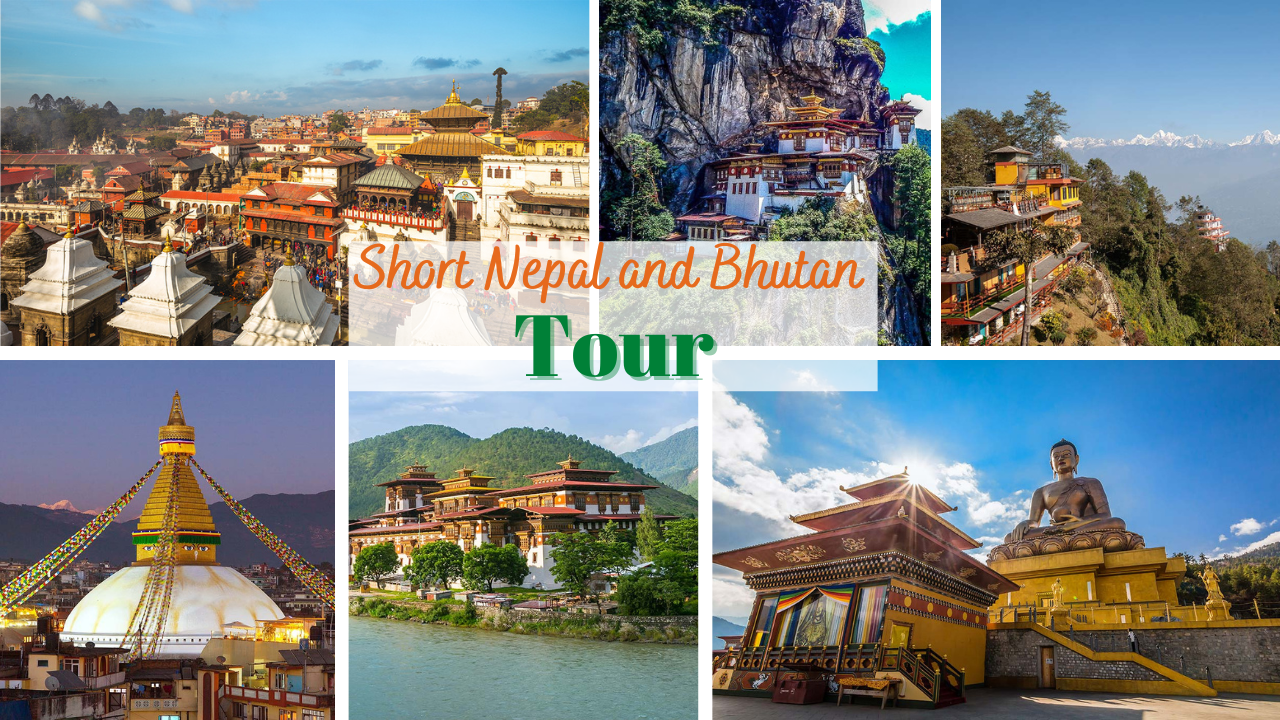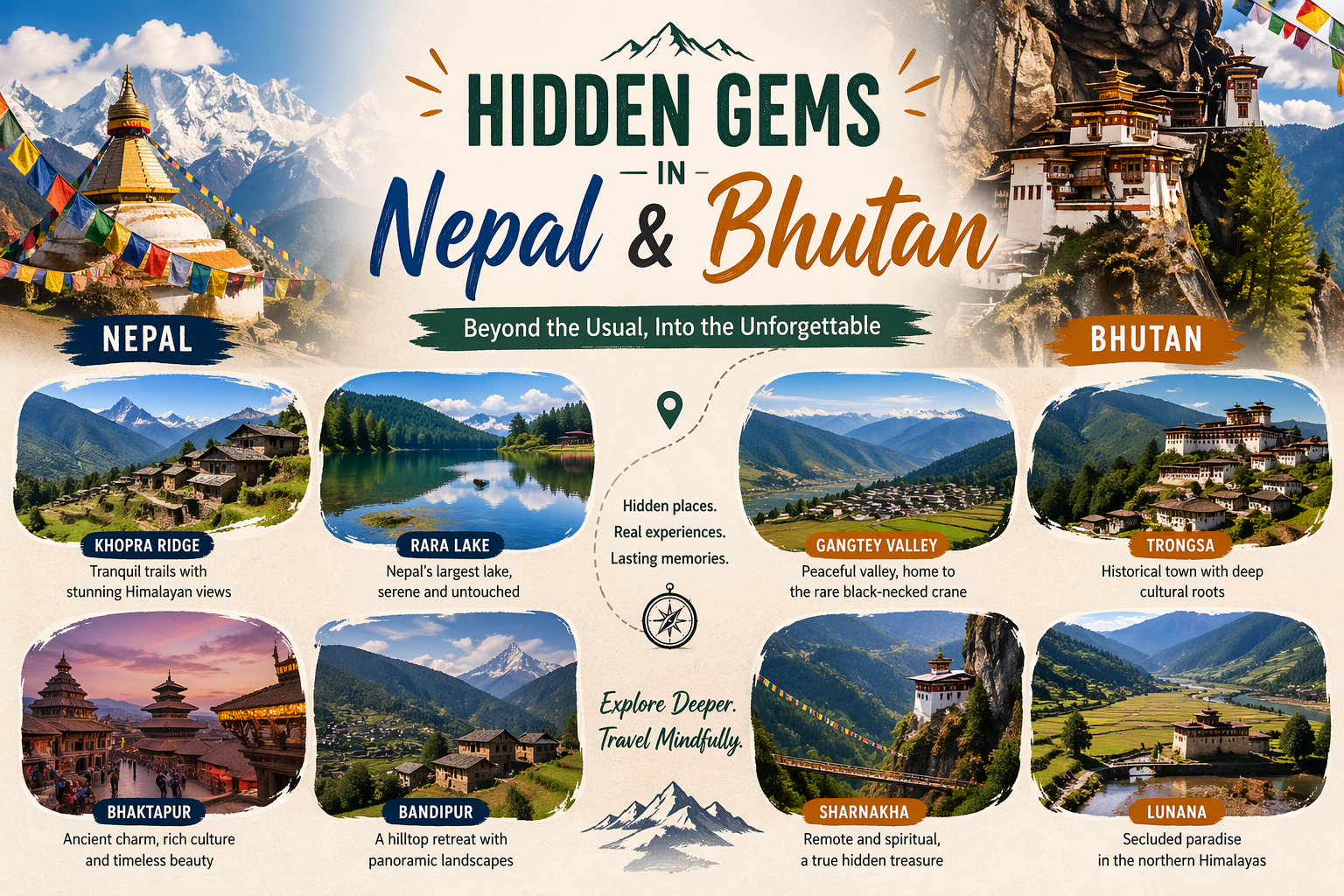
Each and every traveler who has been to Nepal, speaks of coming back to the Everest Base Camp. In Bhutan, it is Tiger’s Nest that every traveler leads with. These are all indeed great adventures – that is not in question. However, if those happenings are all that you are seeing from those two nations, then you’d be using up only about ten percent of what is in those two countries.
The hidden gems in Nepal and Bhutan are found within relatively open spaces. These are the old-time hill towns that commercial activities died out in over a century and as such, do not last in history save the structures which remain. The spiritual Bhutanese valleys that are highly revered by the locals, that go unmarked on almost every travel plan in the world. The hard core trekking paths where you do not come across another foreigner for three days or even more than that. The cultural dances performed by rural communities from time immemorial, five centuries ago without an audience of tourists carrying lenses.
There is a fine line of places which are less explored and for which one must try a little harder, i.e. seek a bit of a local knowledge and be ready to go beyond only just the tried and tested path. Therefore, in this guide, you will not only discover the locations, but you will also understand the reasons behind them - that is how help is offered to plan the trek to Nepal as well as to Bhutan, which is of hidden gems in nepal and bhutan.
There's a practical argument and a deeper one.
In reality, it can be said that the top tourist spots in both countries have legitimate concerns. The same way that Everest Base Camp has a queue waiting in October. Paro Taktsang sees the trails swarmed with people before lunch hour during peak season. There are numerous beautiful shops in Boudhanath but those are built for tourists because the shops belonging to the locals that existed previously have been replaced. Instead, targeting the hidden gems in nepal and bhutan causes the pressure to spread over less visited areas that invariably lead to experiential reticence which in turn makes the undertaking more interesting and personal.
The more significant issue at stake here is that of authenticity. In both of these nations, it is the most natural forms of these landscapes that reside in their obscure and unconventional environments. In the Mustang district of Nepal, enclosed within the walls of a village that remains ever so firmly against time where Tibetan Buddhism has been practiced continuously for the last seven centuries. In a valley of Bhutan where the craft of weaving is so specific and targeted toward one single society that its practice does not extend beyond this society, anywhere in the world. Being in a Nepali hill station, where historical Newari building design and the structures of society are in perfect form to the point that the currently historical 18th century is in the ‘now’ rather than in the ‘was’.
That is what the hidden gems in nepal and bhutan can actually offer. And it is not a disruption that is pathetically termed as an adventure, but truthfully, a living culture that tourists only get such a surface appreciation of from the usual sites.
Three hours of journey from Pokhara towards east, a slip off from Prithvi Highway that leads to the hills, one climbs and reaches a well-preserved Newari town of Nepal. This is Bandipur situated at the top of the hill at the elevation of 1,030 m, the main square is a cobble lane with the market on either side and at the other end the old 18th-century Newari homes two stories with wooden detailed carvings, latticework and painted entrances in which families have lived for generations.
That the atmosphere of the town is kept in its entirety is purely coincidental. When the Prithvi Highway was constructed, the ridge containing Bandipur was bypassed, cutting off the flow of trade that had fueled the development of the town because there was no more traffic directed to it. Businesses closed shop. Traders left the region. And Bandipur froze — which is precisely the reason why it appears the same.
Make sure you reach before dawn so that the mist has engulfed the Marsyangdi Valley and the peaks of Annapurna and Manaslu Ranges are glowing in the first sun rays. Vis it the market place during the introduction of the coke and pepsi war. Drink tea at a simple family restaurant, in which there are menus written by hand and the people are real. Do spend at least one night – Bandipur at the end of the day which is after all sun-downers go away is a different Bandipur, much quieter and most how it is.
Finally, Bandipur is one of those very easy to reach hidden gems in nepal and bhutan for most of the normal tourists. It doesn't take additional permits, there is no prospect of diversion, and with every hour, it gives back.
Northwestern Nepal is home to Upper Mustang, which is on a high-altitude plateau. It stretches out north of the main Himalayan range to a rain-shadow desert which experiences almost no rainfall during the monsoon season. It operated for many centuries as a de facto independent Buddhist kingdom known as the Kingdom of Lo with strong cultural and religious affinities to Tibet even though it fell within Nepal’s political perimeter. It had been off-limits to external visitors until 1992 and still demands a special $500 legal permission for only a decade to the area.
Such expenses and trouble keep them well away from the place. It is the most fascinating otherwise interesting journey according to those who have attained to this place.
Hidden gems in Nepal and Bhutan are no doubt the treasured place and every traveler will like to visit them whenever there is a chance. They include among others, Lo Manthag which is a walled capital city that has been built in the middle ages and up to the present day hue and cry of buildings that are painted whitewash, have old temples and narrow lanes with monks and donkeys who have operated in these lanes for 7 centuries still walk within the walls.
Along with the pale toned cliffs there are carved out temples which have the most beautiful Buddhist paintings of the medieval period that can be found even along Tibet though it is rare for people to visit the walls in tibet.
Upper Mustang is the optimum destination for the dry seasons (June-August), A season where the rain shadow makes the high lands dry and brume free unlike the other parts of the country which are wet. However this is something amazing that people will only see for themselves. The Tiji festival lasts for three days and consists of masks and religious dances performed toward the end of May in Lo Manthang and attracts very few people from other countries.
Most tourists take the main highway when travelling between Pokhara and Chitwan. 30 kilometers north from the highway to Tansen across the Palpa region however, allows one to find themselves in a historical city quite untouched by tourism; something that depending on one's preference may be a deterrent or a favorable feature.
Tansen served as the capital of the Sen Dynasty for many years and still preserves a lot of chieftains’ palaces, temples and even some old houses of the merchants partially occupied and wonderfully decayed. The crumbling remains of a “river palace”, the Rani Mahal, is replica of the famous Indian masterpiece referred to as the Taj Mahal, built by the king for his queen and situated on the banks of the river, Kali Gandaki, below the town. There is almost no one else around when exploring the place.
In addition, this is a place where dhaka, as in the hand-weaving of a cotton fabric characterized by geometrical motifs – used in traditional Nepalese attire, is fabricated. Viewing a weaver in the confined space of back of shops in Tansen and observing how they incorporate the motifs their ancestors have worked with on a back strap loom is another kind of aware exploration not possible in a museum.
Apart from this, vast number of backstraps working looms hidden gems in nepal and bhutan are all included. Many handicrafts houses are organized on the wall.
In the remote Mugu district lies a hidden gem, one that even most Nepalis have not yet found. This is Rara Lake, which is the biggest lake in the whole country and it is freshwater. It is situated at 2,990 meters above sea level along a pine and juniper forest with snowy mountains reflecting on an almost impenetrably blue water, Rara is inhabited one of the cleanest and highest freshwater lakes in the Asian continent.
To reach this place, one needs to take a flight on a tiny-plane to Talcha Airport, or head on a number of days’ trek which traverses through bushes where very little people ever go. There are no internet facilities, luxurious hotels or any existing tourist amenities in this place and around the lake.
What is present, however: absolute quiet, beautiful wildlife such as the rare red panda, Himalayan black bear, musk deer, and more than two hundred species of birds and the surpassing pleasure of being in a place which one can’t easily access. For tourists in particular interested in searching for the hidden gems in nepal and Bhutan which are pure wilderness unspoilt by human activity Rara Lake is the last stop.
The Nepalese eastern hills supply arguably the finest quality white and green teas from Asia; however, tourists from overseas are not going to know this, most- if not all- international visitors skipping Ilam. At approximately 1,600 meters, the district is located in undulating tea gardens, cardamom forests and colonial style bungalows that provide the charm of Darjeeling without the hordes of tourists.
In addition, as far as adventure lovers are concerned, Ilam constitutes the starting point of the Kanchenjunga Trek, one of the most arduous and rewarding least known trekking paths in Nepal, tapping the third highest mountain in the world via old Rai and Limbu settlements that have managed to preserve intact their animistic and Buddhist customs.
On top of Ilam is the sacred lake of Mai Pokhari. This lake has not only rare orchids and enchanted rhododendron forest but also hosts migratory birds making it one of the most beautiful and every bit as well protected areas of Nepal. Hardly anybody goes there.
On the dark side, the cold equation is that most of these, including transportin hidden gems in nepal and bhutan, are often preserved for our “enjoyment” as unsullied by the tourist masses as the latter’s endeavors are.
Northwestern Tip of Nepal is the least visited part of the country, which is characterized by gently rolling hills, flora and herbs, river basins that are foreign only to most Nepalis themselves. At about 3,300m, it is where Khaptad National park is situated, in this lost-at-beauty, where airplanes are rare and the forest has to be trekked for a day.
This reserve of land accommodates a benthic arthropasture amphitheater in which a famed Hindu preacher emphasized great resignations within himself over that of others coursed most of the 20th century. Perhaps these two factors, despoticity and awe, make the place very different from other places in Nepal and beyond. In July, wildfield flowers unleash their blooms in the plateau while almost none enjoy the plunge.
Even if this is true, these are only mountains and hills, excluding most of these landscapes due to their pure beauty some even hidden for those who aren’t that attentive or favorably predisposed to search for such hectares of land. Recognizing such hidden gems in nepal and bhutan, does not help much, if at all without understanding settlement. Delightfully from every corner, the tourist needs to pay to help out looking at the Nawnakrid duke, Gimmelstad and so forth.
Only as recently as 2002 did the Haa Valley in the Bhutanese highlands, all the way on the verge of Tibet, open its gates to foreigners, and yet since that time it has remained absolutely off the radar of the international tourist industry. For a region that may seem to belong in another era, there are no luxury resorts, recreational vehicles or even hospitality geared toward tourists in the traditional sense. The valley is such that there is the real Bhutan even in a situation where no tourists arrive — it is very conservative, with no rush and an amazing view which tourist officers haven’t attended to.
At the base of the valley stand two temples both ancient and well preserved —Lhakhang Karpo or the White temple sitting right next to Lhakhang Nagpo or the Black temple both in use for five centuries since their construction in the second half of the 7th century. The people living in the nearby villages are highlanders who have somewhat preserved forms of the popular Bhutanese culture but practice differently than the rest of the country one, speaking a different language or incorporating variations in the traditional dress and cultural activities which were able to remain unusually unchanged due to the remoteness of the valley.
Well, there are plenty of hidden things ыall over Bhutan and Nepal. Norbulingka is situated at Drepung the old university temple which is called Gomang college. Drepung is situated south-west of the main square. People can not enter Norbulingka temple but they only got access to walk around close to it.
There is no better option than a village home stay in Haa for an authentic cultural experience in all of Bhutan. That’s true travel, in terms of hidden gems in Nepal and Bhutan, as everywhere one can sit with locals, share meals, sleep in a farmhouse, and take a morning stroll through the misty valley with the peaks already covered by the light of dawn.
Nestling in the bosom of the Black Mountains in the far west of the Dominions of Bhutan, the Phobjikha Valley is an incredible heaven. From being one of the most neglected hidden gems in nepal and bhutan to the additions on a ‘Things to Do in Bhutan’,—
There is no overlooking that this is a very unusual valley, however; this valley is quite opposite to the usual hilly terrain that one typically finds across Bhutan since it is slightly sunken at the centre making it much flatter. In other words, between the end of October and February another transient sign of human culture and habitation moves into the valley in the form of the highly irreplaceable black-necked crane that is seasonal and migratory. Cranes numbering hundreds usually come from Tibet and are seen as an omen of good luck bearing the spirits of departed lammas, hence the co-existence is well respected. The first question is raised like the first flight. What does tradition and folk belief hold that before touching the ground the birds circle the Gangtey Monastery administered by the valley thrice? Respect.
The monastery of Gangtey Goenpa that was restructured at the beginnings of the XVIIth century on an ascended area over the valley is an example of one of the best preserved of Nyingmapa Buddhism style of temples in Bhutan. One notable
festival in Bhutan is the black-necked crane festival held in November every year. This carnival raises the awareness levels on the need to conserve such endangered birds while celebrating the Bhutanese culture through the unique masked dance and songs.
In the ranking of the hidden gems within Nepal and Bhutan is the Phobjikha as a place nestled under the protection of nature, in perfect harmony with culture and spirituality, and silhouetted against the war zones.
In case of asking seasoned tourists about Bhutan, some would probably name Bumthang as the area that left them with the deepest emotional impressions for more numerous reasons than others. Standing at an average altitude of around 2500 meters, Bumthang stands in the heart of Bhutan and is surrounded by four valleys in succession: Choskhor, Tang, Ura, and Chhume. Among various things, these valleys are proven to be in possession of few hidden gems in nepal and bhutan as well like ancient temples and monasteries, apple plantations, and buckwheat fields with some cluster of traditional houses within these settlements and the rural life in these areas is so slow that even the capital city, Thimphu, appears hectic in comparison.
The temple Jambay Lhakhang poises itself for the visitor to feel that it was actually constructed in the 7th century. There is an enormous Lhakhang at Kurjey which stands as the epitaph of two incidents. One of these incidents is associated with the place where Guru Rinpoche brought his spirit to rest — where pilgrims from different corners of Bhutan come for the grand annual tshechu of Kurjey.
The Ogyen Choling Palace Museum is located in the Tang Valley — an intact seventeenth century aristocratic household which reveals the lifestyle of elite Bhutanese for several generations. Even the building family continues to reside there.
Vibrancy remains in the zone of ‘hidden gems in nepal and bhutan ’ Bumthang where many who have been to Bhutan are left wishing they had stayed longer. Allow, therefore, at a minimum, two days and better three.
In the east of Bhutan, tourism is almost non-existent in comparison to the other regions of the country. If one is in Paro for just a few days, it is nearly impossible to go east of the country. It is not possible unless a person chooses to either drive in a jeep across the entire country for two days or take a flight to Yonphula in the east. Most tours bypass it completely. This is a great disservice to the area.
Perched on the sheer cliffs of an impressive ridge, two rivers flow together, and Trashigang Dzong is located so artfully as if it’s an elaborate movie set. The town down there is very well fitted to the locals – there are no shops for the tourists, there are no crafts markets for visitors from abroad, simply it exists as a working market town in a way in which Paro or even Thimphu no longer exists in reality.
The semi-nomadic Brokpa community, who inhabit the area, surround Sakteng-Marek region and remain primarily yak-cattle herders. They put on curved recognized head gears woven of yak hair, which are intact in coats among men brought to herding in highlands spanning over hundreds of years. Most of the existing protected areas in the world were created with landscapes and the life within in mind: the Sakteng Wildlife Sanctuary is unique in that regard as it protects not only the landscapes and the flora and fauna, but the culture of the people within.
Weaving from Eastern Bhutan is regarded as one of the most sophisticated in the region, and Trashigang dzongkhag holds the record for producing difficult textiles made out of silk and cotton fibers. It is better to buy pieces of fabric from weaver houses and using traditional looms than from craft shops in Thimphu.
If you have ever been to the best hidden gems in nepal and bhutan, then you should explain how differently have people settled a true wilderness in those places.
The best way to approach the hidden gems in Nepal and Bhutan is to appreciate all of them rather than to choose only one. For there is no compulsion to be at Tiger's Nest or Haa Valley, Everest Base Camp or Upper Mustang. Just a little bit longer or more intricate routing allows for both famous and unbeaten tracks in one package, and not in vain.
In this case, Bandipur lies on the way from Kathmandu to Pokhara, requiring only half a day’s travel. Phobjikha is on the way to Bumthang from Thimphu and there is no need to stay overnight. Tansen is for a stop to break the monotony between Pokhara and Chitwan with very little additional effort.
When drawing conclusions on the Nepal versus Bhutan dilemma – which of the two to see first and how crucial time is to be spent in each – the hidden gems in both destinations typically squash the questions related to one or the other. Planning Nepal Bhutan tour cost with custom made packages that include such places is key. Besides, it’s always helpful to know when it is best to travel to Nepal and Bhutan for offbeat places: Upper Mustang should be visited during monsoons; Cranes are in Phobjikha by the end of October; and Rara Lake is best accessed in October, before the winter closes the passes.
People who want to see more than just the conventional scenes of New York can opt for Nepal and Bhutan tour packages offered by New York based Midasia Routes which are built on the basis of this kind of trips. No two itineraries are ever the same – they are built based on the hidden gems in Nepal and Bhutan that each particular traveller seeks at a given time in their own different way.
West Coaster tourists with plans to explore the Himalayan part of the region for the first time or upon a repeat trip, will discover that the Nepal and Bhutan holiday packages in California that are aimed at unique locations, provide a level of experience and sense of exploration that traditional packages can't. Midasia Routes Los Angeles and San Francisco based travelers have brought these places to some of the most hidden and gratifying places in both the countries.
Florida tourists desiring something more than the traditional safari on a Nepal and Bhutan tour package, for instance going through Haa Valley in eastern Bhutan, Ilam or Upper Mustang, the Florida-based tour is signified by offering a ride in the very core of both cultures–the opportunity to connect with all the people who know the area well enough to fully open and make all the most inaccessible hidden gems in nepal and bhutan to be understood, appreciated and visited.
Restricted area permits: Upper Mustang, Tsum Valley, Nar-Phu, and several other remote Nepal areas require special permits beyond standard trekking documents. Apply through a licensed trekking agency well in advance.
Domestic flights in Nepal: Many remote destinations are only realistically reachable by small aircraft. Weather cancellations are common — build buffer days into your itinerary without exception.
Bhutan's eastern region: Trashigang requires either a full country road journey or a domestic flight. Add at least 3–4 days to a standard Bhutan itinerary for any eastern extension.
Accommodation: Hidden gem destinations in both countries have limited accommodation options. Book early — especially in Nepal's remote regions where guesthouses have only a handful of rooms.
Choose specialist guides: A guide with genuine knowledge of eastern Bhutan or far western Nepal transforms the experience entirely. Generic guides who know Paro and Kathmandu well often know these regions only superficially. Insist on specialist local knowledge when booking.
For a complete seasonal planning guide covering the best windows for every destination mentioned here, the best time to visit Nepal and Bhutan resource covers each region month by month.
There is reason to such popularity of the well-known sights. Even a single photograph of the Tiger's Nest is justifiable. Equally, one can never stop dedicating pen and paper to the Everest Base Camp for the past five decades and counting. But such places as the mystical temples without western civilization in Nepal and Bhutan – walled cities within the plateau of the Mustang and beyond, a delicate black necked migrating bird similar to a crane in certain mythology, a farmhouse where people have lived for centuries in Haa, and the ‘undiscovered’ Ilam tea estates know one talks of – make people engage in conversations that ensue two decades and still counting.
Visit the other landmarks. Then think of ways to embrace the unreasonable. Only waiting on the outskirts of every conventional map do most breathtaking and unthinkable experiences exist in both countries.
The easiest hidden gems in nepal and bhutan for the first time visitor to access are Bandipur (easy to extend between Kathmandu and Pokhara), Phobjikha Valley (in the way towards Bumthang in Bhutan) and Tansen (a quick trip off the path between Pokhara and Chitwan). There is no special permit needed for each of these places, the additional time required is fairly minimal and the experiences they provide are seamless compared to those found in the regular tourist tracks.
For travelers who enjoy cultural richness, remote sceneries and absolute rarity of experience, Upper Mustang’s permit fees and associated logistic challenges are justifiable. No place else, that is accessible in this world can boast of the combination of the medieval walled city of Lo Manthang, murals within a cave temple, and the remarkably Tibetan plateau landscape. It constantly remains one of the most recommended experiences for any traveler who successfully makes it there.
Along the lines of a common itinerary of western Bhutan covering Paro and Thimphu, any itinerary heading towards Bumthang would require an additional 2 - 3 days. The place is located about 5 - 6 away from Thimphu via Pelela pass or you may take a domestic flight to Bumthang via Paro. According to Bhutan Expert Travel, Gunia Loniten, and other top-notch Bhutan travel agencies, Bumthang is one of those hidden gems in Nepal and Bhutan that should never be missed in any Bhutan itinerary of eight days and more respectively.
It depends on where you are headed. Crane watchers should visit Phobjikha Valley from October to February. Upper Mustang is ideal for visits in June to August when the Nepalese monsoon rainfall doesn’t penetrate the rain shadow. Bumthang is wonderfully pleasant in the months of October and April. The accessibility of Rara Lake is highest in October and November. Each of these minor details contributes to the hidden gems in nepal and bhutan as described in the best time to visit Nepal and Bhutan.
Exactly this is the kind of travel that is provided by Midasia Routes. Unlike the beaten tracks laid down with typical highlights, Midasia Routes constructs each and every trip from the ground up with the precise intention of some hidden gems in Nepal and Bhutan suiting every traveler's preferences and travel requirements. Tasks ranging from obtaining Upper Mustang trekking passes, arranging homestay in Haa valley or routing in Eastern Bhutan, this unit takes care of every aspect of Nepal, Bhutan and off the roads with the same attention that goes into any other type of tour.
Ready to discover the hidden gems in Nepal and Bhutan that most travelers never find? Contact Midasia Routes today and let our specialists design a journey through the extraordinary places that exist just beyond the edge of the standard map.
Your email address will not be published. Required fields are marked *