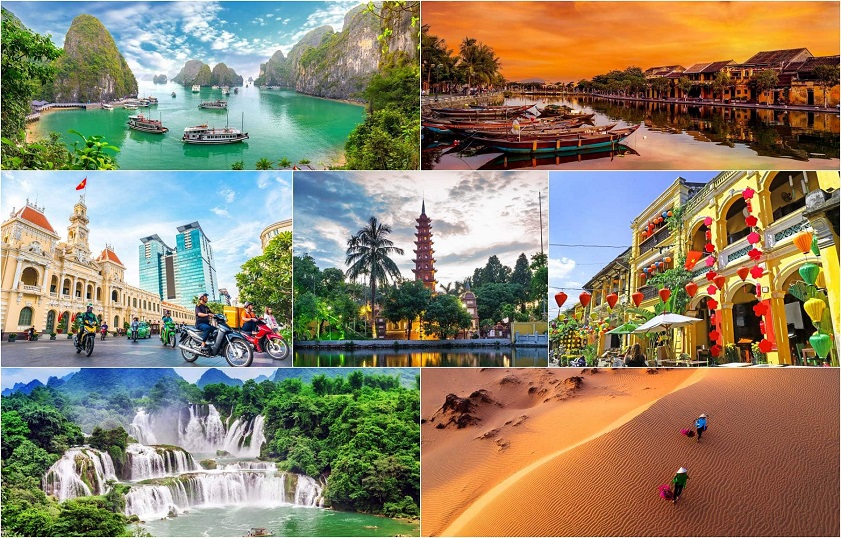
It is crucial that you consider carefully when to go to Southeast Asia before you make any flight bookings. If you time it correctly, then the views will be beautiful; the weather pleasant; and the number of visitors tolerable. If miscalculated, however, one may encounter monsoonal rains that flood the streets, scorching temperatures that are unbearable, and expensive, high season pandemonium.
The problem is, there’s more to Southeast Asia than just one place – there are several regions with different weather, and therefore, different seasons within the same eleven countries. When to go to Southeast Asia, and in particular to Thailand, may not be the best time to visit Southeast Asia and more so, Vietnam, Indonesia, and the Philippines.
It is only natural for any traveler to wonder at times when they can pack all experiences into one region. Just in case you want to experience the beaches, the festivals, or low season travel, you have to understand the variations of travel to Asia.
To make this planning easier and more accurate, Midasia Routes helps travelers choose the best time to visit each destination, plan routes according to weather conditions, and avoid costly travel mistakes.
Now let’s get into it.
It would be great to understand two weather patterns which determine the best time to visit southeast asia even before going down to which countries have wet or dry if it is a wet or dry season.
Anybody who can imagine southeast asia is already imagining tropics that is hot all the seasons of the year which is 25 degrees celsius to 35 degrees celsius (77 degrees fahrenheit to 95 degrees fahrenheit) and as such during the cold months, it is not the temperature it rains and the humidity of the air that is different.
The two key monsoon systems are:
Southwest Monsoon (May–October): Brings heavy rain to mainland Southeast Asia — Thailand, Myanmar, Cambodia, Vietnam's south, and Laos
Northeast Monsoon (November–February): Brings rain to the eastern coastlines — Vietnam's central and northern coast, the Philippines, and parts of Indonesia
This is why the best time to visit Southeast Asia varies so dramatically by location. When it's dry and perfect in Thailand, it may be wet in Vietnam — and vice versa.
Understanding this pattern is the cornerstone of any reliable Asia climate guide.
Thailand is where most Southeast Asia itineraries begin, so getting the timing right here is critical.
Thailand is the perfect gateway into a wider Southeast Asia adventure. Midasia Routes offers fully custom travel planning that builds your Thailand-anchored itinerary around the best weather windows — connecting you seamlessly to neighboring countries without ever landing in the wrong season.
Best time to visit Southeast Asia's Thailand: November to April
This is Thailand's cool, dry season — and it's genuinely spectacular. Skies are clear, humidity drops, and beach destinations like Koh Samui, Phuket, and Krabi are at their most inviting.
November–February: Peak season with ideal weather across almost all of Thailand. Temperatures hover around 25°C–30°C. Crowds are highest and prices peak in December–January.
March–April: Still dry but temperatures rise significantly, hitting 35°C–40°C in the north. Songkran (Thai New Year Water Festival) falls in mid-April — one of the most memorable festivals in Asia.
May–October: Wet season across most of Thailand. Rainfall is heavy but rarely all-day. Prices drop by 30–50%, and the country is far less crowded.
Mini Case Study: Travelers visiting Chiang Mai in November report ideal trekking conditions, cooler temperatures around 22°C, and lush green landscapes from the tail end of the rains — making it arguably the single best month in the entire Asia travel season calendar for northern Thailand.
For the best time to visit Southeast Asia on a budget, Thailand's shoulder months of May and October offer excellent value with manageable rainfall.
Vietnam is the most complex destination in any Asia weather guide because the country stretches over 1,600 km from north to south — and each region has its own distinct weather pattern.
Northern Vietnam (Hanoi, Sapa, Ha Long Bay)
Best time: October to April (cool and dry)
Avoid: July–August (heavy monsoon rains and humidity)
Central Vietnam (Hoi An, Da Nang, Hue)
Best time: February to August (dry and warm)
Avoid: October–November (typhoon and flooding season)
Southern Vietnam (Ho Chi Minh City, Mekong Delta)
Best time: December to April (dry season)
Avoid: May–October (wet season, though rarely disruptive)
When is the best time to visit Southeast Asia on a Vietnam tour that travels from Hanoi to Saigon? The answer is February through April. This is the time when you can easily travel to all geographical regions.
Which part of Asia remains full of festivals in all seasons except for monsoons and summers? It is only Vietnam. The other parts of the country remain festivals only during Tet Vietnam Lunar New Year which is celebrated in January or February, causing most shops to close down for one week.
Cambodia's climate is simpler than Vietnam's — the entire country shares the same seasonal pattern.
Best time to visit: November to April (dry season)
November–February: Ideal temperatures (25°C–30°C), low humidity, and clear skies over Angkor Wat — the best conditions for temple exploration
March–May: Increasing heat (up to 40°C), especially in April. Still dry but physically demanding
June–October: Wet season. Angkor Wat is lush and dramatically misty. Crowds thin significantly and prices drop
There is a silver lining in the cloud called wet season, in Cambodia – the floods of Lake Tonle Sap (September-October) when the lake flows back reversing its flow in one of most peculiar occurrences in Asia. This then leaves wet season shoulder as a very underrated period in Cambodia in every nature-lover’s Asia season.
There's also the best time to visit southeast asia if one wishes to experience Angkor temple without too many other tourists. Early November/late October boasts reduced rainfall and low tourist numbers due to the end of monsoon season crowd level.
Bali operates on a slightly different clock from mainland Southeast Asia, making it an important entry in any complete Asia climate guide.
Best time to visit Bali: April to October (dry season)
This is the opposite of mainland Southeast Asia's ideal window — a fact that makes Bali an excellent complement on longer itineraries.
April–June: Warm, dry, and less crowded than July–August. The best time to visit Southeast Asia's most famous island if you want value and good weather simultaneously
July–August: Peak season. Schools are out across Australia, Europe, and the US, making Bali's beaches and rice terraces extremely crowded. Prices surge.
November–March: Wet season. Rain is heavy but typically falls in short afternoon bursts. Surf season for the west coast picks up. Prices are lowest.
When to travel to Asia via Bali for surf? The best waves hit Uluwatu, Padang Padang, and Canggu from May to September.
The Philippines consists of over 7,000 islands, and the best time to visit Southeast Asia via the Philippines depends entirely on which island group you're visiting.
The Philippines' island-specific weather patterns make it one of the most rewarding destinations to time correctly. Our Philippines tour package is designed around the November-to-May dry season sweet spot — covering Palawan, the Visayas, and beyond during the precise window when the islands are at their most spectacular.
Visayas and Palawan (Cebu, Boracay, El Nido):
Best time: November to May (dry season)
Peak season: December–April
Avoid: June–October (typhoon season)
Mindanao:
Less affected by typhoons; relatively stable year-round
Luzon (Manila, Batanes):
Best time: December to May
Typhoon risk: June–November
In Asia, the Philippines encounters ample typhoon cycles recording as many as twenty occurrences in a year. That is why it is even more important to understand the timing correctly, and the Philippines becomes so peculiar in every fair Asian meteo guide.
With the exception of El Nido and Coron, Palawan, best time to visit southeast asia beaches would be from February to April when the water is most still and even diving or snorkeling is most clear.
Myanmar's best time to visit aligns closely with Thailand's.
Best time: November to February
Cool, dry, and comfortable across the entire country
Bagan's temples look magnificent in the gentle winter light
Inle Lake's floating villages are perfectly accessible
March to May: Hot and dry. Manageable but demanding, especially in Mandalay where temperatures hit 40°C+.
June to October: Monsoon season. Roads in rural areas can become impassable, but the countryside turns intensely green and prices fall sharply.
Here's a rapid-fire breakdown for the most popular Southeast Asia destinations:
November is widely considered the single best month to begin a Southeast Asia trip — and Midasia Routes sees the highest booking demand for this window every year. Our group travel expeditions for November and February depart with small, intimate groups of like-minded travelers, giving you the structure of an organised tour with the freedom of independent travel across the region's best-weather months.
January: Best time to visit Southeast Asia for Thailand, Cambodia, Vietnam south — peak season but outstanding weather
February: Excellent across Vietnam, Thailand, and Cambodia. Tet Festival. Ideal Asia travel season for most mainland destinations.
March: Still good in Thailand and Cambodia. Warming up. Vietnam's central region at its best.
April: Songkran in Thailand. Very hot but festive. Best time to visit Southeast Asia's island destinations before peak prices hit.
May: Bali and the Philippines dry season begins. Shoulder season bargains across mainland Southeast Asia.
June–August: Bali peaks. Wet season on mainland. Excellent Asia weather for Indonesia's eastern islands — Komodo, Flores, Raja Ampat.
September–October: Transition months. Wet season winding down. Cambodia's Tonle Sap flooding peaks. Good deals across the Asia travel season spectrum.
November: One of the best single months in the Asia weather guide. Dry season kicks in for Thailand, Cambodia, Vietnam. Pre-peak pricing. Near-perfect conditions.
December: Peak season everywhere. Best weather, highest prices, most crowded. Christmas and New Year push prices even higher.
These expert-level insights will give your trip planning a serious edge:
1. Creating a "Green Season" Perception In recent years, the advertising trends have shifted and it is not so much 'rainy season', but a 'green' one – as the former old way of describing things is now considered inappropriate. Trees are in deep green, warm fields are full of rice, the sprays of sea harbors and wharves will be without many tourists. Seasoned travelers find the peak travel season to southeast Asia calendar quite too long. Instead, damp and budget-friendly dates are their favorite in this chart.
2. Understanding Microclimates Even in the same country, microclimates can vary tremendously. For instance, Pai, located in the north of Thailand, is more chilly and misty as compared to Chiang Mai which is only a few hours away. Thailand’s southeastern seaboard (Koh Samui) has its dry season at a totally different timeframe than that season on the western course (Phuket). Do not look at the mean climate for the whole country nor expect every place to be the same temperature.
3. Using Festival Calendar to Determine Which Season to Travel One can effectively make use of festivals when determining which season to go on vacation to Asia:
Autumn, November (Thailand): Loy Krathong – everyone’s favourite; candles floating in the water – classic!
Spring – Water Festival / Songkran (in April in Thailand and Cambodia)
Tet (Vietnam - Jan/Feb)
Diwali (in October/ November. However, celebrated among south-east Indian diaspora communities and coincides with celebrations in India)
4. “The November ‘Sweet Spot’ Strategy” Travel firms consistently point to one month as the ideal time to any Southeast Asian destination – November. This is because the rains stop in Thailand and Cambodia, the south of Vietnam clears up and the average price level before the peak season has still not reached its maximum. Under these circumstances, November is regarded as the best time for anyone heading to southeast Asia.
November is also when Laos is at its most beautiful — rivers are full, the countryside is lush, and the famous slow boat along the Mekong operates in ideal conditions. Our Laos tour package is perfectly timed for November travel, giving you the most rewarding version of this underrated Southeast Asian gem before peak season prices arrive in December.
5. Optimum Accommodation Booking strategy for Shoulder Seasons Despite the fact that there are off-peak seasons, accommodations in places that most people desire go fast. Budget travelers who want to experience the best time to visit southeast asia have no choice but to make early preparations particularly for the months of November and February when they are offered affordable deals and good weather.
Avoid these errors that can derail your Southeast Asia plans:
Treating Southeast Asia as one climate zone — Thailand and the Philippines can have completely opposite weather in the same month. Always research each destination individually within your Asia weather guide planning.
Assuming monsoon means ruined trip — Brief afternoon showers in the wet season rarely destroy a vacation. Many travelers report their best experiences during the off-season in affordable Asian countries.
Only checking country averages — Regional and microclimate differences within countries like Vietnam and Indonesia mean country-level climate data is often misleading.
Booking peak December travel without reservations — December is the most expensive and crowded month in the Asia travel season. Without advanced bookings, you'll overpay or find nothing available.
Ignoring typhoon season in the Philippines and Vietnam — This is a genuine safety concern, not just inconvenience. Check typhoon forecasts and have contingency plans when traveling during June–November in typhoon-prone areas.
Not accounting for festival crowd spikes — Songkran in Thailand and Tet in Vietnam are magnificent but bring significant domestic tourism surges. Prices and crowds spike dramatically during these windows in the Asia travel season calendar.
Underestimating heat in March–May — The hot season across mainland Southeast Asia is genuinely extreme. Temperatures of 40°C+ with high humidity are physically demanding, especially for temple-heavy itineraries.
If you're visiting multiple countries in a single trip, November to February is the most universally recommended window in any Asia weather guide. Dry season covers Thailand, Cambodia, Vietnam's south, and Myanmar simultaneously. Temperatures are comfortable, rainfall is minimal, and most attractions are fully accessible. However, this is also peak season — so expect higher prices and larger crowds at major sites. For budget travelers, October and May offer the best compromise between good weather and value in the Asia travel season.
When it comes to beach-oriented tourism, the solution depends on the coast in question. The finest conditions for beaches in the west coast of Thailand (Phuket, Krabi) occur during the months of November through April. For the east coast of Thailand (Koh Samui) the conditions are better between January and August. Tourists can expect the best beaches in Bali between April and October. Beach resorts in the Philippines are enjoying the greatest number of tourist during the months of November through May. Each country has different seasons, and accurate travel to Asia during its high season can only be successful if the exact destination is known.
But one should not hope for the best in this regard. It is a fact that dry season is not the best time to visit southeast asia. With a wet season comes an emerald terrain, less crowds and unbelievable discounts. The rain executes its fury mostly in the afternoons and evenings while the mornings are generally clear for sightseeing. It is far better to be flexible to plan your trips to places whose wet season is more patronized for example Chiang mai, Bali east coast and the likes.
Generally speaking, the off-peak season harmonizes with some of some inexpensive seasons: during rainy wet Reason– May-October for most of South East Asia. Accommodations are reduced at 30–50%, flights are lower priced, and most tourist sites are not as packed. In Asia, there is a great tourist season; the months just preceding the height of tourists (that which occurs in the months of October and November) are the most lucrative with better weather conditions.
Vietnam’s long and narrow profile complicates matters. When travelling the entire country from north to south, February through April is the best time due to the dryness in the north, pleasant weather in the center and the transition to a dry season in the south. September or October is the prime period for Hoi Halong Bay and Hanoi. March to July is a good time for Hoi An and Da Nang. The peak of the dry warm weather in Southeast Asia, localized by the Vietnam portion, is December to April for Ho Chi Minh City.
Southeast Asia can be visited all year round. However, some time periods are better than others. The Philippines from June to October are held in the cyclone season. Vietnam's central coast during the months of October and November experiences heavy rains and many areas get flooded. April is excessively hot in Thailand and Cambodia. December is another one of those cosmopolitan months all over, it is overrated and very expensive. It is impossible to say which is the best time to visit southeast asia because it depends on what you are looking for, avoid bad weather, save money, or avoid large crowds.
Bali experiences a dry season throughout the months between April and October which contrary to most countries in Southeast Asia falls within their wet season. April, May, and September are considered the best months for the seaons since the weather is perfect and there are significantlyA few tourists compared to the high season which spans July to August. November-March is Bali’s monsoon season which experiences most rains with gorgeous views as well as the cheapest of Asia travel seasons especially in Bali.
December is perfect in terms of weather for most of Southeast Asia, which explains why it is the peak season for travels. However, it is also the month when one pays the most and jostles with the most. The double whammy of Christmas and New Year means that you will also witness a hike in rates and tourists. If you are looking for the best time to visit southeast asia for love weather and cheap prices, it is November. Veteran members of the Asian climatic guide would even argue that November eclipses other months.
For first-time travelers, the best time to travel is from November to January. It’s the peak season for travel and offers the best weather conditions in most destinations. However, if the budget is tight, the shoulder seasons in May and October also have great deals. For beginners, the best time to travel to Southeast Asia is November as dry season starts, the price is still affordable, albeit increasing, and major cities and tourist resorts have already adopted the mood of forthcoming holidays.
An effective method is to travel in regions according to the sequence of the further dry areas. First region must be Bali or the Philippines (October–November), then focus on Thailand and Cambodia (November–February), followed by Vietnam from the south to the north (December–April). Another approach is to allow for the wet weather but much reduced crowds and costs during the grand Asia travel season by conducting the entire travel during one rainy season — May to October. Each place’s climate must always be checked because the individual place’s climate might contradict any one general or other Asia weather charts which are best time to visit southeast Asia.
Everyone has their own perspective on what the best time to visit Southeast Asia is. Many prefer visiting the mainland starting November and up to February when the weather is just timberline. For others, it could be the green season, May - October, for that reason, and so as to save few coins. For those with enthusiasm for festivals and traditions, it would be around the Songkran, Tet or Loy Krathong period.
Undoubtedly, it is not southeast asia. To this effect, one subscribes that who wins in a battle has better weapons and better tactics and strategies. Bearing in mind such insightful Asia weather guide, most of other travelers will be at a backward position because many only go ahead to book and pay for tickets forgetting that there is a monsoon season in Asia, that some places have better weather at different times as there is the concept of micro-climates, and also, the shoulder seasons provide excellent value for money.
Eventually, the best time to visit Southeast Asia is that which fits your purposes, and your pocket, and your style of travel. In travelling purposes, the eleven countries do fulfil this need, as each of them offers stunning values during various seasons due to her unique characteristics.
Make plans for the perfect Asian vacation right away. Those temples and beaches, street food and desserts, and many more are waiting for you - and now, you know which is the best time to visit southeast asia for these purposes.
The best time to visit Southeast Asia is the time that works for your itinerary, your budget, and your travel style — and Midasia Routes is here to help you find it. From small group boutique expeditions timed to the region's shoulder seasons to fully bespoke private journeys designed around your ideal weather window, we build Southeast Asia trips that get the timing exactly right. Contact our travel experts today and start planning your perfect trip.
Your email address will not be published. Required fields are marked *