The Haa Valley first allowed foreigners to enter its territory in 2002 although it is located in the Bhutanese highlands which extend to the border of Tibet. The international tourist industry has not discovered this region because it maintains its outdated appearance. The existence of a specific type of destination alienates travelers from experiencing standard vacation activities. Your entire daily schedule will differ from previous days because this destination provides multiple diverse geographical areas and multiple cultural elements and multiple wildlife activities within its small territory. Sri Lanka exists as the ultimate travel destination which travelers should explore through Sri Lanka travel packages that provide complete access to the country.
The island of Sri Lanka which has the same area as Ireland offers visitors the chance to see ancient rock fortress cities which rise from jungle plains and colonial hill stations that are covered with tea mist and whale watching opportunities which take place off the southern coast and leopard safaris which occur in scrubland national parks and its four different coastal areas and its Buddhist temple culture which defines everyday life through the permanent presence of incense and temple bells which sound throughout the day. Most international travelers still don't have Sri Lanka at the top of their list. The island offers you an advantage because it remains less visited than other Southeast Asian locations while its people show genuine friendliness and its atmosphere provides a distinct peacefulness which cannot be found in places that experience mass tourism.
This guide contains all necessary information for your Sri Lanka trip which includes top travel destinations and the details of each travel package and recommended methods for organizing your daily activities and cost estimation and the procedure for finding your ideal trip experience.
The existing facilities in the area include vacation resorts which provide upscale amenities and the possibility of staying in recreational vehicles and traditional tourist accommodations. The valley contains genuine Bhutanese culture which exists for tourists who choose to stay away from the area.
Sri Lanka packs a diversity of experiences into 65,610 square kilometers that larger countries struggle to match across ten times the area. The two-hour drive from any point of departure leads to three distinct landscape regions which include the cultural triangle's ancient ruins and the hill country's tea estates and the coast's fishing villages and resort beaches.
The high travel demand for Sri Lanka travel packages stems from this situation which offers limited time for travelers. The two-week itinerary provides complete coverage of beach relaxation and cultural immersion and wildlife safari and highland trekking activities without creating a rushed experience. Most destinations die not offer the unique combination which exists in that specific location.
The Yala National Park of Sri Lanka contains the highest leopard population of any location throughout the globe. From November to April, blue whales, which rank as the Earth's most massive creatures, migrate to the waters near Mirissa, establishing Sri Lanka as one of the world's top whale watching locations. Udawalawe National Park provides the best experience for observing wild Asian elephants in their natural environment in all of Asia.
Travelers to Sri Lanka arrive with knowledge about its beaches and temples. The travelers leave their trip with stories about the local wildlife because they experienced two surprises: the sight of a leopard resting on a branch under the afternoon sun and the sight of a blue whale emerging from the water thirty meters away from their boat.
Sri Lanka has observed its documented history for more than 2500 years because archaeological sites throughout the island have been confirmed by UNESCO as existing at multiple locations. The World Heritage List includes eight Sri Lankan sites which range from the Sigiriya rock fortress to the Polonnaruwa ancient city and the Kandy sacred city and the Galle old town. The island of Sri Lanka offers a historical experience which no other island in the world can match because it contains living historical sites that people can visit.
Before exploring specific destinations, it's worth understanding what well-structured Sri Lanka travel packages actually include — because the quality varies enormously between operators.
A good Sri Lanka travel package should include:
Return airport transfers — arrival and departure from Bandaranaike International Airport in Colombo or Mattala Rajapaksa International Airport in the south
Private air-conditioned vehicle with driver — Sri Lanka's road network makes private transport the most practical and comfortable way to move between destinations
Accommodation — ranging from boutique guesthouses and eco-lodges to heritage hotels and luxury resorts depending on your tier
Breakfast daily — sometimes additional meals depending on the package
English-speaking guide — for cultural sites, wildlife parks, and heritage experiences
National park jeep safaris — with licensed naturalist guides inside Yala, Udawalawe, or Minneriya
Entrance fees for major cultural sites
What's usually excluded: international flights, visa fees, personal expenses, tips, and optional activities like whale watching or cooking classes. Always confirm what's included and excluded before booking.
Most travelers use Colombo as their arrival point but then proceed to their next destination by departing to the north or south. The Colombo city area provides authentic character which visitors can discover through two hours of thorough exploration. The Pettah district operates as a bustling commercial area which maintains its authentic South Asian market atmosphere through its combination of Dutch-era warehouses and spice merchants and textile traders and street food vendors who represent multiple religions and ethnic groups. The Gangaramaya Temple near Beira Lake combines traditional and modern Buddhist architecture in a complex that also houses an extraordinary museum of donated objects from across Asia. The Dutch Hospital building from the 17th century which served as a VOC facility now operates as a dining and shopping area while showcasing Colombo's historical development through its colonial past in a modern atmosphere.
The central northern plains of Sri Lanka contain the most significant concentration of ancient civilizations in South Asia outside of India. The Cultural Triangle which encompasses the ancient cities of Anuradhapura and Polonnaruwa and the Sigiriya rock fortress, represents the oldest historical core of Sri Lanka, which offers travelers the most authentic experience of the country.
Sigiriya — The Rock Fortress
Sigiriya stands 200 meters above the jungle plain because its shape resembles a volcanic fist and it serves as Sri Lanka's ancient historical emblem and one of Asia's most exceptional archaeological sites. The 5th-century CE palace fortress built by King Kasyapa I showcases exceptional military construction methods and artistic excellence through its Sigiriya frescoes, which show celestial maidens painted at inaccessible heights onto the rock face.
The ascent to the peak requires about 90 minutes of walking which includes a well-known section that requires crossing a narrow path which connects to the cliff through metal brackets. The views from the top — across jungle, reservoirs, and distant hills — are worth every step.
Polonnaruwa — The Ruined Medieval Capital
Polonnaruwa served as the medieval capital of Sri Lanka from the 10th century until the 13th century and currently exists as a UNESCO World Heritage Site that maintains complete historical integrity through its collection of palace complexes, audience halls, Buddhist stupas, irrigation reservoirs, and Gal Vihara rock carvings which display four monumental Buddha statues carved directly into a single granite outcrop.
Polonnaruwa is less visited than Sigiriya but the site provides greater value to visitors because its extensive remains show complete medieval South Asian urban development.
Dambulla Cave Temples
The five ancient caves located in a granite hilltop above Dambulla town hold 153 Buddha statues and more than 2100 square meters of ceiling and wall paintings which form the largest cave temple complex in Asia. The paintings display Sri Lankan art history which has existed over multiple centuries through their visual representation of Buddhist iconography that attracts art historians who come to research this particular study material.
The hilltop setting, the cool interior light, the overwhelming density of sacred imagery, and the community of golden langurs that inhabit the surrounding trees create an atmosphere which exists nowhere else in Sri Lanka.
Kandy exists at an elevation of 500 meters which lies in the central highlands and surrounds a lake that mirrors the cloud patterns above the nearby mountains. The city serves as a vital transit point because it connects major trade routes which link southern regions with northern parts of the island while maintaining its unique heritage that distinguishes it from all other Sri Lankan cities.
The Temple of the Sacred Tooth Relic (Sri Dalada Maligawa) contains what people believe to be a tooth relic of Buddha which makes it the most sacred Buddhist site in Sri Lanka and one of the most essential sites in the Buddhist faith. The evening puja ceremony — drums, incense, the opening of the inner chamber — draws thousands of worshippers daily and creates an atmosphere of genuine devotional intensity.
The Esala Perahera festival in July or August — a ten-day procession of hundreds of elaborately costumed elephants, fire dancers, drummers, and whip crackers through Kandy's streets — is one of the most spectacular cultural events in Asia and a compelling reason to time your Sri Lanka travel package around its dates.
Kandy provides visitors with multiple attractions which include the Royal Botanical Gardens at Peradeniya (one of the finest botanical gardens in Asia) and the Kandy Lake promenade and traditional Kandyan dance performances that occur most evenings and easy access to the nearby hill country which enables visitors to take day trips.
From Kandy, the landscape climbs into Sri Lanka's central highlands which display a world of rolling tea estates and misty waterfalls and colonial-era bungalows and a temperature that feels so much cooler than the coast that it creates the impression of entering another country.
The Kandy to Ella Train
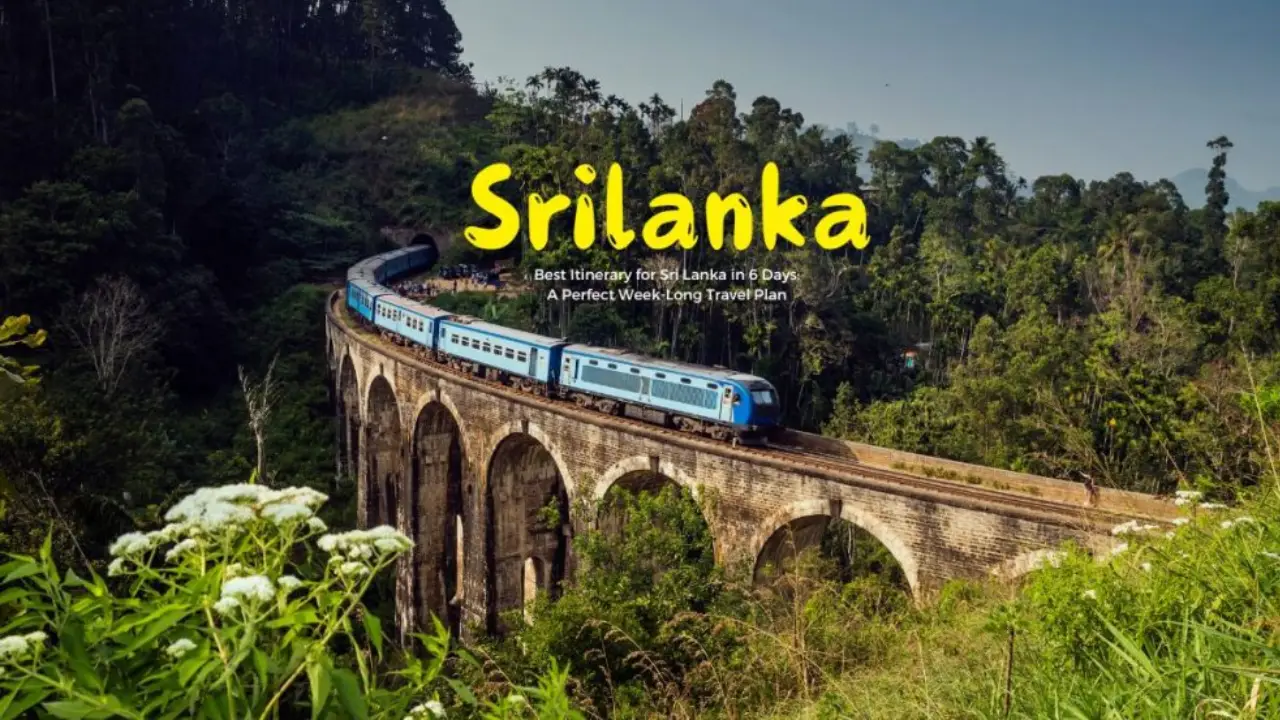
The train journey from Kandy to Ella via Nuwara Eliya is widely described as one of the most beautiful railway routes in the world. The colonial-era blue train threads through tea estate country, crosses high viaducts, passes through cloud-forest tunnels, and offers views across the entire highland region from open carriage doors. The observation car seats require customers to book tickets several weeks before the actual date.
Nuwara Eliya
Nuwara Eliya exists as a historical oddity because its colonial-era buildings and racecourse and golf course and strawberry-growing climate and flower garden climate create a unique identity which leads people to call it "Little England". The Hill Club operates as a hotel which serves roast beef and Yorkshire pudding in its dining room that features a fireplace and hunting trophies, creating one of the most extraordinary and amusing cultural experiences found in Sri Lanka.
Ella
The small hill town of Ella has become one of Sri Lanka's most popular traveler bases — and for good reason. The Nine Arch Bridge (a stunning colonial-era viaduct through the jungle visible from a short trail), the sunrise hike to Little Adam's Peak, and the longer Ella Rock trek all deliver views across the southern highland landscape that justify the journey. The town itself provides a peaceful atmosphere together with delicious dining options which serve as an ideal starting point for visitors who want to explore the nearby tea fields on foot..
Sri Lanka's national parks are among the best wildlife destinations in South Asia, and any well-designed Sri Lanka travel package should include at least one safari experience.
Yala National Park
The most famous park in Sri Lanka extends over 979 square kilometers of its southeastern coast which includes dry scrubland and lagoons and forest areas. Yala has the world's highest density of wild leopards — though sightings are never guaranteed, they are more consistent here than almost anywhere else in Asia. The park also hosts large herds of elephants and sloth bears and water buffalo and crocodiles and extraordinary birdlife.
You can find the best wildlife viewing times during the morning game drives which begin before 6am and during the late afternoon drives. The park schedule requires you to consider midday heat because it causes a major decline in animal movements.
Udawalawe National Park
If your goal is to observe elephants, Udawalawe provides better results than Yala. The park — built around a large reservoir in the south-central lowlands — hosts a permanent population of approximately 600 elephants that gather in large herds at the water's edge throughout the day. The sight of 50 elephants walking across a plain during the golden hour of afternoon light stands as one of Asia's most breathtaking wildlife experiences, which occurs at Udawalawe as a common sight instead of a rare event..
Minneriya National Park
From July through October, Minneriya hosts one of the world's great wildlife spectacles — "The Gathering." The Minneriya reservoir area becomes an elephant gathering site when its surrounding drought conditions drive hundreds of elephants to its diminishing water edge for feeding and drinking and social interaction. The single gathering of 300 elephants represents the largest assembly of Asian elephants which exists anywhere on Earth.
Sri Lanka's coastline is not a single experience. The island's four coasts have distinct personalities, distinct peak seasons, and distinct appeal for different kinds of travelers.
The South Coast (Mirissa, Unawatuna, Tangalle) The south coast is Sri Lanka's most developed tourist coastline and home to its finest beach towns. Mirissa — a small crescent bay — is the epicenter of Sri Lanka's whale watching season (November–April) and combines excellent swimming with a relaxed café and restaurant scene. Unawatuna offers a protected bay excellent for snorkeling. Tangalle is quieter, less developed, and increasingly popular with travelers who want the south coast experience without the crowds.
The East Coast (Arugam Bay, Trincomalee) The east coast is Sri Lanka's surf coast — Arugam Bay is one of Asia's finest right-point surf breaks and draws an international surfing community from May through October. Trincomalee, in the northeast, has some of Sri Lanka's most pristine beaches and is the base for diving and snorkeling in exceptionally clear waters.
The West Coast (Negombo, Kalpitiya) Negombo, just north of Colombo airport, is the practical choice for first-night and last-night stays — a beach town with good accommodation and restaurants that absorbs arrival and departure days without wasting itinerary time. Kalpitiya, further north, is an emerging destination for kitesurfing and dolphin watching.
The North (Jaffna Peninsula) The Jaffna Peninsula, Sri Lanka's northernmost region and cultural heartland of Tamil civilization, remained inaccessible to tourists for decades during the civil conflict. It is now fully open and offers a Tamil cultural experience — Jaffna cuisine, Hindu temple traditions, Dutch fort architecture, and the extraordinary palmyra palm landscape — completely unlike the rest of Sri Lanka.
Sri Lanka sits comfortably in the mid-range destination category — more affordable than Europe or Japan, more developed than many Southeast Asian budget destinations, and offering genuine luxury options at prices that undercut comparable experiences elsewhere.
Realistic per-person estimates for a 12–14 day Sri Lanka travel package:
Budget: $1,500–2,500 USD (clean guesthouses, shared safari jeeps, local transport options)
Mid-range: $3,000–5,000 USD (boutique hotels, private vehicle and guide, included safaris, whale watching)
Luxury: $7,000–14,000+ USD (villa resorts, private naturalist guides, helicopter transfers, bespoke cultural access)
International flights from the US to Colombo typically run $800–1,400 USD round trip in economy, connecting through Dubai, Doha, or Singapore. For a full picture of how the trip cost Sri Lanka calculation breaks down across categories, the dedicated Sri Lanka tour cost guide covers every variable in detail.
Sri Lanka e-visa costs $35–50 USD depending on nationality and is processed online before departure — simple, fast, and completed within 48 hours in most cases.
This framework covers the essential highlights of a well-balanced Sri Lanka travel package:
Days 1–2: Colombo — city orientation, Pettah bazaar, Gangaramaya Temple, Dutch Hospital
Days 3–4: Dambulla and Sigiriya — cave temples, rock fortress climb, Cultural Triangle orientation
Day 5: Polonnaruwa — ancient capital bicycle exploration, Gal Vihara rock carvings
Days 6–7: Kandy — Sacred Tooth Relic Temple, Royal Botanical Gardens, Kandyan dance performance
Day 8: Nuwara Eliya — tea estate tour, Hill Club dinner, colonial heritage walk
Day 9: Ella — Nine Arch Bridge, Little Adam's Peak sunrise, train journey segments
Days 10–11: Yala or Udawalawe — morning and evening wildlife safaris
Days 12: South coast — Mirissa beach, whale watching (seasonal), Galle Fort
This itinerary works beautifully as a foundation. For travelers interested in a more detailed day-by-day Sri Lanka itinerary covering alternative routes and regional extensions, the full planning guide goes deeper into each destination.
New York travelers who want to visit Sri Lanka need expert guidance to plan their trip because the island requires them to decide which national parks to visit and create a travel plan that includes both the cultural triangle and the coastal region and determine the best location for their hill country segment. The Midasia Routes Sri Lanka tour package from New York provides travelers with an expert who creates customized travel plans based on their particular interests about Sri Lankan island travel. California-based travelers drawn to Sri Lanka's wildlife and coastal experiences will find that a Sri Lanka tour package in California coordinated through Midasia Routes is designed around West Coast departure logistics from day one. Your travel preferences and schedule determine which travel elements you want to experience through Yala's leopards Mirissa's whales and Sigiriya's ancient history.
The Midasia Routes Sri Lanka tour package from Florida delivers essential planning solutions to Florida travelers who want to visit Sri Lanka for their first time or who want to return because it provides a complete planning solution that provides visa support and airport transport and safari and cultural site reservations.
Visa: Apply for the Sri Lanka e-visa online before departure. Cost is $35–50 USD; processing takes 24–72 hours. Don't leave this until arrival.
Best time to visit: Sri Lanka's dual monsoon system means different coasts peak at different times. The west and south coasts are best November through April; the east coast peaks May through September. The hill country and cultural triangle are good year-round with November–April being most reliable.
Transport: Private vehicles with drivers are the most practical way to travel between destinations. Sri Lanka's roads are significantly better than India's but journey times are longer than maps suggest — always build travel time generously into your daily planning.
Dress code at temples: Shoulders and knees must be covered at all Buddhist and Hindu sacred sites. Carry a lightweight scarf or sarong as a standard travel item throughout Sri Lanka.
Food: Sri Lankan cuisine is one of Asia's most underappreciated culinary traditions. Rice and curry, hoppers (bowl-shaped fermented rice crepes), kottu roti, and fresh seafood at every coastal town are reasons in themselves to visit. Eat local whenever possible.
Tipping: Not mandatory but appreciated. Standard tips for guides run $5–10 USD per day; drivers $3–5 USD per day. Safari guides typically receive $10–15 USD per full day in the park.
The travel guide Sri Lanka resource covers entry requirements, health precautions, currency, and connectivity in full detail for international travelers.
The travel packages for Sri Lanka succeed because the island's intricate design needs detailed planning to develop proper routes which travelers can explore within a two-week period. The destinations offer exceptional experiences which surpass typical Asian standards and rank as world-class attractions according to any measurement. The hospitality is genuine. The food is excellent. The wildlife offers some of the most outstanding viewing opportunities found in any location.
Visitors to Sri Lanka must fulfill three requirements which include coming with an open mind and leaving space for unplanned events while selecting a travel plan that includes beach activities and visits to ancient cities and highland tea regions and at least one national park visit at sunrise. The combination of these activities will enable Sri Lanka to provide a travel experience which transforms your understanding of holiday experiences.
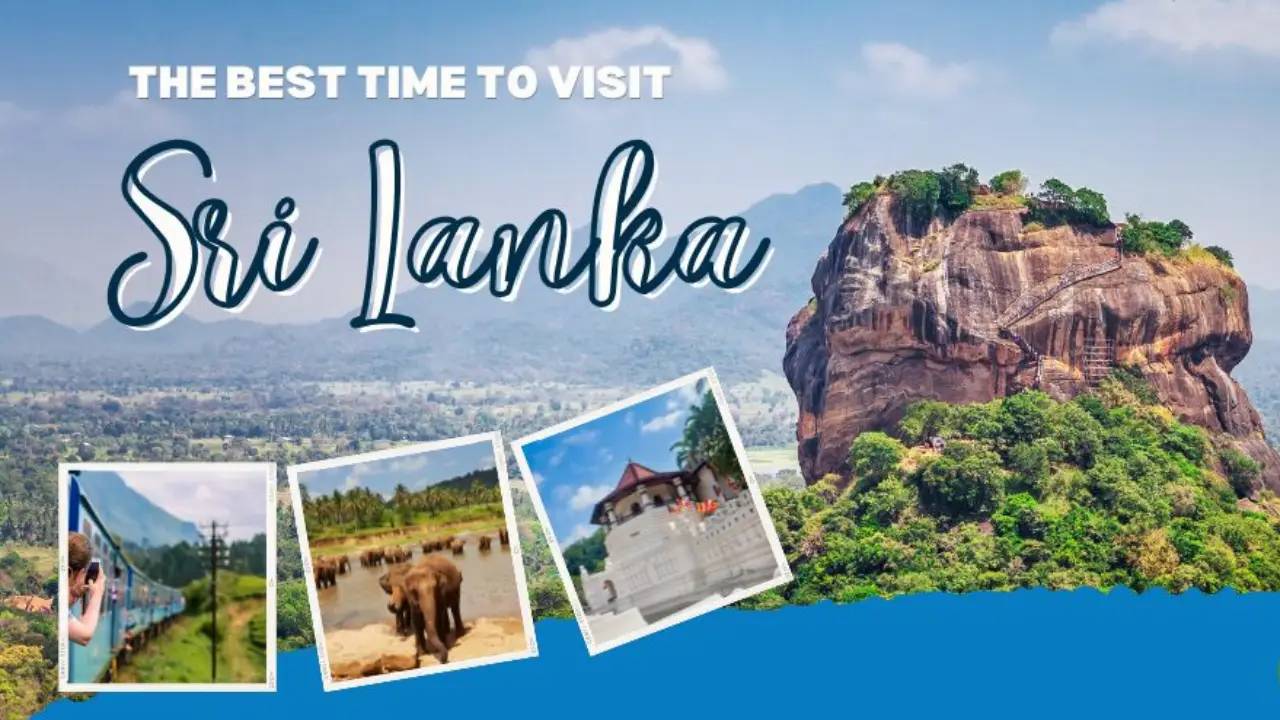
The optimal travel period for Sri Lanka depends on your choice of travel destination. The west coast, south coast, cultural triangle, and hill country experience their peak conditions from November through April because of their dry weather and sunny skies which create perfect conditions for beach activities and sightseeing. The eastern coast and Arugam Bay surf area reach their highest activity levels between May and September. The November to March period provides the ideal time for an island tour because all regions become accessible at once. The complete guide to the best time to visit Sri Lanka explains the most suitable months to visit each region.
The essential highlights of the cultural triangle and hill country and wildlife and coast require at least 10 days for proper exploration. The 14-day period enables thorough exploration of all four regions without creating a feeling of emergency. Travelers who try to do Sri Lanka in under a week typically come back wishing they'd stayed longer. The island rewards time and its various attractions exceed all visitor expectations when travelers follow a proper itinerary.
International travelers who visit Sri Lanka will find the country to be both safe and welcoming. The country has maintained political stability while developing its tourism industry since civil conflict ended in 2009. Standard travel precautions apply as anywhere — be aware of your belongings in crowded areas, use registered taxis or pre-arranged transfers, and follow your guide's advice on local customs and temple etiquette. All reputable operators who provide holiday deals for Sri Lanka also deliver 24/7 support to handle any issues that arise during trips.
Sri Lanka's wildlife list is extraordinary for an island of its size. Yala National Park allows visitors to see leopards sloth bears elephants and crocodiles. Udawalawe serves as the main location to see large elephant herds. The elephant gathering at Minneriya takes place from July through October each year. Visitors to Mirissa and Trincomalee can see both blue whales and spinner dolphins. Horton Plains National Park in the hill country serves as a habitat for sambar deer and native bird species. Travelers who visit Sri Lanka without expecting its wildlife will find the country surprising.
Absolutely—both combinations exist as popular choices which work well for practical purposes. The distance from Sri Lanka to India stands at 30 kilometers which creates a natural multi-country circuit that connects South India with Sri Lanka. The Maldives serves as an ideal destination which Puerto Rico travelers can reach through a short flight from Colombo after their active cultural and wildlife itinerary in Sri Lanka. Midasia Routes creates multi-country travel routes which connect Sri Lanka to South India and the Maldives and the entire South and Southeast Asian region so that travelers can experience a single continuous traveling experience.
Ready to explore Sri Lanka's beaches, ancient temples, and extraordinary wildlife? Contact Midasia Routes today and let our Sri Lanka specialists design your perfect island journey — built around your timeline, your interests, and your definition of an unforgettable trip.
Your email address will not be published. Required fields are marked *