Your travel through Vietnam will lead to better experiences when you create an effective travel plan.
Travelers from abroad arrive in Vietnam without prior trip planning which causes them to visit multiple cities without discovering their less-known attractions and forces them to travel back through three hundred kilometers of territory. The result? Your efforts lead to three negative outcomes: you become exhausted, you exceed your financial limits, and you experience a persistent sensation that you did not discover the actual Vietnam, which is why choosing a well-structured Vietnam Tour Package can help you explore the country more efficiently and comfortably.
A well-designed Vietnam travel route solves all of that.
To simplify this entire process, Midasia Routes helps travelers plan smart and efficient routes, ensuring you explore both popular highlights and hidden gems without unnecessary travel or extra costs.
The article provides all necessary information for three different types of travelers who need to plan their Vietnamese journey: a solo backpacker who needs to find budget-friendly travel routes, a couple who wants to explore Vietnam's most beautiful locations during their two-week stay, and a family who wants to use a trustworthy Vietnamese travel guide to plan their journey.
Vietnam stretches over 1,650 kilometers from north to south. It combines tropical beaches, ancient towns, misty highlands, UNESCO heritage sites, and some of the world's best street food into one extraordinary country.
The complete Vietnam travel route guide includes destination breakdowns which show travel timelines and provide insider tips while answering every question that first-time visitors and returning visitors typically ask. Let's build your perfect route through Vietnam, step by step.
You need to determine your Vietnam travel route before you purchase your flight tickets.
Most travelers following a standard vietnam trip plan fly into Hanoi in the north and fly out of Ho Chi Minh City in the south — or vice versa. Open-jaw flights save you the cost and time of backtracking.
Both directions work well. Here is a quick comparison to help you decide.
The first experience of Vietnamese culture through Hanoi brings a mild introduction to Vietnamese traditions. The northern regions of Vietnam exhibit a slower pace of life which maintains traditional cultural practices during their colder climate. You begin your journey through Vietnam by visiting its peaceful areas before reaching the lively atmosphere of Ho Chi Minh City at your trip's conclusion.
Travelers who come between October and April should choose this route because it leads to the best weather conditions that northern Vietnam experiences during that period.
The first day of your trip in Ho Chi Minh City presents you with an experience that showcases the city's most chaotic yet exciting aspects. The first day of your trip brings you to three attractions the Mekong Delta and War history and the popular nightlife scene. Your journey begins in the south and you reach Hanoi after passing through various beach locations and ancient towns and mountain villages.
Travelers who visit between May and September should follow this direction because it allows them to escape the southern heat by traveling northward.
Most travel vietnam guide resources recommend the north-to-south direction for first-timers because the climate and energy progression feels more natural.
Two weeks is the sweet spot for a first vietnam trip plan. It gives you enough time to cover the essential stops without burning out.
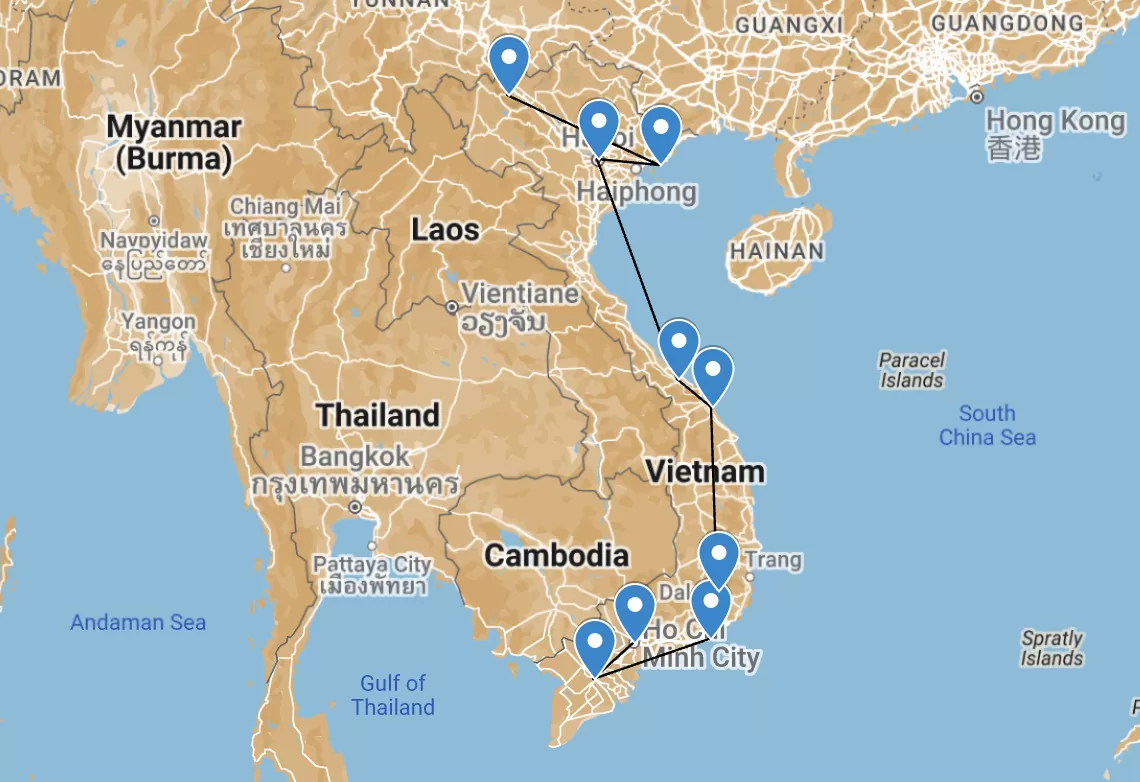
Here is the most popular vietnam itinerary 2 weeks format, built around the classic north-to-south vietnam travel route.
Your vietnam travel route begins in Hanoi, Vietnam's ancient capital.
Spend your first day exploring Hoan Kiem Lake, the Old Quarter's 36 streets, and the Temple of Literature. On day two, book a day trip to Ninh Binh — often called "Ha Long Bay on land" — for karst landscapes and ancient pagodas. Use day three for the Ho Chi Minh Mausoleum, West Lake, and a legendary bowl of bun cha for lunch.
Pro Tip: Book your Ha Long Bay cruise from Hanoi. A 2-night cruise is worth every cent and is a non-negotiable stop on any vietnam backpacking route.
Ha Long Bay is one of the world's UNESCO World Heritage Sites and the most iconic stop on any vietnam travel route. Cruise through limestone karsts, kayak in emerald caves, and watch the sunrise from the deck.
Budget travelers on a vietnam backpacking route can find quality 2-day/1-night cruises starting at USD 80–100. Mid-range options cost USD 150–200 and include much better food and smaller groups.
Fly or take the train from Hanoi down to Da Nang, then transfer to Hoi An — one of the most beloved stops on any vietnam trip plan.
Hoi An's ancient town glows with yellow lanterns every evening. Spend a morning getting custom clothes tailored (it's shockingly affordable), rent a bicycle to explore rice paddies, and take a cooking class using ingredients from the local market.
Hoi An earns its place on every vietnam travel route for a reason — it is simply magical.
Da Nang sits between Hoi An and Hue, making it an easy addition to your vietnam itinerary 2 weeks.
Rent a motorbike and ride the legendary Hai Van Pass — one of the most scenic coastal roads in Southeast Asia and a classic highlight of any vietnam backpacking route. The views over Da Nang Bay are extraordinary.
In Da Nang itself, visit the Marble Mountains, the Dragon Bridge, and My Khe Beach.
Hue is Vietnam's imperial city and one of the most underrated stops on the vietnam travel route.
Explore the Imperial Citadel, visit ancient royal tombs along the Perfume River, and eat bun bo Hue — the city's legendary spicy beef noodle soup. Hue's food scene alone justifies adding it to your vietnam trip plan.
Your vietnam travel route finishes in the south's powerhouse. Ho Chi Minh City (still called Saigon by locals) is chaotic, electric, and endlessly fascinating.
Visit the War Remnants Museum, the Reunification Palace, Ben Thanh Market, and the rooftop bars of District 1. On your last full day, take a day trip to the Mekong Delta to experience floating markets, river life, and fresh coconut candy being made by hand.
This 14-day vietnam travel route covers Vietnam's greatest hits without feeling rushed.
Planning a vietnam backpacking route is one of the smartest ways to see the country. Vietnam is incredibly affordable, and the backpacker infrastructure is among the best in Southeast Asia.
Here is how to stretch your vietnam trip plan further on a budget.
The Open Bus Ticket (also called a Sinh Tourist Bus Pass) is a classic tool for anyone building a vietnam backpacking route. The service operates from Hanoi to Ho Chi Minh City and its fare ranges between USD 30 and USD 45. You can travel to different locations according to your personal timetable.
The sleeper trains provide another excellent travel solution. The main cities in Vietnam receive rail service through Vietnam Railways and the overnight train between Hanoi and Da Nang has become a popular choice among Vietnam travelers because it offers comfortable and scenic yet affordable travel.
VietJet Air and Bamboo Airways offer budget flights that become available at prices below USD 25 when customers book their tickets ahead of time which makes these flights a cost-effective option for traveling across Vietnam.
Hostels in Vietnam provide exceptional value for their services. You will find dormitory beds in hostels throughout Vietnam backpacking route cities which cost between USD 6 and USD 12 per night and offer clean facilities and social environments and convenient locations.
The budget guesthouses known as "nha nghi" provide private air-conditioned rooms at a rate between USD 12 and USD 20 per night, making them an ideal choice for couples and travelers who want their own space during their Vietnam trip.
Budget traveler: USD 25–40 per day Mid-range traveler: USD 60–100 per day Comfort traveler: USD 120–200 per day
Beyond the classic stops, a complete travel vietnam guide reveals destinations that elevate any vietnam travel route from good to unforgettable.
Sapa is the crown jewel of northern Vietnam and an incredible addition to your vietnam travel route if you have extra time. Terraced rice fields, ethnic minority villages, and treks through Fansipan — Vietnam's highest peak — make Sapa a world-class destination.
Add 3–4 days before Hanoi on your vietnam itinerary 2 weeks extension.
This UNESCO World Heritage Site houses the world's largest cave system, including Son Doong Cave. Phong Nha sits between Hue and Hoi An on your vietnam travel route — a perfect overnight stop that most travelers skip and later regret.
If your vietnam trip plan includes beach time, Mui Ne is an easy add-on between Ho Chi Minh City and Da Lat. Famous for red and white sand dunes, kite surfing, and fresh seafood, Mui Ne feels worlds away from the city chaos.
For travelers willing to extend their vietnam travel route, Con Dao offers pristine beaches, sea turtle nesting grounds, and almost no tourists. Fly from Ho Chi Minh City in 45 minutes.
The average vietnam travel route transforms into a perfect path through these insider moves.
You should purchase Ha Long Bay cruises directly from licensed operators instead of using street agents who lack proper authorization. Your entire vietnam itinerary needs to be planned based on the different quality levels, which show how Vietnamese people present their country during that two-week period.
You need to carry Vietnamese Dong cash. Your backpacking route through Vietnam will lead you to street stalls and markets and rural areas where cash is the only accepted payment method.
Get a local SIM card on arrival. Viettel and Vietnamobile provide 30-day data plans with unlimited access for USD 5-8, which serve as essential tools for your Vietnam travel route.
When you visit temples and pagodas, you need to wear clothing that maintains modesty standards. The travel vietnam guide requires this behavior because it represents the basic requirement of respectful conduct.
Google Translate needs to be downloaded with Vietnamese offline capability, which allows users to see menus and signs through its visual translation feature.
Learn a few Vietnamese phrases. Your Vietnam travel plan becomes easier when you learn to say "hello" and "thank you" in Vietnamese, because it helps you build connections with others.
Travelers who have extensive experience with international trips commit the same mistakes that beginners make when they develop their Vietnam travel route. The country of Vietnam presents an extensive challenge to travelers who attempt to visit all its attractions within a two-week period. The two-week Vietnam itinerary will lead to traveler exhaustion because of its excessive schedule. The best travel experience comes from visiting five to six different locations while spending sufficient time at each site.
Backpackers in Vietnam tend to skip Hue because it takes too long to reach. Budget travelers often skip Hue to save time. The mistake lies in excluding Hue from your Vietnam travel route because its historical sites and culinary offerings and local atmosphere present unique experiences which you cannot find anywhere else in Vietnam.
Travelers need to book their return flights from Hanoi or HCMC with an open-jaw option. Your Vietnamese travel itinerary becomes less efficient because you need to retrace your steps.
Travelers make their route selection in Vietnam without considering weather conditions. The two regions of Vietnam experience opposite seasonal patterns. Weather conditions in each area should be checked before making the final date decisions.
The only dining option for me exists at restaurants which cater to tourists. Travelers who explore Vietnam should try street food which is available at plastic-stool street stalls that charge between USD 1 and 2 for each meal.
You must validate your visa before you reach your destination. The visa requirements for your nationality must be checked because Vietnam grants e-visas to most countries with different processing times which will apply to your home country.
The individual needs more time to travel than he estimated. The Vietnam travel route appears brief on the map yet actual travel times increase because of road conditions and ferry schedules and mountain passes.
The classic north-to-south vietnam travel route — Hanoi, Ha Long Bay, Hoi An, Da Nang, Hue, and Ho Chi Minh City — is ideal for first-timers. It covers Vietnam's most iconic destinations in a logical geographic order, minimizes backtracking, and works perfectly as a vietnam itinerary 2 weeks. This vietnam trip plan is recommended by virtually every travel vietnam guide for good reason.
The minimum duration for a meaningful travel route through Vietnam requires two weeks. The two-week Vietnamese itinerary enables travelers to visit all important sites without difficulty. The duration of three to four weeks permits travelers to experience Vietnam beyond its main backpacking routes and discover hidden locations such as Sapa and Phong Nha and Con Dao.
Vietnam ranks among Southeast Asia's most secure destinations which travelers can explore alone. The Vietnam backpacking route system offers complete development which provides social hostels and safe travel conditions because violent crime against tourists occurs infrequently. The Vietnamese travel route requires you to implement standard travel safety measures while you protect your belongings and use your gut feelings to decide what to do next.
The best time for traveling from northern Vietnam to southern Vietnam occurs between February and April. The northern region experiences cool dry conditions while the central area of Vietnam offers comfortable weather and the southern region maintains bearable temperatures until the arrival of its highest heat period. Your travel vietnam guide should always include a regional weather check, as Vietnam's diverse climate means no single month is perfect for every destination simultaneously.
Backpackers need to budget between USD 700 and 900 for a two-week travel schedule in Vietnam which excludes their airfare costs. The standard Vietnam backpacking route includes all essential expenses for accommodation dining transportation and activities. Mid-range travelers should budget USD 1,500–2,200. Comfort travelers can expect to pay between USD 2,500 and 4,000 for a complete Vietnam vacation package which includes upscale hotels and personalized tour experiences.
Most nationalities can obtain a Vietnam e-visa online for USD 25, valid for 90 days. Some nationalities receive visa-free entry for 15–45 days. The official Vietnam Immigration Portal must be checked by travelers who want to create their Vietnam travel plan to prevent unexpected border issues.
The Open Bus Pass together with overnight sleeper trains and budget VietJet flights serve as the three main transportation options which enable affordable travel through Vietnam. Your Vietnam trip plan will remain within a shoestring budget if you stay in dorm hostels and eat street food and book activities through local vendors instead of international platforms.
The Easy Rider route which operates through the Ho Chi Minh Trail functions as the main motorbike vietnam travel route through Vietnam according to experienced travelers. The motorbike journey between the northern and southern Vietnam requires a travel period of three to four weeks which enables riders to experience complete independence. The individual must possess driving skills for road navigation together with an international driving permit. The route stands as an unsuitable path for first-time backpacking through Vietnam because it exceeds the capabilities of beginner riders.
The complete food guide for traveling Vietnam includes: pho (Hanoi), bun cha (Hanoi), cao lau (Hoi An), mi Quang (Da Nang), bun bo Hue (Hue), banh mi (nationwide), fresh spring rolls, and com tam (Ho Chi Minh City). The topmost pleasure of traveling through Vietnam comes from tasting authentic regional dishes.
Both directions work well for a vietnam travel route. First-time travelers prefer North to south travel because Hanoi provides a gradual introduction to their journey. Travelers who visit during summer should choose South to north because it helps them escape the hot weather. Most travel vietnam guide experts suggest following the weather rather than a fixed rule when designing your vietnam travel route.
Vietnam delivers results which exceed the expectations that it establishes with its visitors.
A well-planned vietnam travel route brings visitors to discover historical sites together with natural beauty and top-quality food and authentic local hospitality. The main factor for success in your travel plans through Vietnam exists because you should organize everything before you begin yet remain open to new experiences while traveling.
Your travel guide serves as your starting point. Your travel route for Vietnam should be developed based on your personal interests and financial capacity and travel schedule. Select the locations that bring you excitement. Skip the ones that don't. Vietnam rewards flexibility.
The most important thing? The perfect moment does not exist so you need to begin your Vietnam trip planning process. Book those flights, create your Vietnam backpacking route, obtain this Vietnam travel guide, and get ready for an unforgettable journey.
Your email address will not be published. Required fields are marked *