The complete travel experience to multiple Asian countries can be achieved through proper trip planning. The problem most travellers face is not a lack of desire. The problem exists because they do not have proper organization systems. The Asian continent stands as the Earths largest continent which contains 48 nations and thousands of islands and multiple languages and various cultural experiences. The absence of a defined framework creates difficulties for travelers who want to organize a trip across multiple Asian nations.
The guidebook provides complete resolution to the existing issue. The guidebook contains everything you need for your first or fifth Asia multi country trip which includes the best Asia tour routes and multi destination travel Asia strategies and all necessary budgeting information and visa guidance and every travel Asia tip known to experienced explorers.
We will create your travel itinerary through a methodical process which will proceed through multiple stages.
An asia multi country trip is exactly what it sounds like: a single journey that passes through two or more Asian countries, connected by a logical travel route that maximises your time, minimises your costs, and maximises the diversity of your experience.
Unlike a single-destination holiday, a multi destination travel asia journey exposes you to contrasting cultures, landscapes, cuisines, and ways of life — often within the same two-week window that most people would spend on just one beach resort.
Midasia Routes specializes in turning this kind of ambitious travel vision into a reality. Whether you're dreaming of a Vietnam tour package or a sweeping Southeast Asia loop, our custom travel planning service builds your entire multi-country itinerary around your pace, budget, and travel style — so you spend less time planning and more time exploring.
Planning a multi country journey across Asia gives you advantages that single-destination trips simply cannot match.
Cultural depth in a single trip — You can experience the disciplined modernity of Singapore, the spiritual intensity of India, the ancient grandeur of Angkor Wat in Cambodia, and the tropical chaos of Bali within a single continuous journey. No other continent compresses this level of diversity into affordable, connected travel the way Asia does.
Outstanding value for money — Asia remains one of the most budget-friendly travel regions on Earth. An asia multi country trip through Southeast Asia in particular allows travellers to cover enormous ground for remarkably little money. Daily budgets of 30–60 USD are genuinely comfortable across much of the region.
Efficient use of long-haul flight costs — Flying from Europe, North America, or Australia to Asia is the single biggest expense of most Asia travel planning journeys. Once you are in the region, internal travel between countries costs very little — especially with the extensive low-cost carrier network that connects the continent.
Stories worth telling — Arriving home from a single-country trip is enjoyable. Arriving home from a well-executed asia multi country trip — with your passport stamped across six countries, your camera full of scenes from a dozen different worlds — is something else entirely.
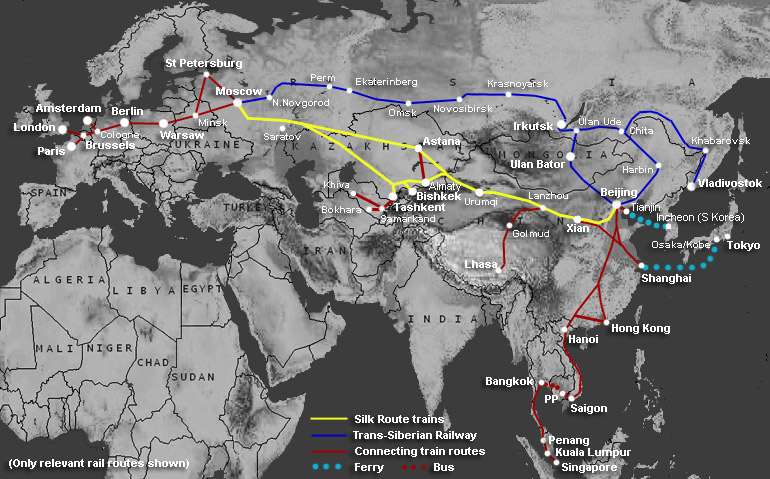
Image alt text suggestion: asia multi country trip route map Southeast Asia 2026
Good asia travel planning is not about booking every detail six months in advance. It is about building a flexible framework that keeps you on track without robbing you of spontaneity.
Asia is too large to cover in a single trip, so your first major asia travel planning decision is choosing your regional focus. The three primary regions for multi destination travel asia are:
Southeast Asia — Thailand, Vietnam, Cambodia, Laos, Indonesia, Malaysia, Singapore, the Philippines. This is the most popular region for first-time asia multi country travellers. Affordable, well-connected, English-friendly, and extraordinarily diverse.
East Asia — Japan, South Korea, Taiwan, China, Hong Kong. Higher cost but extraordinary depth. A Japan-South Korea-Taiwan asia multi country trip is one of the most satisfying combinations available in 2026.
South Asia — India, Nepal, Sri Lanka, Bhutan. Deeply rewarding, culturally intense, and increasingly accessible. Best for travellers who want transformative experiences over comfortable convenience.
Combinations — Many experienced travellers build asia tour routes that bridge regions — starting in Singapore (Southeast Asia gateway), flying to Tokyo (East Asia), then looping back through Bali.
The minimum realistic duration for a meaningful asia multi country trip is 14 days. Here is a realistic breakdown:
14 days — 2 to 3 countries comfortably
21 days — 3 to 4 countries with good depth in each
30 days — 4 to 6 countries, enough time to slow down and explore properly
60+ days — Full regional circuit; the classic backpacker asia tour route
The smartest asia travel planning strategy is to anchor your trip around hub cities with major international airports. Flying in and out of different cities (open-jaw flights) saves you enormous backtracking time and often costs less than returning to your origin.
Top hub cities for asia multi country trip planning:
Singapore (SIN) — The best gateway into Southeast Asia
Bangkok (BKK) — Budget airlines connect Bangkok to almost everywhere in Asia
Tokyo (NRT/HND) — Perfect for East Asia circuits
Kuala Lumpur (KUL) — AirAsia hub; one of the cheapest cities to fly into and out of
Hong Kong (HKG) — Strong connections across East and Southeast Asia
The heart of any asia multi country trip is its route. Here are the most proven, most rewarding asia tour routes in 2026, broken down by travel style.
Looking to extend your Southeast Asia circuit with an island escape? Our Philippines tour package and Sri Lanka tour package are natural add-ons for travellers who want to push their multi-country journey beyond the classic mainland route — both offering world-class beaches, rich culture, and exceptional value.
This is the gold standard first asia multi country trip for a reason — it works brilliantly.
Bangkok (Thailand) → Siem Reap (Cambodia) → Ho Chi Minh City (Vietnam) → Hoi An (Vietnam) → Hanoi (Vietnam) → Fly to Bali (Indonesia)
Day 1–4: Bangkok — temples, street food, Chao Phraya river
Day 5–7: Siem Reap — Angkor Wat sunrise, Bayon temple, floating villages
Day 8–11: Ho Chi Minh City and the Mekong Delta
Day 12–15: Hoi An — ancient town, tailor shops, lantern-lit evenings
Day 16–18: Hanoi and Ha Long Bay overnight cruise
Day 19–21: Bali — beaches, rice terraces, final unwinding
This asia tour route requires only budget airlines for all connections and averages 40–60 USD per day all-in for a comfortable mid-range experience.
For travellers who want a higher-budget, higher-intensity asia multi country trip.
Tokyo (Japan) → Kyoto (Japan) → Seoul (South Korea) → Busan (South Korea) → Taipei (Taiwan)
Days 1–5: Tokyo — Shibuya, Harajuku, Tsukiji, Akihabara, day trip to Nikko
Days 6–8: Kyoto — Fushimi Inari, Arashiyama bamboo grove, Kinkaku-ji
Days 9–12: Seoul — Gyeongbokgung Palace, Hongdae, DMZ tour, Korean BBQ
Days 13–14: Busan — Gamcheon Culture Village, Haeundae Beach
Days 15–17: Taipei — Shilin Night Market, Jiufen, Sun Moon Lake day trip
Budget for this asia multi country trip: approximately 120–180 USD per day (Japan in particular raises the average).
One of the most underrated asia tour routes available.
Delhi (India) → Jaipur (India) → Varanasi (India) → Kathmandu (Nepal) → Bangkok (Thailand) → Chiang Mai (Thailand) → Bali (Indonesia)
This asia multi country trip spans three distinct cultural universes — the ancient subcontinent, the Himalayan highlands, and the tropical island world of Southeast Asia. It is demanding, extraordinary, and deeply transformative.
Budgeting is one of the most searched aspects of asia travel planning, and the answers vary enormously depending on your route and style.
Achievable across most of Southeast Asia. Covers:
Hostel dorm or basic guesthouse accommodation
Street food and local restaurant meals
Public transport and shared transfers
One paid activity or entrance fee per day
Budget airline internal flights (booked in advance)
A 21-day Southeast Asia asia multi country trip at this tier costs approximately 630–1,050 USD on the ground, plus international flights.
The sweet spot for most travellers planning a multi destination travel asia journey. Covers:
Boutique guesthouses or 3-star hotels
Restaurant meals with occasional splurges
Private transport on longer routes
Regular paid activities (cooking classes, boat tours, temple tickets)
Comfortable seat or budget business class on internal flights
A 21-day mid-range asia multi country trip costs approximately 1,470–2,520 USD on the ground.
High-end resorts and private tours and fine dining options remain accessible throughout Southeast Asia. Most travelers from India expand their travel plans to include Japan and Singapore as their primary destinations.
A solo traveler who visited three Southeast Asian countries Thailand Vietnam and Cambodia and Bali during 2025 spent 1800 USD for his entire trip throughout the 21 days while traveling at mid-range comfort.
The travel asia tips which experienced travellers developed through their actual experiences are essential for completing any guide that covers multiple Asian countries.
Travelers should choose open-jaw flights which allow them to fly into one city and leave from another city to avoid expenses and wasted time that comes with backtracking. An open-jaw flight for your asia multi country trip (fly into Bangkok, fly home from Bali) typically costs only slightly more than a return ticket and saves you days of retracing your steps.
Use low-cost carriers for regional connections -- AirAsia Scoot Jetstar Asia VietJet and Cebu Pacific connect virtually every major destination on a Southeast Asia multi country trip for 20-80 USD per flight if booked in advance.
Apply for visas before you leave -- Some countries on popular asia tour routes require advance visas that cannot be obtained on arrival. Vietnam's e-visa and India's e-visa and certain Cambodian visa situations all require advance planning. Build visa deadlines into your asia travel planning calendar.
Travelers should bring multiple payment methods which include a Wise card and a Visa credit card and local cash because this combination works best for their asia multi country trip. Travelers should not depend on one credit card because ATMs in that area have unpredictable operational patterns.
Travelers should plan their packing according to their entire journey. An asia multi-country trip which includes beach destinations mountain trekking and city exploration needs proper packing strategies. A 40-litre carry-on bag is almost always sufficient and eliminates checked baggage fees on budget airlines.
Travelers should use overnight transport because it offers them the most efficient way to travel between their destinations. Overnight trains (Vietnam's Reunification Express) and overnight buses (Thailand to Cambodia, Thailand to Laos) save both money and accommodation costs on a tight asia multi country trip schedule.
Get travel insurance that covers the entire route -- Single-country travel insurance will not serve you on an asia multi country trip. Purchase a regional or worldwide policy that explicitly covers all countries on your itinerary.
Here is what separates a good asia multi country trip from an extraordinary one.
Instead of linear point-to-point routing, experienced asia multi country travellers often use a hub-and-spoke model. Choose one or two hub cities (Bangkok, Singapore, Kuala Lumpur) and use them as bases for shorter excursions before moving on.
This works particularly well because:
Budget airline prices are lowest from major hubs
Accommodation in hub cities is plentiful and competitively priced
You maintain a home base to store large bags while exploring lighter
Missed connections and delays have less catastrophic effect on your overall asia multi country trip
The most interesting asia tour routes mix modes of transport. Flying everywhere is efficient but strips the journey of texture. The Mekong River slow boat from Thailand to Laos, the train from Bangkok to Chiang Mai, and the ferry from Malaysia to Sumatra are all experiences that are themselves part of the asia multi country trip, not just logistics.
The peak season for every main Asia tour route occurs at specific times. The peak tourist season for Thailand's islands occurs between December and March. The hotel rates and visitor numbers to Japan double during the cherry blossom period which lasts from late March to early April. The ideal travel period for Vietnam's central coast extends from September to January.
The intelligent method for planning Asia trips involves creating multi-stop travel routes which lead to each destination during its shoulder season because this approach reduces expenses while delivering authentic experiences of each location.
Singapore, Hong Kong, and Tokyo's Narita airport all offer worthwhile layover programs. Changi Airport in Singapore serves as a travel destination because travelers can explore the entire city-state during a 24-hour layover which requires no extra flight costs. Your Asia multi-country trip routing will provide you with additional travel stops through extended layovers.
Learning from others' errors is one of the most valuable travel asia tips available.
Over-scheduling the itinerary — Trying to visit too many countries in too little time is the single most common mistake on an asia multi country trip. Spending three days in each of seven countries produces exhaustion and shallow experiences. Fewer countries, more time equals a better journey.
Ignoring visa lead times — India's e-visa takes up to 72 hours to process. Some countries require embassy visits weeks in advance. Building your asia multi country trip itinerary without checking visa requirements first can derail the entire journey.
Booking all accommodation in advance — Booking your first and last night in each country is wise. Booking every night months in advance removes flexibility, locks you into decisions made before you understood your preferences, and often prevents you from staying longer somewhere you love.
Underestimating internal transport time — Asia is large. Vietnam alone is 1,650 kilometres from north to south. Routing your multi destination travel asia journey without accounting for transit days leads to exhausting overnight buses and missed experiences.
Changing too much money at airports — Airport currency exchange desks across Asia consistently offer the worst rates available. Use ATMs in city centres or use a Wise/Revolut card for your asia multi country trip financial management.
Packing for one climate only — An asia multi country trip that covers Japan (potentially cold), Vietnam (variable), and Bali (tropical) requires layering capability. Travellers who pack only beachwear regret it by Day 4 in Kyoto.
Neglecting health preparation — Different countries on your asia tour route require different vaccinations and health precautions. Consult a travel medicine clinic at least six weeks before departure to ensure your asia multi country trip health preparation is complete.
The optimal travel schedule for Asian countries requires three countries to be visited during a period of 21 days. The travel experience provides sufficient diversity to create an authentic multi-destination Asia travel experience which enables visitors to explore their complete destinations. The Thailand-Vietnam-Bali route serves as an ideal introductory Asian tour because budget airlines connect all three countries while first-time visitors can freely explore the distinct experiences each country provides. The first Asia multi-country trip requires travelers to avoid adding more countries because they should focus on exploring each destination in depth.
Southeast Asia consistently provides the most economical options for multi destination travel throughout Asia. A traveler needs to spend between 35 and 45 USD daily to travel between Bangkok, Siem Reap, Ho Chi Minh City, and Hanoi. Travelers can access economical ground transportation between these cities through buses and trains and budget flights, which become cheaper when they make early bookings. The Asia tour route from Western countries to Bangkok offers budget travelers the most attractive option because international flights to that city are among the lowest priced in the region.
The most essential travel advice for Asia needs to be understood through this principle. The comprehensive travel insurance policy must provide coverage for all countries included in your Asia multiple country travel itinerary. The policies which advertise themselves as "worldwide" or "Asia-wide" automatically include multiple Asian travel destinations, but users must verify each nation's coverage through the policy's detailed documentation. The policies restrict coverage to specific countries which have active travel advisories, so people need to verify government travel warnings for all their travel locations before they buy insurance.
The period from November to February provides optimal travel conditions for Southeast Asia because it offers cool and dry weather throughout Thailand and central and northern Vietnam and Cambodia. The time period represents peak tourist activity according to current travel patterns. The period from late April to June in Southeast Asia and from September to October in East Asia serves as the ideal time for travelers who want to experience good weather while paying lower travel costs.
Traveling multiple Asian countries becomes most efficient through using multi-currency cards from Wise and Revolut as primary payment methods which people should use together with withdrawing local cash from ATMs. Border crossings should not involve travelers carrying large amounts of any single currency because exchangers provide unfavorable exchange rates at those locations. Travelers should obtain a small amount of the next country's currency before their arrival by using an ATM located in the city center which they should visit before their departure day.
For Southeast Asia, booking individual budget airline flights separately is almost always cheaper than purchasing packaged multi-destination airfares. You can create custom Asia tour routes through Google Flights Skyscanner and the AirAsia website which provide you with their lowest available prices. The Japan Rail Passes and airline multi-city booking tools in East Asia which includes Japan and South Korea provide travelers with actual savings compared to purchasing individual tickets.
Yes, absolutely — but manage your expectations carefully. A 14-day asia multi country trip works best with two or three countries and minimal movement. The 14-day itinerary in Southeast Asia includes three travel options which are a Japan-South Korea circuit and a Thailand-Cambodia-Vietnam sprint and a Singapore-Bali-Malaysia triangle. The primary guideline for traveling in Asia during brief trips requires travelers to choose air travel instead of ground transportation and to avoid including additional destinations which serve only as passport stamp collection points.
The different vaccination requirements between countries and individual vaccination requirements create the need for professional travel guidance instead of online research. The standard vaccination recommendations for a Southeast Asia multi-country trip include Hepatitis A and Typhoid vaccines together with all current required immunizations. Some itineraries that include rural areas of Nepal and specific border regions of Southeast Asia will require travelers to get Japanese Encephalitis and Rabies pre-exposure and Malaria prophylaxis vaccines. You should visit a travel medicine clinic at least six weeks before your asia multi country trip departure.
Most countries which tourists visit through established Asian travel routes provide safe conditions when visitors follow normal security measures. The safest countries in the world maintain their position as Singapore Japan Taiwan and South Korea. The established tourism destinations of Thailand Vietnam Bali Indonesia Cambodia and Malaysia provide safe conditions which enable travelers to visit multiple Asian countries. The primary risks which exist throughout the region include petty theft and traffic accidents and tourist scams which people can control through their basic knowledge and through following proper travel tips for Asia.
For a Southeast Asia asia multi country trip, booking international flights 3–4 months in advance secures good prices without requiring premature commitment to a rigid itinerary. For East Asia (especially Japan during cherry blossom or autumn foliage seasons), book 5–6 months in advance as accommodation and bullet train tickets sell out early. Internal budget airline flights across Southeast Asia can often be booked 4–8 weeks out at excellent prices. Your asia travel planning timeline should always start with international flights and work backwards from there.
The most diverse continent on Earth is currently unoccupied by visitors and the best way to explore it remains an Asia multi-country journey. The path which offers the most complete and valuable travel experience serves as the best way to discover the region.
The same process starts every amazing Asia multi-country journey when a person decides to start the trip. The route requires improvement while the budget needs modification and the itinerary needs development. Your commitment to travel begins at the specific moment you choose to embark on your path.
The guide provides you with development resources which include the Asia tour routes and the Asia travel planning frameworks and the multi destination travel Asia strategies and the travel Asia tips which experienced travelers use.
The only remaining question now is which country will you visit first when you arrive.
Your email address will not be published. Required fields are marked *