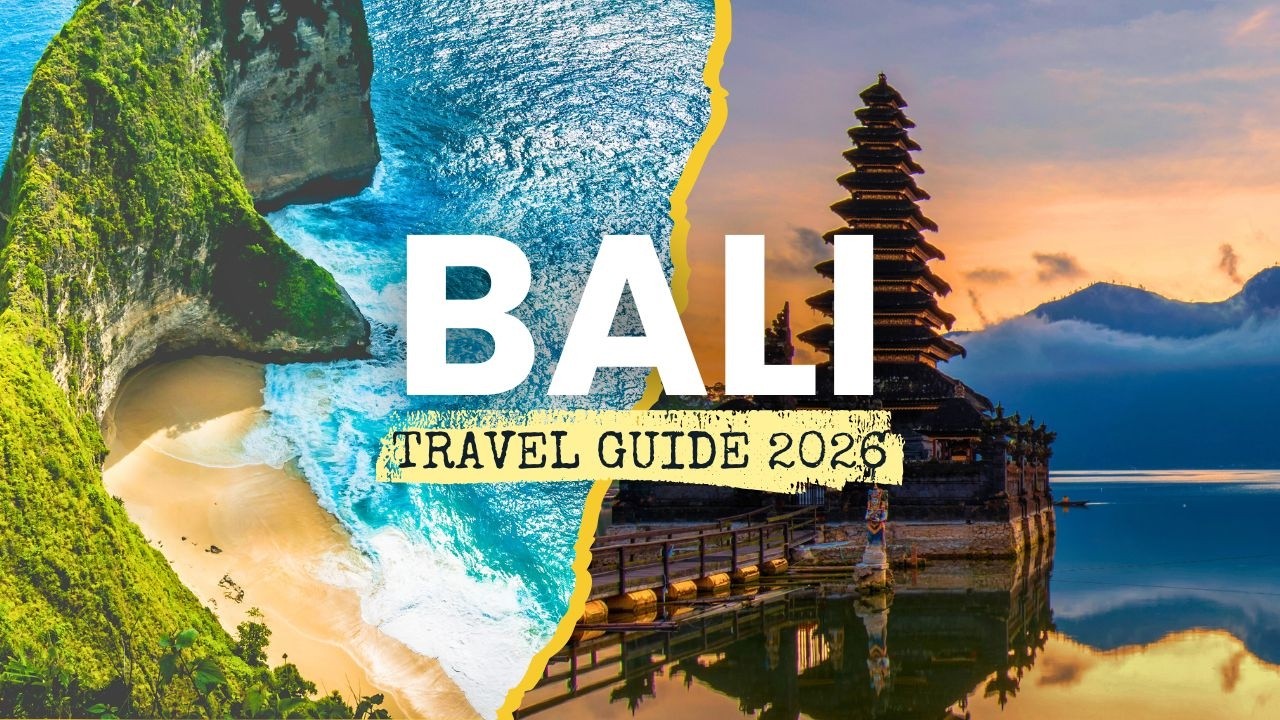
If you want to wake up in rice terraces and surf before breakfast, spending too much more than a couple bucks on really good nasi goreng – this Bali travel guide 2026 is for you.
It is no wonder that Bali is one of the most popular islands in the world. However, after the pandemic when tourism is recovering stronger than ever, the problem is facing the majority of tourists whether it is the first time or the fiftieth: how can you see the authentic Bali and not end up with a tourist trap, integrate yourself in the place, reach the places that truly make this island special and not spend all your money?
This Bali travel guide 2026 tackles the above issues. From comprehensive Bali beaches review to unfrequented by most tourist attractions such as temples, from prudent Bali holiday plan that suits every pocket to paramount Indonesia travelling advice to help you reduce expenditure and get rid of hassle – it is all here.
To make your journey smoother and more personalized, Midasia Routes helps travelers plan efficient Bali itineraries, discover hidden gems, and manage their travel budget without missing out on authentic experiences.
Irrespective of your preference, whether you are adventurous, married, away from home due to work commitments, or perhaps visiting the Island of the Gods with family for vacation, this guide will enhance your understanding of how to travel this island efficiently without necessarily throwing away every coin into the sea.
Prior to getting into the nitty-gritty of planning your Bali holiday, one has to of course know what to expect in Bali in 2026.
Planning a multi-country Southeast Asia trip? Midasia Routes also offers expertly curated Vietnam tour packages and Philippines tour packages that pair perfectly with a Bali holiday for travelers looking to explore the wider Asia Pacific region in one seamless journey.
Bali – is not a singular destination; it is several distinct worlds rolled into one island that is nearly the size of the state of Delaware. In the south, it is mainly modern, noisy, surfing, and filled with nightclubs. Central parts of the island are artistic, cultural, religions and lush. The north and east are untouched, raw and best for those adventurous people looking for hidden Bali out of the reach of any influencer’s Instagram. Here is the bali travel guide 2026 article.
Bali is part of Indonesia, and your passport must be valid for at least six months from your date of arrival
Most nationalities receive a free 30-day visa on arrival, extendable to 60 days
The official currency is the Indonesian Rupiah (IDR); always carry cash for smaller warungs and markets
Bali has one international airport: Ngurah Rai International Airport (DPS), located in Denpasar
The island operates on Central Indonesia Time (WITA), which is UTC+8
Understanding these basics is the foundation of every successful Bali travel guide, and getting this right before you book will save you enormous headaches.
One of the most common questions in any Bali travel guide 2026 is simply: when should I go?
Bali is famous for its itinerary any time of year, but this is the golden season. Clear blue skies, bestly waves on the western beaches (Kuta, Seminyak, Canggu) and open-air dances of the temples. Obviously, the number one and two places in July and August are the worst in terms of arrival, prices and accommodation availability unless one makes prior arrangements.
The phrase 'wet season' usually brings with it a bad connotation. Sure, it rains – in the afternoons for a short intense period rather than pouring rain the entire day as is usually assumed. The prices fall greatly, the number of people around drop, and the island becomes an unfathomable green. Wet season in Bali has to be commended for the bargain seekers or those interested in discovering the island without being invaded by tourists and their guides.
Here is something you didn’t hear from this bali travel guide 2026: if you want pleasant weather, a bearable tourist population, and the benefits of lower tourist rates, then the months in between April, May, and September are the best.
There is no such a thing as a complete bali travel guide 2026 without a well-designed Bali itinerary. Let's present three options, depending on how much spare time one has got. The first one is quite short, the second one – a little bit longer, while the third one will take at least a month or so.
No two travelers are the same, and neither should their itinerary be. Midasia Routes specializes in custom travel planning — crafting private, personalized Bali and Southeast Asia itineraries built entirely around your pace, budget, and interests.
Days 1-2: South Bali - Seminyak and Canggu Arrivals & Acclimatization Welcome to the south of Bali. Soak in the vibes of this more relaxed region while getting over the jetlag. Visit stunning beach lounges around Seminyak, have a fruity bowl in Canggu, and on the Second Day, enjoy the Tanah Lot temple’s beach hit upon twilight.
Day 3-4: Ubud - the Real Bali Head North towards Ubud. Go to the Sacred Monkey Forest, hike the Campuhan Ridge, shop at the Ubud Art Market, with its local crafts, and enjoy a traditional Kecak fire dance in the evening.
Day 5-6: East Bali - Volcanoes and Temples Wake up bright and early for the dawn ascent of the famous Mount Batur, go to Besakih to see the Mother Temple, then take the rest of the afternoon off at the dark sandy beaches of Amed.
Day 7: Time For the South of Bali Again Head back to the South, go shopping for presents at the Seminyak markets, and begin preparing to leave.
Add to the 7-day plan:
Day 8: Drive to the Bukit Peninsula for Uluwatu Temple, cliff-top views, and Padang Padang Beach
Day 9: Head to Nusa Penida for a day trip — Crystal Bay, Kelingking Beach, and Broken Beach are the highlights of this spectacular island
Day 10: Slow morning in Seminyak, final beach session, departure evening
Add to the 10-day plan:
Days 11–12: North Bali — Lovina beach, dolphin watching at sunrise, Gitgit waterfall, and the Handara Gate (the iconic split gate surrounded by highland mist)
Days 13–14: West Bali National Park for snorkelling around Menjangan Island, then a final relaxation day back in Seminyak
This Bali travel guide 2026 recommends a minimum of 10 days to experience the island with any real depth.
Every prior travel to Bali should recommend an exceptional tome of Bali beaches. This is because the city’s beaches are as varied as explicable. Each of the beaches has its own character and its own ring of devotees.
persever is indispensable in Bali. Every bali travel guide 2026 emphasizes that in one way or the other.
Kuta Beach — The classic among Bali beaches. It is a good spot for learning to surf. It has good vibe related to watching the sun set and also people. Very busy but not less iconic.
Seminyak Beach — A more polished version of Kuta beach that is less busy. Where you will find beach clubs and also the best setting sun of the island.
Canggu Beach (Batu Bolong) — A bali travel guide 2026 should make mention of this area as the hub of digital nomads and surfing lovers in Bali. Good waves, better coffee, best memes ever!
Padang Padang – A small cove that has a rocky entrance and gained popularity because of the “Eat, Pray, Love” film. Come in advance because it will get crowded.
Balangan Beach – Bali travel guide 2026 is what this spot is considered as far as beaches are concerned. A seemingly deserted stretch of white sand next to bluff. Low tide looks beautiful.
Bingin Beach – An excellent left barrel breaking wave. This is one of the beaches that experienced surfers prefer and find hidden souks in Bali.
Amed – Black volcanic sand. Snorkeling is perfect right from the shore. Old Bali nostalgic slowness of life.
Virgin Beach (Pasir Putih) – Turquoise white-sand Beach not far from Candidasa that lies down an uneven road on the way, one of the treasures of east Bali.
Images alt- text proposal: bali travel guide 2026 — pure white sand – Balangan Beach in Bukit Peninsula
Every Bali travel guide 2026 worth reading goes beyond the obvious. Here are the Bali hidden places that experienced travellers seek out.
Although all tourists head straight to Ubud, the area of Sidemen East is quiet — a valley with stepped rice fields, ancient weaving villages, and views of Mount Agung that can literally make you want to stop walking. Cheap guesthouses are available here where you can stay and spend less than the average price of accommodation in Bali, which is twenty one US dollars, and wake up in utter silence, which is becoming hard to find in Bali.
Most tourists flock to Tegenungan Waterfall. Smart tourists go to Tibumana, a twin waterfall located near Bangli, which hardly attracts any of the crowds and is accessible by a simple and delightful trek through the jungle and fields of rice.
The island of Nusa Penida has lost its charm and become more popular over the last few years, but Tembeling — a hidden freshwater pool so far inland that the most accessible way of exit seems to be through the trees – still counts among the best kept secrets of the region.
Surely, of course, people seem to already be exhausted by seeing these recent images of Gates of Heaven, but if you get there before 6am, you can actually practically have the whole temple to yourself. The drive to the temple through fogging hills is also and actually worth the sacrifice of an early morning.
There is a small village by the sea not far away from Tejakula, a sound of cameras clicking with every hand gestures of annihilation, as the people of this history teach the same greetings in the same way. The salt farmers start their day at the break of dawn in a dirty yellow shade of light and this is some of the activities that this bali travel guide 2026 joyride offer in its truest form.
Great Indonesia travel tips are the difference between a stressful trip and a seamless one. Here is what you genuinely need to know.
Always withdraw cash from airport ATMs upon arrival (better rates than currency exchanges)
A comfortable mid-range daily budget in Bali in 2026 runs approximately 50–80 USD, covering accommodation, food, transport, and one activity
Budget travellers can live well on 30–40 USD daily if they eat at warungs and stay in guesthouses
Luxury travellers should budget 200–500+ USD daily for villa stays and fine dining
Renting a scooter (around 5–8 USD per day) is the most efficient and authentic way to explore Bali, but only do so if you are an experienced rider
Grab (the Southeast Asian equivalent of Uber) works well in south Bali and Ubud
Private drivers cost roughly 50–70 USD for a full day and are excellent value for long multi-stop days
Do not drink tap water — ever
Apply sunscreen generously; the equatorial sun in Bali is genuinely intense year-round
Carry travel insurance that covers motorbike accidents (one of the most common causes of traveller hospitalisation in Bali)
Respect dress codes at temples — always carry a sarong
Remove shoes before entering a home or temple
Use your right hand for giving and receiving items
Never touch someone's head
Do not step over temple offerings (canang sari) placed on the ground — walk around them
These Indonesia travel tips alone will make you a more respectful and better-prepared visitor.
This Bali travel guide 2026 would be incomplete without a dedicated section on minimising your airfare — often the single biggest expense of the trip.
Following the historic trend and looking at the forecast for the 2025-2026 scheduled flights, the cheapest tickets for flights to Bali can be bought on Tuesdays and Thursdays. In contrast, Fridays and Sundays are generally the most expensive days for tickets since there is a demand for holiday travelers on those days.
International flights: Book 3–5 months in advance for the best prices
Domestic connections (e.g., Kuala Lumpur or Singapore to Bali): Book 4–8 weeks out
Singapore (SIN) → Bali is one of the most competitive short-haul routes in Asia
Kuala Lumpur (KUL) → Bali with Air Asia is consistently affordable
Sydney and Melbourne → Look for Jetstar and Scoot promotions
Expert Tip: Use Google Flights' price calendar view to identify the cheapest travel window across an entire month. Shifting your departure by even two or three days can save 150–300 USD on international return tickets.
Almost all bali travel guide books will often include ubud and kuta. Here is what these well researched sources ignore.
Canggu – The New Wave of Digital Entrepreneurs
Canggu has fast turned into one of the most popular digital nomads’ destinations in South East Asia. Bali now has a Digital Nomad Visa (which some call Second Home Visa) in 2026 and workers can legally keep residing and working on the island for a maximum of 5 years. This wil come handy if you will remain in the area longer than a tourist.
Bali Goes for Responsible Tourism
2026 sees Bali escalate its fight against overtourism. All fascinates and each arriving foreign tourist brings an extra charge of a tourist $10 US used to fund conservation and cultural preservation activities. In addition, environmentally friendly tourists should not only use reusable bags in place of plastic bags (Bali regulations do not permit) but book in host managed hotels nearby and join the local community run beach clean ups conducted by ngos such as Bye Bye Plastic Bags Bali.
Bali Off-Season Surfing
Once it gets to rainy seasons that begin in November down to March, the wind shift and turns the coast of the east part of the Island into heaven for surfers especially around areas such as Amed and Keramas where one can find a reef having ones of the best right-hand wave suitable for surfing given that none of the most popular bali travel guide 2026 really would talk about that change of surf.
Underestimating traffic — South Bali traffic, especially around Canggu and Seminyak, can be severe. Always allow double the estimated travel time during morning and evening hours.
Booking only south Bali — Staying exclusively in Kuta or Seminyak means you miss 80% of what makes Bali extraordinary. Build a Bali itinerary that includes Ubud and at least one other region.
Ignoring the rainy season — Many travellers avoid the wet season unnecessarily and pay peak-season prices as a result. Strategic wet season travel offers dramatic savings and far fewer crowds.
Not negotiating — In markets and with freelance drivers, gentle negotiation is expected and respected. The first price quoted at a market is rarely the final price.
Disrespecting temple dress codes — Turning up to a temple in shorts without a sarong will result in being turned away. Always carry a sarong.
Trusting only Google Maps for directions — In rural Bali, Google Maps frequently routes you down unpaved or non-existent roads. Ask locals for confirmation on longer drives.
Skipping travel insurance — This is the single most dangerous mistake any traveller can make in Bali. Medical evacuation from Indonesia can cost tens of thousands of dollars without coverage.
Yes, indeed travel to the Bali destination is safe for the solo female travellers. The local culture of the Balinese in such a way that women are highly revered. Just as it is in any place, general safety principles apply, such as remaining in the well-lit places at night, using the more reliable transport apps in the market i.e. Grab other than hailing cabs from streets, and listening to your inner feelings. As per various bali travel guide 2026, Ubud in particular, is often admired by numerous solo women travellers as the most friendliest place in the world.
When it comes to the question of where to stay, the answer depends on an individual’s preferences for travelling. As per the bali travel guide 2026, Seminyak is a place that can be recommended to those who love the seaside, as well as fine dining in high-end establishments and entertainment. Ubud – culture, wellbeing and environment. Canggu – distance working and board ridings. Amad – diving and an even more peaceful and real Balinese life. First time tourists usually have no problem splitting their stay between Ubud and Seminyak.
In the bali travel guide 2026, the total daily expenditure depends on the individual's spending power. The general expenditure for budget backpackers per day is 30–40 USD on a guesthouse and meals (Warongs), plus renting a scooter. 70-100 USD per day would suit midrange travelers, who would stay in a boutique hotel, eat out, and have some excursions. 200 USD and more will be for the rich travelers who will stay in villas with private pools and indulge in some extra ordinary services.
Most individuals, mainly those from regions such as the USA, UK, Australia and many European countries, tend to gain a Visa on Arrival which is free and extends for 30 days and can be prolonged up to another 30 days upon payment. Nonetheless, there are nationalities that will need to obtain a visa beforehand. It is, therefore, your duty to ascertain your country’s requirements from the main Indonesian immigration website prior to making any reservations.
According to this bali travel guide 2026, it is suggested to visit Sidemen Valley for clear paddy fields, Tibumana Waterfall for a no crowd swim or swimming holes, Les Village in North Bali for pure culture, Tembeling Natural Pool which is unique on the island of nusa penida. Travelers who look beyond the common tourist routes will appreciate these hidden gems in Bali.
The recommended 10-day itinerary for Bali includes two days within the south of the island (either Seminyak or Canggu), a couple of days in Ubud, a whole day on Mount Batur and its surrounding attractions, a couple of days on Bukit Peninsula beaches, a day on Nusa Penida, and two days to take a break or to slow down in your favorite part of the island. This particular format allows one to feel the essence of the entire range of the island.
From April to October, weather stability is at peak and surfing on west coast over this period is equally best. However, May, June and September are the best months as they come with favorable situations but without crowded places like in July and August. Conversely, the wet months from November to March will cost less and the surroundings are covered with greenery that will suit the interests of tourists who travel on tight budgets.
Yes, of course. Bali is an ideal long haul destination. Children are very accommodating in any Balinese homes or establishment. For instance, taking a monkey forest tour in Ubud and visiting the major leisures of Bali Safari and Marine Park situated in Gianyar or indulging in athri-sport rides in Tanjung Benoa or training the little ones to cook special dishes. Family services, or even better spacious home quateshire with a swimming pool are available at affordable rates.
The most important Indonesia travel guidance for those visiting for the first time will include: always have cash with you, refrain from consuming tap water, always pack a sarong for temple outings, organise airport transfers in advance so as to avoid any conning, use Grab for city transportation and lastly, ensure you are well insured, travel wise, prior to departure. Following these basic steps would break more than ninety five percent of the barriers that one may face in the rest of their trip.
The beaches in Bali are different in their diversity, which is not the case in other parts of Indonesia. On the Bukit Peninsula, the beaches are hidden in high cliff enclosed white sand bays. In East Bali, there are dark volcanic beaches with great snorkeling opportunities. The northern coast has gentle and warm waters suitable for children. There is something for everyone on every coastline and this is the reason a bali travel guide 2026 on the beaches is not just about the nearest sand.
Bali in 2026 is a turning point – it is more integrated and more conscious, with a depth and complexity that has a new quality. It appreciates those who do their homework, those who travel a little deeper than a postcard picture, and those who strive to experience the place they are visiting and not just photograph it.
The present bali travel guide 2026 gives you power to record a voyage of your own: an itinerary of Bali that allows some time, a Bali beach guide that absolutely eats the famous beachs, a travelogue of hidden Bali secrets that should make have a great time, traveling Indonesia tips filled with numerous hints and recommendations.
The Islands of the Gods has created a framework where millions of tourists have enjoyed themselves and filled countless pages of preview sticker books. Take the necessary steps to become one — equipped well, this Bali travel guide 2026 at the ready — and you are indeed prepared to do just that.
Whether you're ready to book or still exploring options, the Midasia Routes team is here to help you plan every detail. From group travel expeditions for those who love shared adventures to fully private bespoke journeys designed around your travel DNA — contact us today and let's build your perfect Bali trip together.
Your email address will not be published. Required fields are marked *