Oman is one of the few Gulf destinations where US passport holders have been able to arrive without a visa for stays of up to 14 days, yet 2026 has made planning an Oman tour from the USA a more careful exercise than it was a year ago. The US State Department currently rates Oman at Level 3, Reconsider Travel, citing regional armed conflict and terrorism risk. Any honest guide has to start there, and then explain what travelers can actually do with that information.
This guide is for American travelers who are weighing a tour to Oman and want a clear picture of the safety context, entry rules, best season, regions and planning steps before they commit. It also explains what a well-paced 12-day private journey covers, so you can judge whether Oman fits the trip you have in mind.
The Level 3 advisory reflects the wider situation in the Gulf and Red Sea region, including the threat of drone and missile attacks linked to the US and Iran hostilities that began on February 28, 2026, and a general risk of terrorism. Reports from October 2026 say that Omani tourist areas have not seen large-scale attacks and that Muscat International Airport was operating normally, but regional events have caused short-notice schedule changes elsewhere in the Gulf.
Level 3 is a warning, not a ban, and it is a decision each traveler has to make with current information. These steps help you make that decision responsibly.
A private tour operator should review current conditions before and during the trip and adjust routes, hotels and timing as needed. No journey is risk-free, and if the advisory worries you, postponing is a reasonable choice.
US passport holders have been able to enter Oman without a visa for up to 14 days, provided they meet the entry conditions. These typically include a passport valid for at least six months, a confirmed hotel reservation, a return or onward ticket, health insurance and proof of sufficient funds. The 14 days cannot be extended or converted into another visa.
For longer stays, apply for a tourist eVisa through the Royal Oman Police portal before you travel. A single-entry eVisa for 30 days costs about 20 Omani rials, which is roughly US$52, and a one-year multiple-entry eVisa is higher. Our 12-day itinerary fits inside the 14-day window on paper, but many travelers prefer an eVisa for the extra margin if flights shift. Entry rules change, so confirm eligibility on the official Royal Oman Police website before booking.
The best season to visit Oman for most of the country runs from October to April. Temperatures are comfortable for sightseeing, desert camps are pleasant at night and mountain villages are cool in the evenings. Summer is very hot in Muscat and the interior, which makes outdoor touring uncomfortable between May and September.
The south behaves differently. In Salalah, the Khareef (monsoon) season, usually from June to September, turns the hills green and brings mist and light rain. If green landscapes matter more than desert heat, a summer visit to Dhofar can work, but it is a different trip from the classic autumn and winter tour. Check the Ramadan calendar when you choose dates, since opening hours and the pace of daily life change during the month.
Our 12-day Oman journey links four parts of the country at a comfortable pace: coastal Muscat, the desert and mountain interior, heritage villages and the Frankincense Coast around Salalah. Here is how each region adds to a well-balanced trip.
Muscat is a low-rise city between mountains and sea, with white buildings, forts and a long corniche. The Sultan Qaboos Grand Mosque is the main cultural landmark, and the old souk at Mutrah is the place for frankincense, silver and textiles. Spending the first days here lets you adjust to the time change before heading inland.
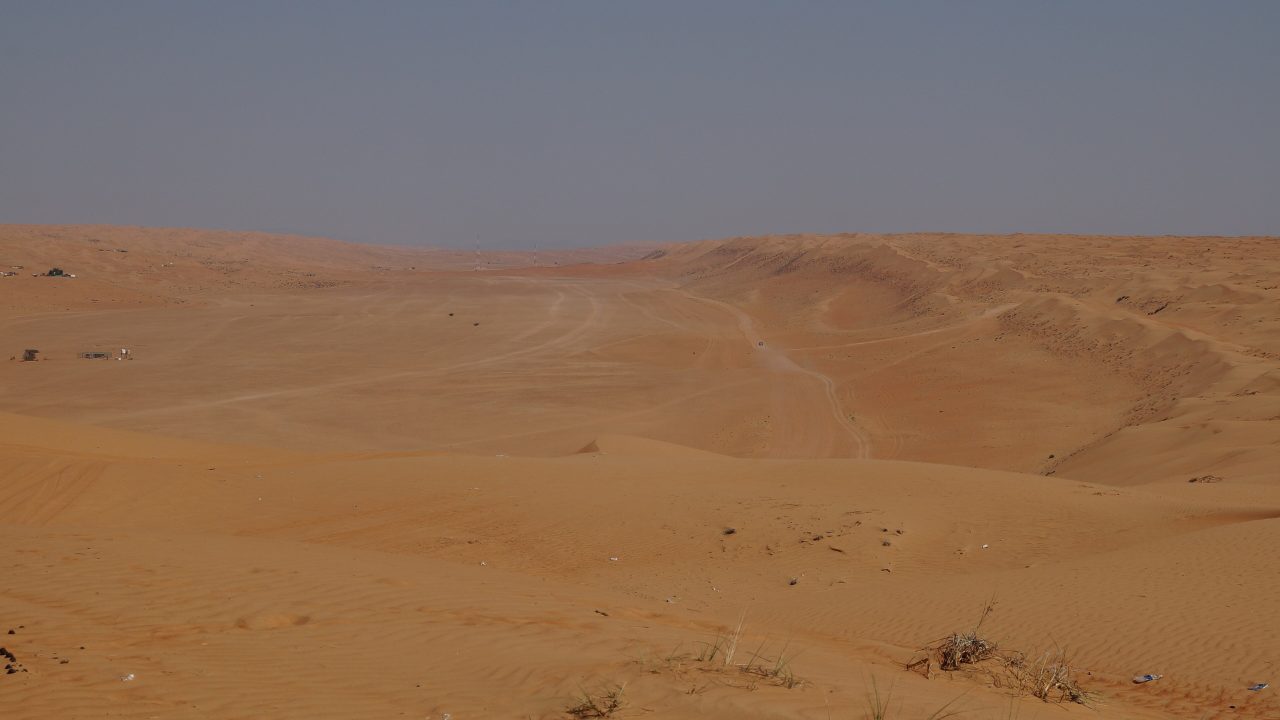
Wahiba Sands is a sea of golden dunes that changes color from morning to dusk. A night at a desert camp brings dune views, stargazing and a chance to meet Bedouin communities who have lived in this landscape for generations. Camps range from simple to very comfortable, so tell your operator what level you prefer.
Jebel Akhdar, the Green Mountain, climbs through terraced gardens and traditional villages where roses, pomegranates and walnuts grow in the cool air. Nearby Nizwa has a historic fort and a market that is liveliest on Friday mornings. These two stops show a side of Oman that most short beach-and-city packages miss.
The south is the historic center of the frankincense trade, which moved resin across Arabia for thousands of years. The Land of Frankincense is listed as a UNESCO World Heritage Site, and a visit combines archaeological sites, coastal views and fragrant markets. A domestic flight from Muscat to Salalah keeps the journey efficient.
Most travelers reach Muscat with one stop, usually through a Gulf or European hub, and the total journey takes the better part of a day. Because regional flight schedules have been less predictable in 2026, avoid tight connections and build in a buffer day at the start of the trip. A private operator can meet you at the airport, which helps after a long flight.
Oman suits private travel because distances between regions are long, public transport is limited and the best experiences, such as desert camps and mountain villages, depend on a driver who knows the roads. A private driver and guide also lets you change the pace without waiting for a group. Families can choose a family holiday in Oman with shorter drives and a pool at each stop, and couples often add a beach stay at the end.
The price of a tour is driven by the season, the level of hotels and desert camps, the number of internal flights, the number of guided days and group size. Request a written quote that lists each of these, so you can compare operators on the same basis.
If you are still deciding whether Oman belongs on your list, read more: Why Oman Should Be Your Next Journey. For other routes across the region, see our luxury tours across the Middle East and Africa.
This outline shows how the regions fit together. Routes and hotels vary by season and availability, so treat it as a starting point for planning.
Omani cooking is gentle and aromatic rather than fiery. Look for shuwa, meat marinated in spices and slow-cooked underground for hours, often served at celebrations, along with fresh fish, dates and halwa, a sweet that is served with kahwa, the cardamom-scented Omani coffee. Hospitality is central: guests are offered coffee and dates, and accepting a small cup is polite.
The country's traditional dress is part of daily life, with men wearing the dishdasha and a cap or turban and women often wearing an abaya. Visitors are not expected to copy it, but modest clothing is appreciated, and your guide can explain customs before village and mosque visits.
Ask every operator for the same written list, so quotes can be compared fairly.
Oman works for several kinds of trip. Families benefit from short drives, hotel pools and activities such as wadi swimming where conditions are safe. Couples and honeymooners often add a few beach nights at the end, and older travelers can choose a slower route with fewer overnight moves. Tell your planner who is traveling so the route, rooms and pace can be shaped around them.
Ready to plan? Request a custom Oman itinerary with your dates, group size and preferred pace.
Most problems on an Oman trip come from a few predictable choices, and each is easy to avoid with early planning.
A planner who has done the route can build these points into the schedule, so you spend your energy on the experience instead of the logistics.
It also helps to match the trip length to your energy. Twelve days covers the main regions comfortably, while ten days is possible if you skip Salalah and focus on the north. Anything shorter than a week tends to feel like a sampler, so choose the regions that matter most to you and leave the rest for a return visit.
Finally, share your must-haves early. Whether you care most about forts, beaches, birdwatching, photography or food, a planner can weight the days toward it, and that detail makes a private journey feel designed for you.
An Oman tour from the USA offers desert dunes, mountain villages, historic forts and the frankincense coast in a country known for its hospitality. In 2026 it also calls for informed decisions: read the current Level 3 advisory, check your insurance, choose flexible bookings and travel with an operator that reviews conditions as they change.
If you would like to talk it through, our team can explain the route, entry rules and flexibility options and help you decide whether now is the right time. View our luxury Oman tour or send us your preferred dates.
Your email address will not be published. Required fields are marked *