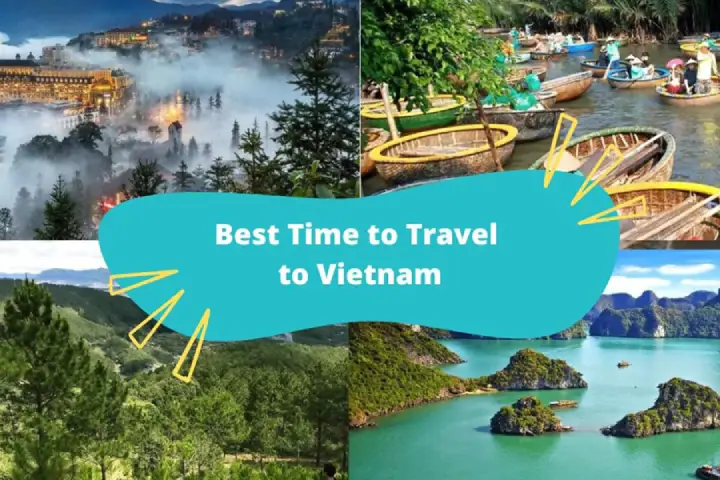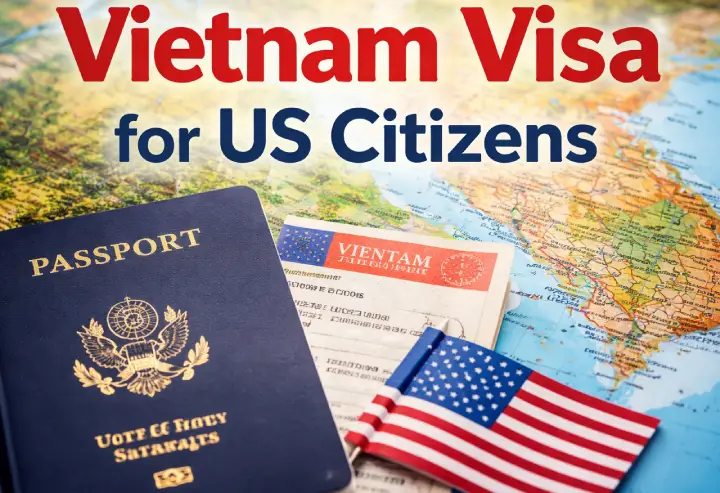
It is always a joy to plan a tour to any country but wait, before you get too excited about watching the sun rise over the Ha Long Bay or lanterns bloom over the Hoi An, there surges a very important piece of document every American traveler must handle before departure – a visa to Vietnam. No worries – it is easier than in most cases imagined.
The Vietnam visa for US citizens has changed positively in recent times. It is quite possible for American nationals to obtain the visa to Vietnam following a quite basic E-visa procedure that takes less than half an hour of finishing without the embassy or even the passport. This is particularly useful when one is to book for a California Vietnam trip, arranging a New York- based Vietnam tour package, or scheduled for a Florida- based Vietnam travel. Hence, worrying about those changes later once the tickets are already out will definitely alleviate any last minute visa issues or midasia routes disturbances.
The following guide provides information on all the possibilities, requirements, costs and steps to be taken so that one can go to Vietnam without fear instead of getting confused.
U. S citizens who require a visa to enter Vietnam don’t have to travel far to the capital city for one, as it is often issued within midasia routes regions.
MidAsia Routes has helped hundreds of American travelers navigate the Vietnam visa process smoothly. Whether you are booking a Vietnam tour package in California, a Vietnam tour package in New York, or a Vietnam tour package in Florida, understanding your visa options before departure saves time and stress.
When it comes to the Vietnam visa for US citizens, there are currently three main pathways. Understanding which one fits your trip is the first step.
The Vietnam e-visa is a perfect fit for American travelers and is the one most US tourists opt for these days. The e-visa was developed in 2017 and then underwent radical improvements in 2023. It is fast to process, cost-effective, accessed and applied for online without the need to handle any paper.
Once your e-visa is approved, the next step is choosing the right Vietnam tour package that matches your travel style — from cultural deep-dives to nature escapes across Ha Long Bay and Hoi An.
Basic information on e-visa of United States citizens:
Up to 90 days (under normal rules – on August 2023 changes it was limited to only 30 calendar days)
Involves both single and multiple entries
Can be applied for and issued for only $25 which applies to all nationals
There is a waiting period of 3 days (working days) for processing
It is done purely online – you do not need to tour the embassy at all
Applicable to every airport, land border, and seaports in Vietnam.
With the introduction of 90-day duration, there is no such thing as coming back and forth for US citizens when it comes to spending vacations and going on travels within the country. Owing to the fact that even if you're planning to have a 10-day intensive vietnam trip or a lengthy 6-week stay running through the whole country, a single e-visa will suffice and there’s no need to worry about renewals.
There is a bit of a misconception in regard to Visa on Arrival - you do not really receive it at the immigration checkpoint at the airport. This whole affair encompasses two general stages.
If you are arriving through an international airport and prefer added flexibility, pairing your VOA with a structured group travel plan ensures someone experienced is handling logistics on the ground while you focus on the experience.
You get at the approved pre-arranged letter to an accredited traveling operator in Vietnam before travel
On the arrival to one of the international airports in Vietnam, they do stamping of your physical visa/sto, which is required after showing the approval narration and paying the stamping fees.
Concerning VOA few points need to be considered:
It can enable you to enter Vietnamese territory only through international airports, excluding land and water borders.
It is mandatory to obtain a pre-approved letter (Agency charges ranging from 6$ - 25$ in different agencies).
There is a fee for getting a stamp at the port of entry: 25 $ for one time trips and 50$ for a round trip.
The approval letter uses 2 to 3 days to process.index and quiry service is applicable.
You should not prefer this if traveling to Vietnam from the Lao, China or Cambodia by land.
For the majority of people from the US, the availability of an e-visa has rendered visa on arrival quite dispensable. An electronic visa is straightforward, it may be used at any time, and it costs the same or even less than the visa on arrival. It is however still available for usage in some cases such as beneficiaries who need quick service or who cannot access the e-visa system
Numerous countries worldwide allow their citizens to enter Vietnam without a visa for a certain period. Sadly, the United States of American is not one of those countries. Always, American traveler needs a visa, be it e-visa or VOA irrespective of the period of visit.
This merits verifying prior to the date of travel, since the list of exemptions has been growing in Vietnam, however, as per the latest policy guidelines, the US vessel, for any travel to Vietnam, needs a visa.
The Vietnam e-visa application is genuinely straightforward. Here's the exact process:
As of now, one can apply for the Vietnamese e-visa at evisa.xuatnhapcanh.gov.vn which is the sole official portal – all others, the so-called ‘Vietnamese e-visa agents’, should be avoided. There’s no need to look further than the government website. Apparently some of these sites look credible and offer the Vietnam visa for US citizens but they are just a scheme to make a quick buck charging 50 – 100 for a 25 dollars procedure.
Click "For Foreigners" and select "E-visa Grant"
Enter your email address to create a temporary account
You'll receive a verification code to proceed
Have the following ready before you start:
Valid US passport (must have at least 6 months validity beyond your intended entry date)
Passport-style photo (digital, white background, recent)
Passport biographical page scan (clear, all four corners visible)
Your intended entry and exit dates
Your intended entry checkpoint (airport, border crossing)
Accommodation address in Vietnam (hotel name and address of your first night)
The payment is guaranteed on the website via a credit or debit card. This fee is not subject to refund even in cases of rejection of your application, therefore before proceeding to check out carefully, check all the details. The costs for a visa which is payable in vietnamese embassies are uniform — $ 25 per head irrespective of nationality.
Visa processing ordinarily takes about 3 business days. An email will be sent to you once your e-visa has been processed. You need to log back and download the PDF file of your e-visa from the portal.
For compliance with immigration requirements and regulations, a scanned copy of an e-visa should be carried and be shown along with the passport. Some countries will allow a soft copy, but in Vietnam, immigration officers in airports and border checkpoints do not usually, if at all, allow – or rather demand – processing with a soft copy. You would better take two printouts.
Your US passport must be valid for at least 6 months beyond your planned departure date from Vietnam — not just your entry date. If your passport expires within 6 months of your entry date, renew it before applying for the visa. Airlines will deny boarding if this requirement isn't met.
It is your responsibility to ensure that all details provided in your e-visa application are matching your passport, including middle name(s) where applicable. Do not underestimate minor mistakes, such as a letter referring to an initial in place of the full middle name, as sometimes they can prove problematic in the airport. Do not rush the naming portion.
Upon issuance of the e-visa, travelers are expected to enter through the designated checkpoint. Travelers must use the specific airport, land border or seaport as indicated on the visa upon entering Vietnam. A vietnam visa for US citizens is still necessary even if the person applies. Thus, the point of entry must have been confirmed beforehand.
In case the itinerary of your vietnam tour includes any tours to Cambodia, Laos or Thailand – that most of the prolonged plans include – take a multiple entry option in your e-visa request. The single entry visa gets cancelled once you leave Vietnam, however short that exit may be. The fees for multiple entry are $25 similar to a single entry and hence, it is rather pointless to go for a single entry unless one will definitely not leave the country only to come back in.
Beyond the visa itself, here's everything US travelers need in order before departure:
Valid US passport — minimum 6 months validity beyond Vietnam exit date; at least 2 blank visa pages
Vietnam e-visa — printed copy (PDF downloaded from government portal)
Return or onward flight ticket — immigration may ask to see proof of onward travel
Accommodation details — address of your first night's accommodation
Travel insurance documentation — not legally required but strongly recommended
Vietnam tour confirmation — if traveling on a vietnam tour package, carry your booking confirmation
Learning from others' mistakes is the most efficient kind of travel prep:
Using unofficial third-party websites that charge inflated fees — always use the official government portal
Submitting a blurry passport photo or document scan — rejection rates increase significantly with poor image quality
Selecting the wrong entry point — always verify which airport or border crossing you'll actually use
Forgetting to select multiple entry when the itinerary includes neighboring country visits
Applying too close to departure — apply at least 7–10 business days before travel to allow buffer for processing delays or resubmission if rejected
Not printing a physical copy — always carry a printed e-visa, not just a phone screenshot
Passport expiry miscalculation — count 6 months forward from your Vietnam exit date, not entry date
MidAsia Routes offers dedicated Vietnam tour packages in California with full pre-departure support including visa documentation guidance, so you never have to figure it out alone.
Regardless of whether the Vietnam tour package you want to book is in California, New York, or Florida, reputable Vietnamese travel agencies provide information on the Vietnam visa for US citizens included in the pre-departure pack, some even assist in applying for the visa. However, always enquire about the nature of visa assistance offered by your travel agency and the required paperwork to be presented before the flight.
Once your flight bookings are finalized, you should proceed and apply for your e-visa - at least 2 weeks prior to travel; 3-4 weeks is most preferable. Do not wait past this period, since there is no benefit in it and in worst case scenario, a processing delay could disrupt the plan of your Vietnam tour.
Many of our extended itineraries combine Vietnam with a Laos tour package for a complete Southeast Asia experience — in that case, always select multiple entry on your Vietnam e-visa before departure.
Planning a multi-country travel itinerary — for instance combining Vietnam with Cambodia, Thailand or Laos — which numerous extended Vietnam tour packages have provision for, is it important to always ensure you have a multiple entry Vietnam e-visa and also cross check with other countries regarding Vietnam visa for US citizens. Always remember that each country has different rules to be followed keep in mind.
The regular tourist e-visa allows business related functions such as organizing or attending meetings, conferences as well as site visits. Nevertheless, individuals seeking to carry out extended business activities or labor for which they have signed employment contracts in Vietnam must apply for another class of visa. In case you need to engage in specialized business travel, contact the Vietnamese embassy.
For specialized or extended business visits, our custom travel team can design a private itinerary that accommodates your schedule, meetings, and site visits across Vietnam without compromising on comfort.
Even though Vietnam does not legally impose any mandate on the entry of foreign nationals with travel insurance, caution is advised as this is a mistake no seasoned traveler simply repeats. Services in terms of health might be poor in Vietnam’s rural areas and medical evacuation to Bangkok or Singapore might be a necessity for a more serious ailment and would cost between $15,000–$50,000 without insurance cover.
What your Vietnam travel insurance should include:
Emergency medical coverage (minimum $100,000 recommended)
Medical evacuation and repatriation
Trip cancellation and interruption
Baggage loss and delay
24/7 emergency assistance line
As a US resident, reliable insurance companies with travel cover plans are World Nomad’s, Allianz Global Assistance and SafetyWing. Certain excursion tours in the states of Florida, California, and New York have this inclusion – in most cases, it costs little when purchased alongside other packages.
Of course, US citizens always need a visa to access Vietnam — there is no theoretical possibility or visa exemption agreement between the two countries currently. The easiest part however is that the process of getting Vietnam visa for US citizens is quite straight forward and very cheap as it could all be processed online through the official e-visa system: 25 dollars, and it will last for three months. One who is applying for visa must access the government website available at evisa.xuatnhapcanh.gov.vn and do it earlier that 7 to 10 days before the set day of travelling.
Up to 90 days as opposed to the previous 30 can now be stayed in Vietnam by US citizens on an e-visa issued since August 2023. This essentially implies that a majority of the Vietnam tours covering even longer distance and extensive tour programs together with some neighboring countries are fit in one e – visa without having to extend or renew it.
It is possible to obtain Vietnam visa for US citizens whose length exceeds 90 days e-visa, though the procedure gets trickier — in most cases requiring submission to the local immigration office of Vietnam or to the travel agency in Vietnam. Nevertheless, many visa-exhausted travelers briefly leave the country to one of the neighboring states (Cambodia, Laos, Thailand) and return to Vietnam with a new e-visa permitting multiple entries. In cases where will be more than 90 days, it is advisable to contact a vietnam tour agency or a Vietnamese immigration expert prior to traveling.
Rejections of the E-visa for the United States nationals are not very frequent, but do happen — in most cases the reason lies in errors in the provided application (name disparity, low-quality scanned copies of the documents, inaccurate data). If in any case the application is turned down, $25 compensation fee is not returned, however one can immediately re-apply upon rectifying the matter at hand. That is one more reason why it is advisory to apply at least 10 days before the travel date, that is, to ensure that one can obtain the Vietnam visa for US citizens in case of misfiling without altering the vietnam package schedule booked.
You can easily find a good tour agency organizing Vietnam tour packages from California available for New York, Florida and other states. This would include pre-departure instructions such as how to apply for a Vietnam visa, what documents are required and when, etc. Some tour operators charge a premium because they provide the services of assisting with visas. Do not forget to find out from your package supplier what kind of visa support they offer - it is something that sets agents apart.
One of the easiest procedures to plan for a holiday in Vietnam is one of obtaining the Vietnam visa for US citizens. All that one requires to make the society’s 90 days of indulging Vietnamese culture is approximately $25 and sitting more than 30 minutes to finish filling in the forms online.
Remember to, as usual, do advance applications, and print out the e-visa, while thoroughly checking that all the details correspond to the details of the passport, and make sure you select “multiple entry” in case the tour in Vietnam will also cover other states. Regardless of whether it is a vietnam tour package that starts in Florida, or a vietnam tour package in California or New York, the highlight of the vacation will be getting the visa for Vietnam. There is no more doing of anything for that – they are plain as day jokes.
Once your Vietnam visa for US citizens is secured, the real journey begins. Browse our handpicked Vietnam tour packages or contact us to start planning your perfect Vietnam adventure with MidAsia Routes today.
Your email address will not be published. Required fields are marked *