Since September 2023, Bhutan has charged most international visitors US$100 per adult per night instead of US$200, and the government has fixed that reduced rate until August 31, 2027. The lower fee makes the next year an unusually good window for a first visit. It does not answer the question that shapes the whole trip: the best time to visit Bhutan depends on whether you want festival crowds, clear Himalayan views, empty monasteries or green valleys, because each season delivers a different country.
This guide is for travelers who are choosing dates for a private journey and want to avoid two common mistakes: arriving in the week every flight is full, or arriving in rain without knowing it was coming. It covers weather by season, a month-by-month table, the festivals worth planning around, the Tiger's Nest hike in each season, and how far ahead to book flights and guides.
Most travelers do best in spring (March to May) and autumn (September to November). October is the strongest single month, with the clearest mountain views, the best trekking conditions and a dense calendar of festivals. It is also the busiest month, so flights and the better hotels sell out first.
May and November are the quiet alternatives. Both keep most of the good weather and thin out the crowds. If you are flexible, a good time to visit Bhutan for value is the first two weeks of November, when the skies stay clear and black-necked cranes begin arriving in the Phobjikha Valley.
Bhutan climbs from subtropical foothills in the south to alpine passes above 5,000 meters in the north, so a single month can bring heat in one valley and snow in another. The central valleys that most itineraries use (Paro, Thimphu, Punakha and Phobjikha) follow a predictable pattern, with Punakha running roughly 6 to 7 degrees Celsius warmer than Paro and Thimphu all year.
Spring is the second most popular season. Valleys turn green, rhododendrons bloom on the higher slopes and the Paro Tshechu falls in late March. Days are mild and the mountain views are often good in the mornings, though afternoon haze and the occasional shower are normal by May. Book early for March and April, because this is when the festival crowds arrive.
The monsoon runs from late June to early September, with rain on most days, usually in afternoon and overnight bursts. Valleys are at their greenest and the roads and monasteries are the quietest of the year. Views of the high peaks are rare, and landslides can slow road travel between regions, so this season suits culture-focused travelers who value space over scenery.
Autumn brings dry air after the rains, deep blue skies and the most reliable views of the Himalaya. October is the peak, with the Thimphu and Jakar festivals, harvest in the rice terraces and the best trekking weather. By November the crowds ease, mornings turn crisp and the cranes return to Phobjikha.
Winter is dry, sunny and quiet. Nights in Paro and Thimphu drop to freezing or below, while Punakha stays mild enough for comfortable sightseeing. High passes in the east can close with snow in December, so itineraries in this season usually stay in the western and central valleys.
Use this table to compare months quickly. Festival dates follow the Bhutanese lunar calendar and move each year, so confirm exact dates when you book.
| Month | Weather | Crowds | What stands out |
|---|---|---|---|
| January | Cold, dry and sunny | Low | Quiet monasteries, mild Punakha |
| February | Cold mornings, clear days | Low | Punakha Dromchoe and Tshechu |
| March | Warming, mostly dry | High | Paro Tshechu in late March |
| April | Mild, flowers in bloom | High | Rhododendrons, spring festivals in Haa |
| May | Warm, first showers | Medium | Good value, strong trekking window |
| June | Humid, monsoon begins late month | Low | Green valleys, empty sites |
| July | Wet | Low | Quietest month for culture visits |
| August | Wet | Low | Lush landscapes, limited views |
| September | Rain easing | High | Thimphu Tshechu cluster begins |
| October | Clear, crisp, dry | Highest | Best views, Jakar Tshechu, trekking |
| November | Dry, cooler mornings | Medium | Black-necked cranes, Crane Festival on November 11 |
| December | Cold, dry, snow on high passes | Low | Druk Wangyel Tshechu at Dochula on December 13 |
A tshechu is an annual religious festival held in a dzong or temple courtyard, where monks and laymen perform masked dances over several days. The dances are not staged for tourists; local families dress in their best clothes and travel for days to attend. Visiting one gives context that no museum can, which is why many travelers build their whole trip around a single festival.
The Haa Summer Festival, which older guides still list for July, now takes place in spring as the Haa Spring Festival, so ignore any listing that shows a July date. If a festival matters to your plans, share your target dates early. A good operator can hold rooms, vehicles and guides before the public rush.
Choose late March to April or late September to November. The combination of clear weather, open roads and full festival calendars gives the richest introduction to Thimphu, Punakha, Phobjikha and Paro. A classic route such as our 11-day Kingdom of Happiness journey works well in any of these months.
October is the dependable month for high routes. The Snowman Trek passes, at about 5,000 meters, are reliably open only in October, and most other treks are comfortable in April, May and the autumn months. Treks need guides, camping support and permits, so plan them with a licensed operator well in advance.
Late October and November bring the clearest light and the black-necked cranes in Phobjikha. Spring is better for flowers and for the soft light of early morning in Paro. Photographers who want festival color should add Punakha in February or Paro in March.
June to August and December to February are the low-crowd months. Hotels have more availability and monasteries are calm, though you accept rain in summer and cold nights in winter. Older travelers often prefer December and February in Punakha, where the valley is warmer. For more on pacing, read more: Best Tours for Seniors: Slow-Paced Private Journeys Across Asia and the Middle East.
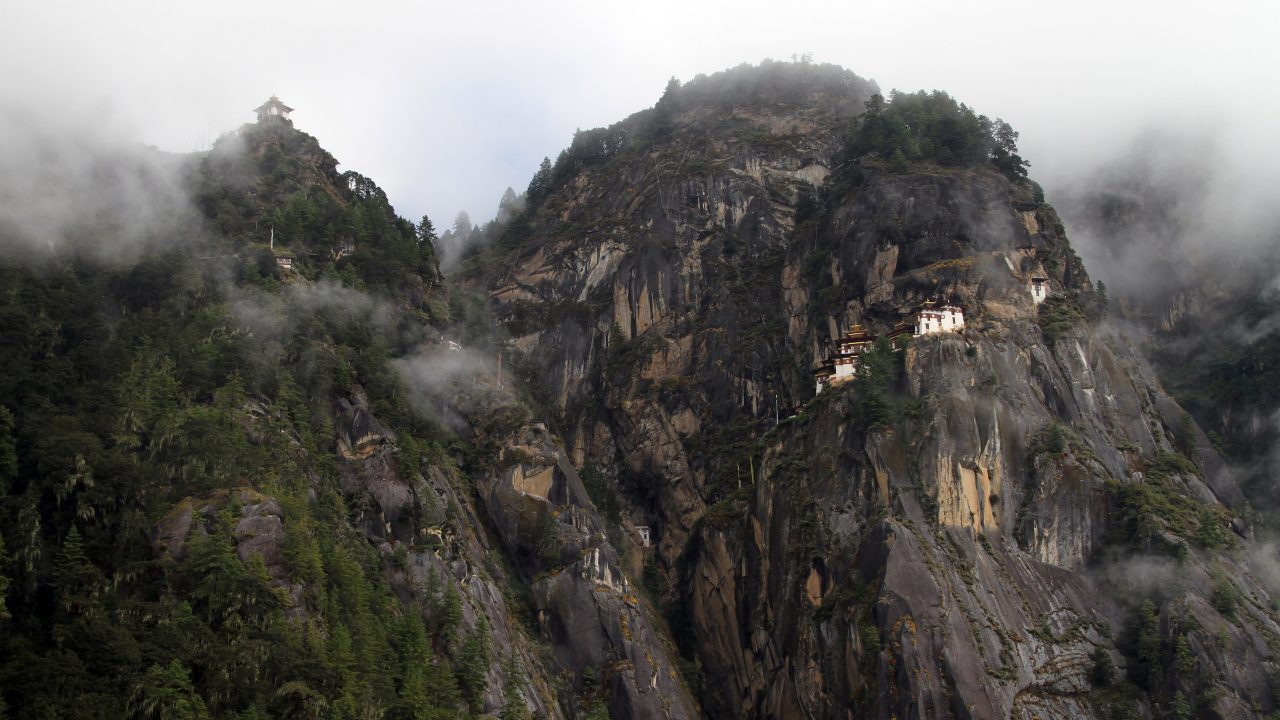
The Tiger's Nest Monastery (Paro Taktsang) clings to a cliff above the Paro Valley and is open all year. Clouds often gather in the afternoon during the monsoon, so start early to catch the view. In deep winter, icy patches can form on the upper steps. Most visitors allow half a day for the hike, plus a rest stop at the cafeteria halfway up, and a day of acclimatization at Paro's elevation of roughly 2,200 meters beforehand is sensible.
Three practical points affect when you can go as much as the weather does.
Most international visitors also need a visa approved before travel, which a licensed operator arranges alongside your guide and accommodation. Our private Bhutan journeys include this planning as part of the itinerary.
Many travelers pair Bhutan with Kathmandu, because flights from Nepal's capital are a short hop to Paro on the clear mornings when the Himalaya shows from the window. Our 14-day Two Himalayan Kingdoms route follows Kathmandu, Chitwan, Thimphu, Punakha and Paro, and a spring or autumn departure suits both countries. If you are still deciding between the two, read more: Nepal vs Bhutan: Which Destination is Better for Your Next Himalayan Trip? and Best Time to Visit Nepal and Bhutan: Weather, Festivals and Travel Tips.
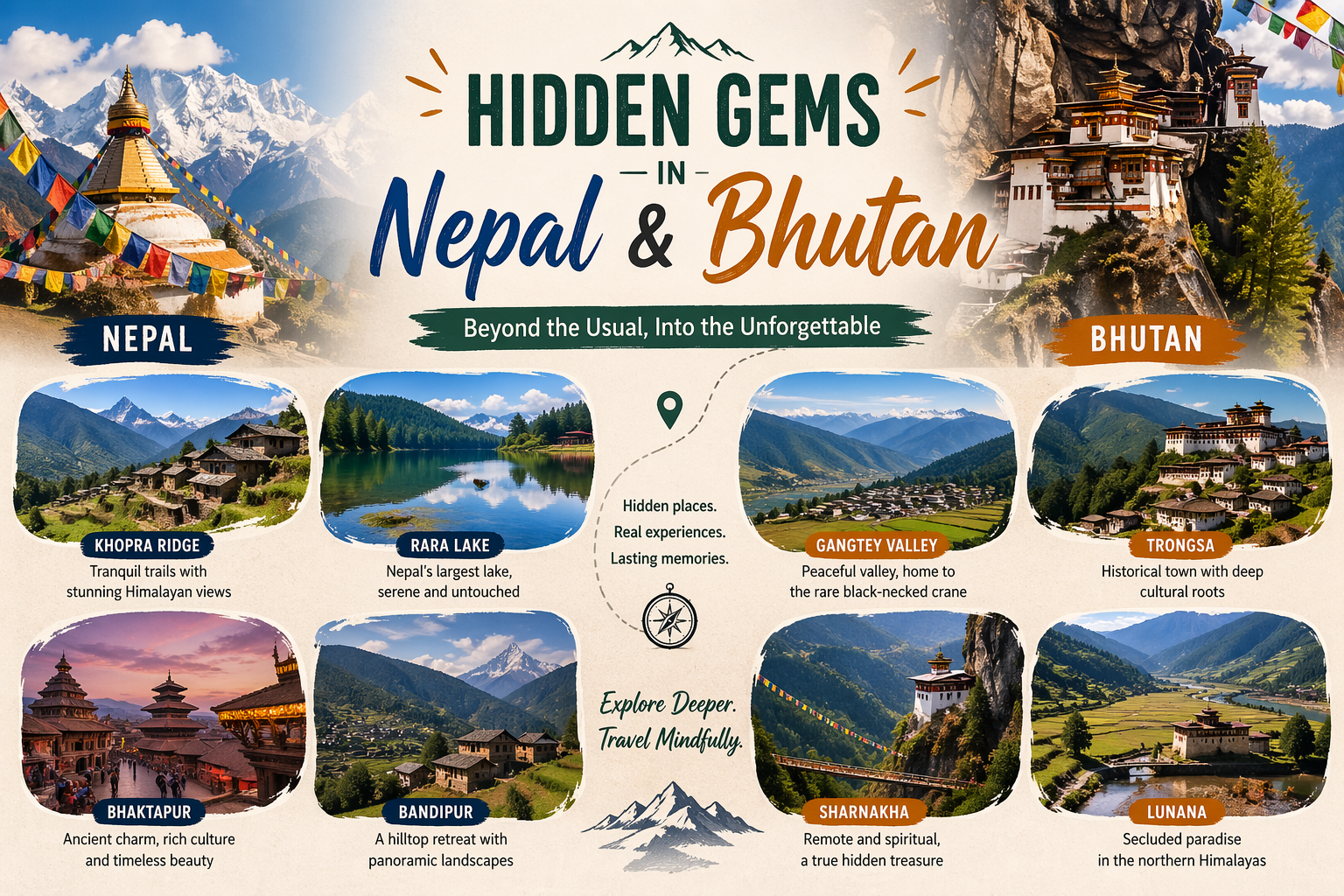
Travelers who prefer to avoid festival crowds can use quieter months to reach smaller valleys. Read more: Hidden Gems in Nepal and Bhutan: 10 Offbeat Places.
Bhutan's valleys sit at very different heights. Punakha is around 1,200 meters, Paro and Thimphu are around 2,200 to 2,300 meters and Dochula Pass is about 3,100 meters, so a single day can move you through several climates. Pack in layers whatever the month: a light base layer, a fleece, a windproof jacket and a hat for mornings and passes.
Visitors to dzongs and temples are expected to dress respectfully, remove hats and keep voices low. Your guide will explain the customs before each visit, and photography is usually restricted inside temples.
Dates drive most of the cost and availability in Bhutan, so the first conversation with an operator should settle a few practical points.
If you already have a month in mind, send it with your group size and walking comfort and we will propose a route that fits the season. See our private Bhutan journeys or ask for a custom itinerary built around your dates.
For most travelers the best time to visit Bhutan is October, with March to April and November as strong alternatives. Choose summer or winter when quiet and value matter more than mountain views. Because flights, festival rooms and guides sell out months ahead, decide your priority first, then fix your dates.
If you are ready to plan, tell our team your preferred month, group size and pace. We will match the season to a private route and hold the key bookings. Explore our luxury Bhutan tours to start.
Your email address will not be published. Required fields are marked *