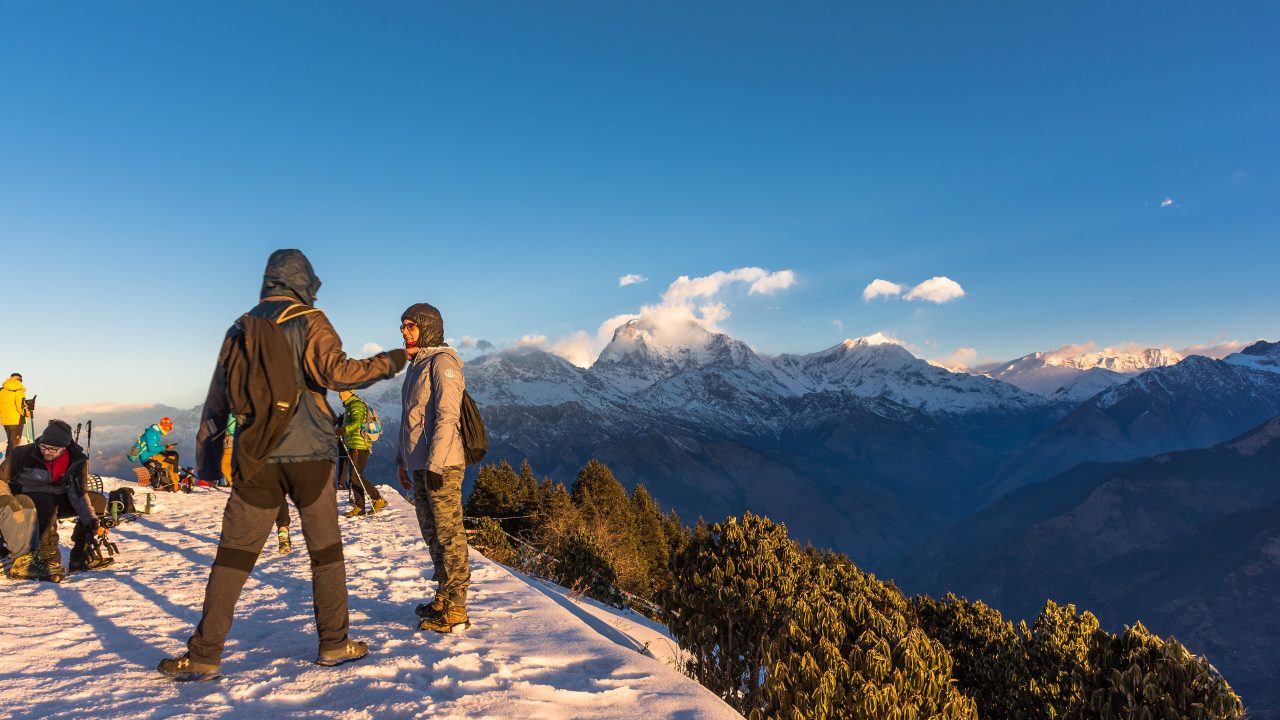
Thorong La, the high point of the Annapurna Circuit, sits at 5,416 meters (17,769 feet), almost 1,000 meters above Mount Whitney, the highest summit in the contiguous United States. That single number explains why trekking in Nepal rewards planning more than it rewards fitness alone. The right route, the right month and a sensible climbing schedule decide whether a trek becomes the best trip of your life or an early flight home.
This guide is for travelers choosing a first Himalayan trek who want to match a route to their fitness, season and vacation time before booking flights and permits. It compares the best-known Nepal treks, explains the seasons and permit rules, covers altitude safety using CDC guidance, and shows how a guided private trek differs from a do-it-yourself itinerary.
Most treks in Nepal are lodge-based. You walk four to seven hours a day between mountain villages, sleep in simple guesthouses called teahouses, and eat dal bhat or other hot meals where you stop. There is no technical climbing on the standard routes, which is why people in good general health, including many first-time trekkers in their 50s and 60s, complete them.
The challenge is not the trail but the altitude. Air pressure falls steadily as you climb, and every extra 300 to 500 meters of sleeping altitude makes the body work harder. A good Nepal trek therefore builds in slow progress, rest days and a guide who watches the group, not only the map.
Two seasons dominate. Autumn (October and November) is the most popular, with the clearest views, stable weather and mild days. Spring (March and April) is the second choice, with warmer temperatures, rhododendron forests in bloom and occasional haze over the peaks.
Winter (December to February) suits experienced trekkers on lower routes, since days are short, nights are cold and snow can close high passes. The monsoon (May to September) brings leeches, landslides and cloud on most routes, so most operators avoid it. Upper Mustang is the exception, because the rain shadow of the Himalaya keeps its high desert dry in summer.
If you are also deciding where the Himalaya fits in a longer trip, read more: Best Time to Visit Nepal and Bhutan: Weather, Festivals and Travel Tips.
Use this table as a starting point. Days include walking only, not arrival and rest days in Kathmandu, and difficulty reflects both distance and altitude.
| Trek | Typical days | High point | Difficulty | Best for |
|---|---|---|---|---|
| Poon Hill (Ghorepani) | 4 to 5 | 3,210 m | Easy to moderate | First trek, sunrise over Annapurna and Dhaulagiri |
| Annapurna Base Camp | 7 to 10 | 4,130 m | Moderate | Big mountain scenery with limited time |
| Langtang Valley | 7 to 9 | About 3,870 m | Moderate | Closer to Kathmandu, quieter trails |
| Everest Base Camp | 14 to 16 | 5,364 m (5,545 m at Kala Patthar) | Moderate to difficult | Sherpa culture and the world's highest peak |
| Annapurna Circuit | 12 to 16 | 5,416 m (Thorong La) | Moderate to difficult | Variety, from subtropical valleys to high desert |
| Upper Mustang | 10 to 12 | About 3,840 m (Lo Manthang) | Moderate | Tibetan-style culture, dry-season travel |
| Manaslu Circuit | 16 to 18 | 5,106 m (Larkya La) | Moderate to difficult | Remote trails and fewer trekkers |
Poon Hill and Annapurna Base Camp give dramatic scenery within a week and a half, and neither crosses a high pass. They suit travelers who want the Himalayan experience without committing three weeks. Our Annapurna in Comfort journey takes this idea further: over 11 days it bases you in Pokhara and walks between the foothill villages of Dhampus, Landruk and Ghandruk, so the days stay manageable and the nights stay low and warm.
The Everest Base Camp trek is the classic choice, but a full base camp trek asks for two weeks on the trail and good acclimatization. Travelers who want the culture and the views without the highest sections can follow the Khumbu valley as far as Namche Bazaar (about 3,440 meters), Khumjung and the Tengboche area. That is the idea behind our 14-day Everest Country journey, which follows the valley from Phakding to Namche Bazaar, Khumjung and the Tengboche area, then returns through Monjo and Lukla.
Upper Mustang, the former Kingdom of Lo, is a high-desert region of red cliffs, whitewashed monasteries and walled villages. It sits in the Himalayan rain shadow, so the best season is May to October, unlike most Nepal treks. Our 14-day Kingdom Beyond the Clouds route runs through Kagbeni and Lo Manthang to Jomsom.
The Manaslu Circuit and the Annapurna Circuit suit experienced walkers who want three weeks of changing landscape. Both include a high pass above 5,000 meters, so they work best when you have already trekked at altitude and can allow spare days for weather.
Permit rules and fees are set by Nepal's authorities and change periodically, so confirm current figures with your operator or the Nepal Tourism Board before you travel. These ranges reflect published 2025 to 2026 guidance from Nepali trekking agencies.
Restricted areas such as Upper Mustang and Manaslu cannot be entered by independent trekkers. You must book through a registered agency and travel with a licensed guide, and most operators include permits in their price. For other routes, rules on guides and independent trekking have changed several times in recent years, so check the latest guidance before assuming you can go alone.
Altitude illness can affect anyone, regardless of age or fitness. The CDC Yellow Book offers clear guidance that good guides follow.
Acute mountain sickness starts with a headache plus nausea, dizziness, fatigue or loss of appetite, usually within 2 to 12 hours of arriving at a new altitude. Do not climb higher to sleep while you have symptoms. If symptoms worsen despite rest, descend. Confusion, loss of balance, a persistent wet cough or breathlessness at rest are emergencies that need immediate descent and medical care. Talk to your doctor about preventive medication such as acetazolamide before you leave, and confirm that your travel insurance covers trekking to your planned maximum altitude, including helicopter evacuation.
A private trek keeps the pace in your hands. Your guide can add a rest day when someone has a headache, change the day's route when weather turns and arrange lodges before arrival, which matters most in October and April when teahouses fill. Porters carry the main bags, so you walk with a daypack and save energy for the altitude.
A guided plan also gives you a safety net that group chat advice cannot: someone who knows the trails, the local clinic and the evacuation options. If you want to combine walking with temples and wildlife, our private Nepal journeys link trails with the Kathmandu Valley, Pokhara and Chitwan.
Start training three to four months before departure, with hikes that include long climbs and descents and a loaded daypack. Break in your boots on at least a few trips, and bring layers rather than one heavy jacket, since mornings can start near freezing and afternoons turn warm in the sun.
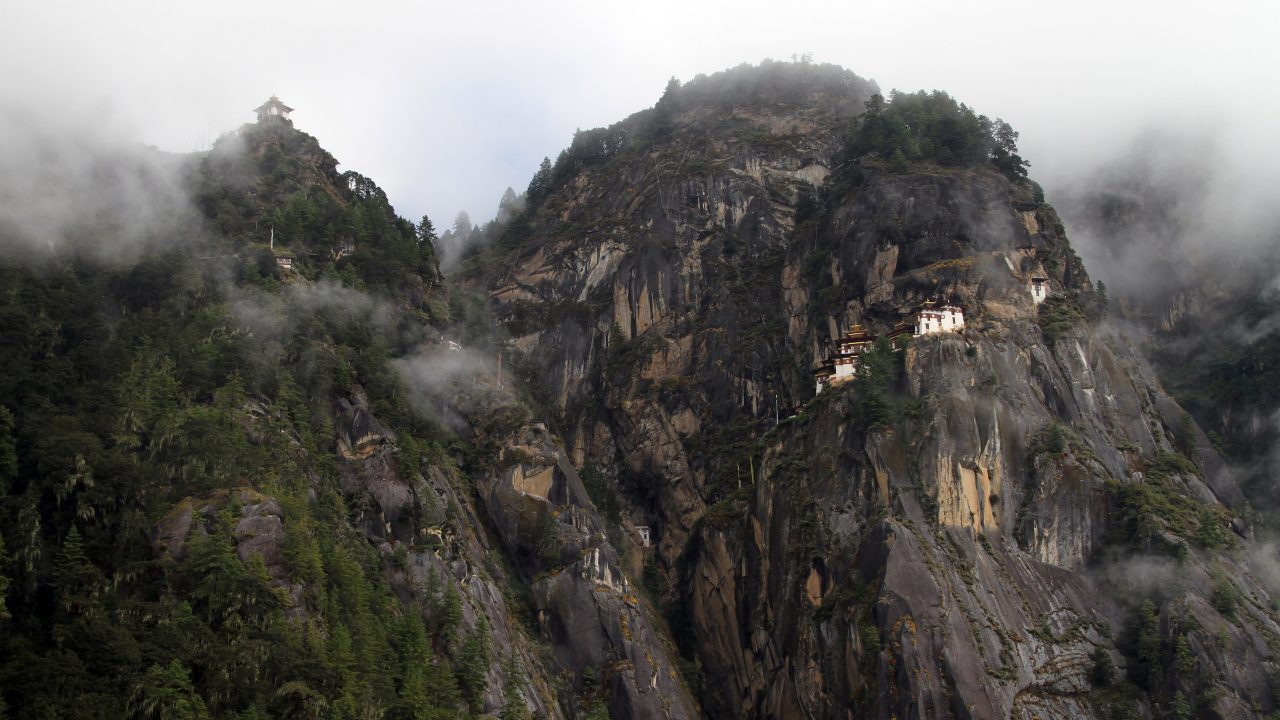
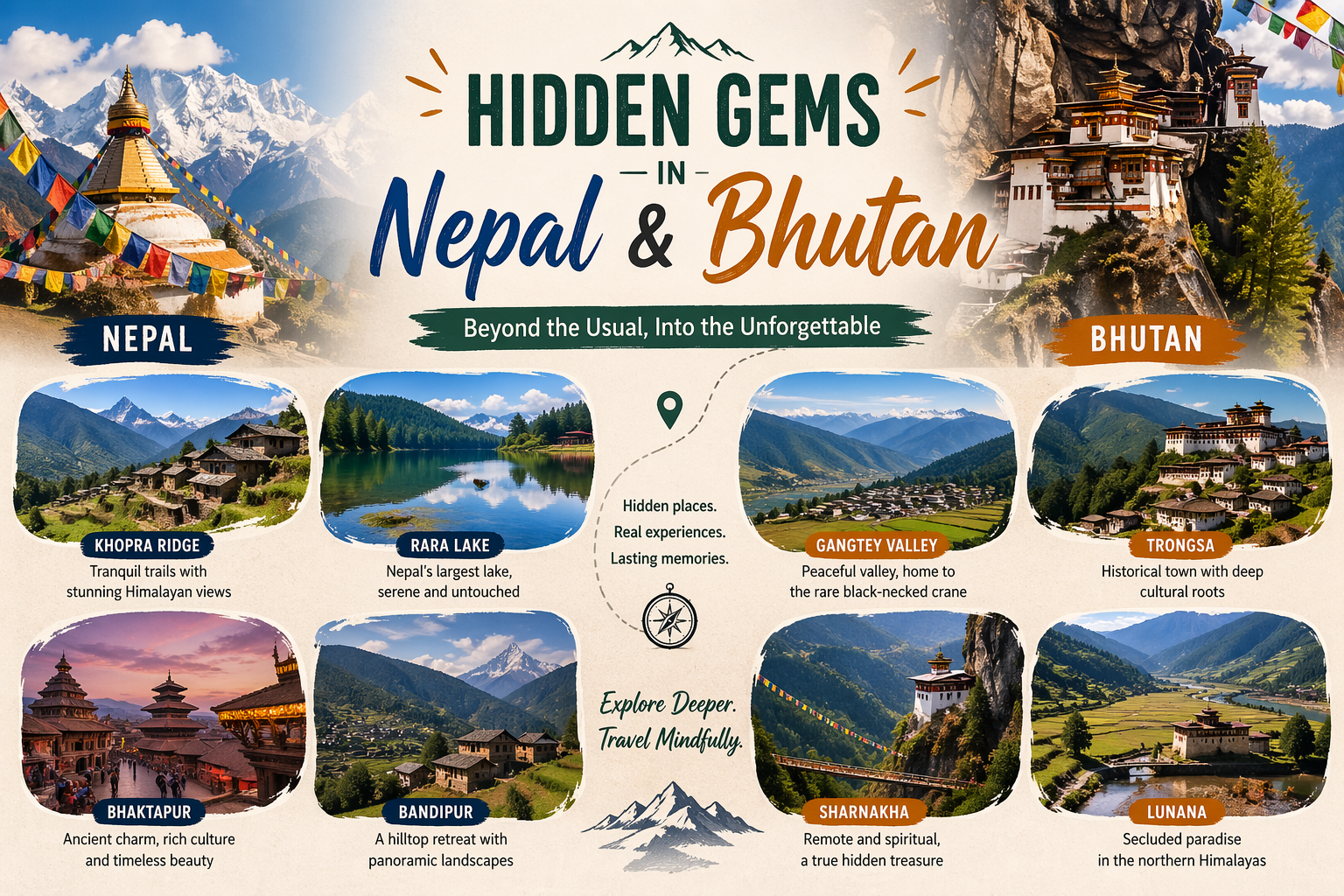
Nepal pairs naturally with Bhutan. Our 14-day Trails, Temples and Tiger's Nest route links the Annapurna foothills with Thimphu, Punakha and Paro, and ends with the hike to Bhutan's most famous monastery. For help deciding how to split time, read more: Nepal vs Bhutan: Which Destination is Better for Your Next Himalayan Trip? and Hidden Gems in Nepal and Bhutan: 10 Offbeat Places.
A well-paced first trek follows a simple rhythm: arrive and rest, walk short days at lower altitude, climb gradually and keep a spare day for weather. This outline shows how a 10-day plan around Pokhara and the Annapurna foothills can work for travelers who want mountain views without a high pass.
The exact route changes with season, fitness and trail conditions, and a good guide will adjust it daily. Treat this plan as a starting point to discuss, not a fixed schedule.
Trek prices vary widely, and the cheapest quote often leaves out items that you then pay for on the trail. When you compare operators, ask for a written list covering the following.
Standard travel insurance often excludes trekking above a set altitude, usually 3,000 to 4,000 meters, unless you add a mountaineering or high-altitude extension. Check that your policy names the maximum altitude of your route and covers helicopter evacuation, since rescue costs in remote areas can be very high. Keep your policy number, the insurer's emergency line and your passport copy with your guide.
If you want help matching a trek to your dates and comfort level, request a custom Nepal itinerary and tell us your fitness, season and the time you can spare.
Whichever route you choose, build in at least one spare day for weather and rest, since a flexible schedule is the cheapest safety margin on any Himalayan trek.
Trekking in Nepal works best when you choose the route for the time and altitude you can handle, travel in autumn or spring, and let a guide manage permits and pacing. Beginners do well on Poon Hill or Annapurna foothill routes, and experienced trekkers can aim for Everest, the Annapurna Circuit or Manaslu.
Tell our team your dates, fitness level and interests, and we will propose a private route with the right pace. Explore our private Nepal journeys to see sample itineraries.
Your email address will not be published. Required fields are marked *