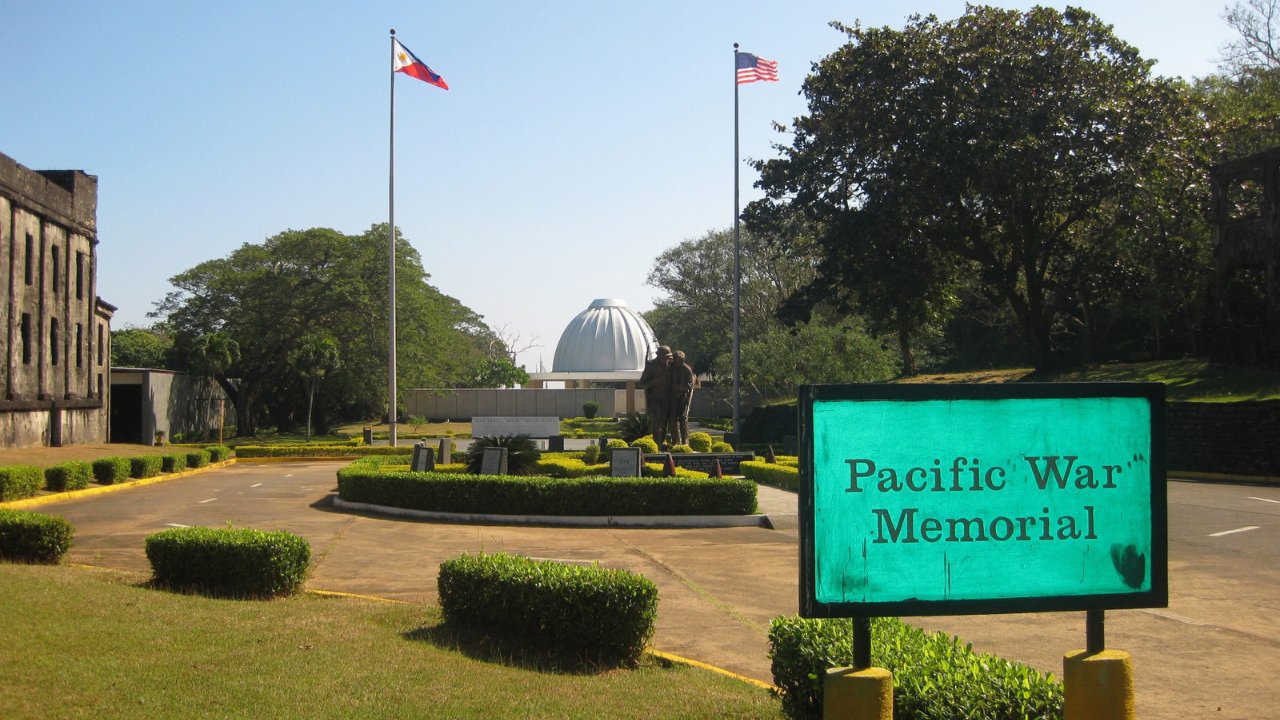
A Corregidor and Bataan WWII tour follows one of the most important campaigns of the Pacific War across ground that is still open to visitors: the Bataan peninsula, where the Death March began in April 1942, the island fortress of Corregidor at the mouth of Manila Bay, which fell on May 6, 1942, and Manila American Cemetery, which holds more than 17,000 American graves. The US State Department rates the Philippines Level 2, Exercise Increased Caution, with higher levels for parts of Mindanao and the Sulu archipelago, none of which are on a WWII itinerary.
This guide is for Americans who want to visit these sites with a family connection, a historical interest or both. It covers the story in brief, what you can see on Corregidor and Bataan, how many days to allow, the best time to go, and what to ask before booking. It also explains why a private guide changes the quality of a battlefield visit, and how to combine the trip with other places in the Philippines.
In December 1941, Japanese forces invaded the Philippines within hours of the attack on Pearl Harbor. American and Filipino troops withdrew into the Bataan peninsula and the fortified island of Corregidor, and held out for months while supplies ran short. Bataan fell in April 1942. Tens of thousands of prisoners were then marched north under brutal conditions, in what became known as the Bataan Death March. Thousands died. Corregidor surrendered on May 6, 1942, and was recaptured in early 1945 in a combined parachute and amphibious assault.
Seeing the places in sequence makes the campaign easier to follow. The peninsula, the island and the cemetery are three chapters of the same story, and a good itinerary tells them in order.
Knowing the sequence helps every site make sense, so here is the outline your guide will fill in.
The estimates of how many died on the march vary widely among historians, and your guide can explain the range and the reasons.
Corregidor lies roughly 48 kilometers from Manila, and is reached by a ferry of about an hour from the city. It is a protected historic site, and most visits are day trips with a guided tour by tram or open vehicle.
Ferry schedules and conditions can vary with the weather, so allow a spare day if possible, and check ahead for any maintenance closures.
The Corregidor day starts early. The ferry leaves from the Manila Bay terminal in the morning, and the crossing takes about an hour. On arrival, a guided tour moves you between the main sites by vehicle, with stops for walking, and a lunch break on the island. The return ferry leaves in the afternoon, so the day is full but not rushed if the guide keeps to the plan.
Wear light clothing, a hat and comfortable shoes, and bring water, sunscreen and a rain layer in the wet season. Agree on a meeting point and time with your group, since you may spread out across the sites. Some operators also offer an overnight stay on the island for a quieter evening and the chance to see the Malinta Tunnel show, though accommodation is limited and should be booked well ahead.
The American return to Corregidor began with a parachute drop onto a very small area of the island, followed by an amphibious landing. The fighting inside Malinta Tunnel and across the island was fierce, and the Japanese garrison was nearly wiped out. Visitors see the remains of the batteries, barracks and hospital as they were left, and the scale of the destruction helps explain why the island has been kept as a memorial rather than rebuilt.
Many of the people who visit with a family connection come from both sides of this history, and the Garden of Peace gives space for that. Take your time, and ask your guide to tell you the stories behind the markers rather than only the dates.
The Bataan peninsula lies west of Manila Bay. The Mount Samat National Shrine, with its large memorial cross and museum, overlooks the battlefield and gives a clear view across the terrain. Markers along the old road trace the route of the march, which ran about 65 miles north to San Fernando in Pampanga, and many travelers walk a short section to understand the distance and the heat.
The sites in Bataan involve long road days. A private driver and guide matter here, since signs are limited and the history is easy to miss without someone to read the landscape.
Manila American Cemetery, in Taguig, is the largest American military cemetery of World War II outside the United States. It holds more than 17,000 graves, and the Tablets of the Missing list more than 36,000 names. It is maintained by the American Battle Monuments Commission, and a visitor center helps families find a specific name. If you are traveling because a relative served or died in the Philippines, tell your operator before you book, so the cemetery visit can be timed and the details can be prepared in advance.
The Battle of Manila in February 1945 destroyed much of the city. Intramuros, the walled Spanish-era core, was heavily damaged, and Fort Santiago was a site of imprisonment during the occupation. Walking these streets with a guide adds the civilian side of the story, which often gets less attention than the military campaign. Many Filipino civilians died in that battle, and the memory remains part of how the city sees itself.
Five to seven days is a comfortable length for the core sites. The six-day pace below is the one most travelers find manageable, and it can be shortened or lengthened.
A longer trip can add other regions. For ideas beyond the battlefields, see our guide to the best places to visit in the Philippines.
The dry season, from about November to April, is the most comfortable for battlefield touring, with lower rain and humidity, though March and April get hot. The wet season runs from roughly June to October, with typhoon risk, especially in the later months, and ferry cancellations can affect Corregidor. Commemorative events around April 9, Araw ng Kagitingan (Day of Valor), draw large crowds at Bataan and Corregidor, and can be moving to attend, but sites and roads are busier.
Many visitors come because a father, grandfather or great-uncle served here. If that is your reason, start before you travel. Service records, unit histories and burial information are held by US archives and by the American Battle Monuments Commission, and the more detail you bring, the more your guide can do with it. A unit name, a date of capture or a camp number can point to a specific place on the route, and sometimes to a specific marker.
Bring any photographs, letters or medals you want to carry with you. Some travelers leave a small tribute at a memorial, and a good guide will help you do it in a way that fits the site.
If you do not know a unit or a camp, start with whatever you have: a name, a hometown, a date of discharge or a photograph in uniform. Even partial details often lead to the right archive. Share what you find with your operator at least a few weeks before travel, so the guide can plan stops around it and the cemetery visit can be timed with the staff who help families locate names.
These are not light days. The Death March route, the tunnel and the cemetery can be heavy, especially for families on a personal journey. A private itinerary lets you build in quiet time, shorter days or a lighter afternoon after a hard morning. Tell your guide what you need, and do not feel obliged to fill every hour.
Corregidor involves a fair amount of walking and steps, and the heat can be strong. If someone in your group has limited mobility, ask for a vehicle-based tour of the island, and for shaded rest stops.
A battlefield without context is a landscape. A guide who knows the units, the dates and the human detail turns a bunker or a road marker into a story. Private travel also lets you set the pace, linger at a marker or a name, and handle sensitive moments with care. For families traveling for a personal reason, that flexibility matters most. Our Philippines WWII journey is built around that approach.
Many travelers add beaches, islands or family time after the battlefields. Palawan, Cebu and Bohol are common choices. If you are traveling with children or multiple generations, see the options in our Philippines family journeys, or browse our overview of Philippines travel packages for ideas.
A Corregidor and Bataan WWII tour is a travel experience built on remembering. The sites are well preserved, the story is clear when told in order, and the cemetery gives a quiet end to the journey. Choose the dry season if you can, allow time for the long road days, and travel with a guide who can bring the history to life.
To plan a trip around your family's story, share your dates and any names or units you would like to look for. Explore our private Philippines WWII journey or ask for a tailored itinerary.
Your email address will not be published. Required fields are marked *