The places to visit in Oman are some of the most varied in the Arabian Peninsula: a white-domed mosque in Muscat, a mountain fort at Nizwa, an enormous red dune field, turquoise wadis, nesting turtles and a monsoon-green coast in the south. The current US State Department advisory, issued on October 23, 2026, rates Oman Level 3, Reconsider Travel, because of regional armed conflict and terrorism, and it marks the Yemen border area, Duqm city and Musandam province as Level 4, Do Not Travel. Any list of places to visit in Oman has to be read alongside that, so this guide includes the main destinations, and it says plainly which ones the advisory tells Americans to avoid.
It is written for travelers who are building a private Oman itinerary and want to know what is worth the time, how places group together, and how to plan around the advisory. It also covers the best months, how many days you need and what to ask an operator.
The advisory describes risks tied to conflict involving Houthi forces on the Saudi side of the Yemen border, and a general risk of terrorism. It tells Americans not to travel to three places.
That list matters because some Oman brochures still feature Khasab and the Musandam fjords. Treat any itinerary that includes them as one to question. The places in the rest of this guide, from Muscat and the interior to the Sharqiya Sands and the Dhofar coast, are outside those three areas, but the situation can change quickly. Read the current advisory before you book, ask how your operator would respond to a change, and confirm that your travel insurance covers a destination under a Level 3 advisory.
For a fuller treatment of entry rules, costs and safety planning, see our guide to an Oman tour from the USA.
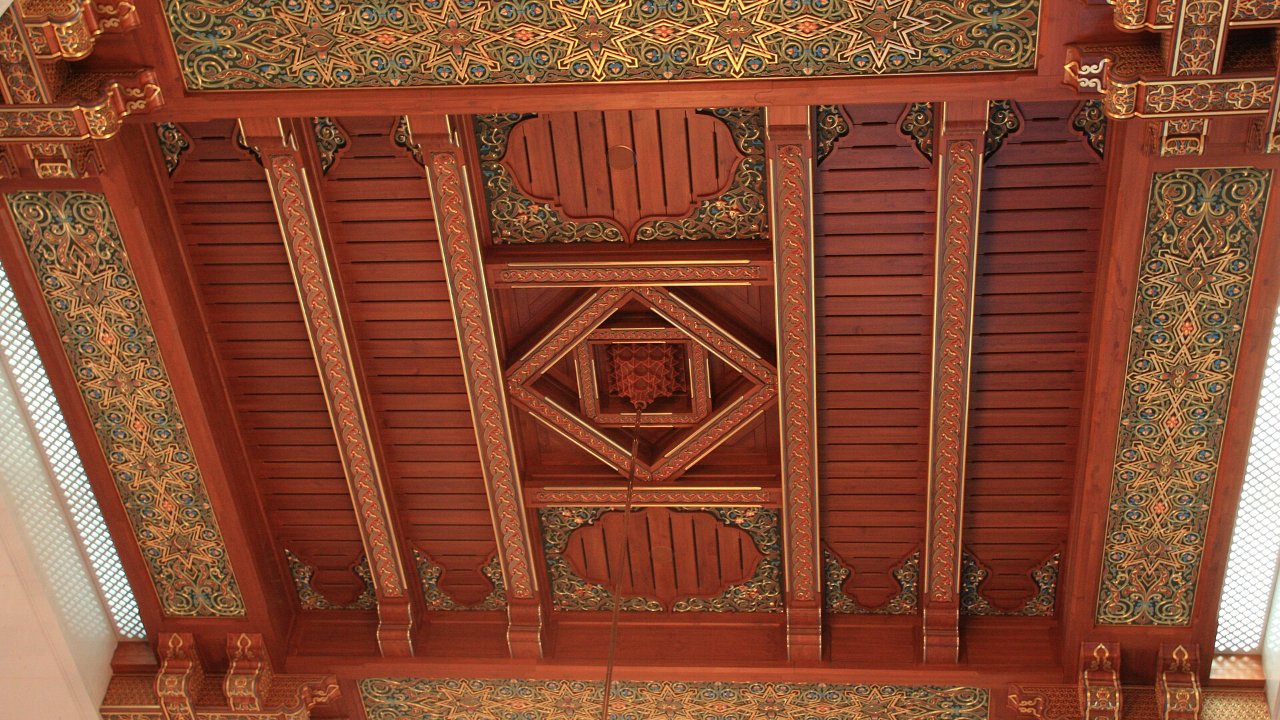
Oman's capital is low-rise, calm and tidy. The Sultan Qaboos Grand Mosque is the highlight, with its marble courtyard, a huge hand-woven carpet and a crystal chandelier. Non-Muslim visitors can enter at set morning hours, and modest dress is required. Beyond the mosque, visit the Mutrah Souq and corniche, the Royal Opera House, the Al Alam Palace and the National Museum. An evening walk along Mutrah is a good first night, and two nights is a sensible start.
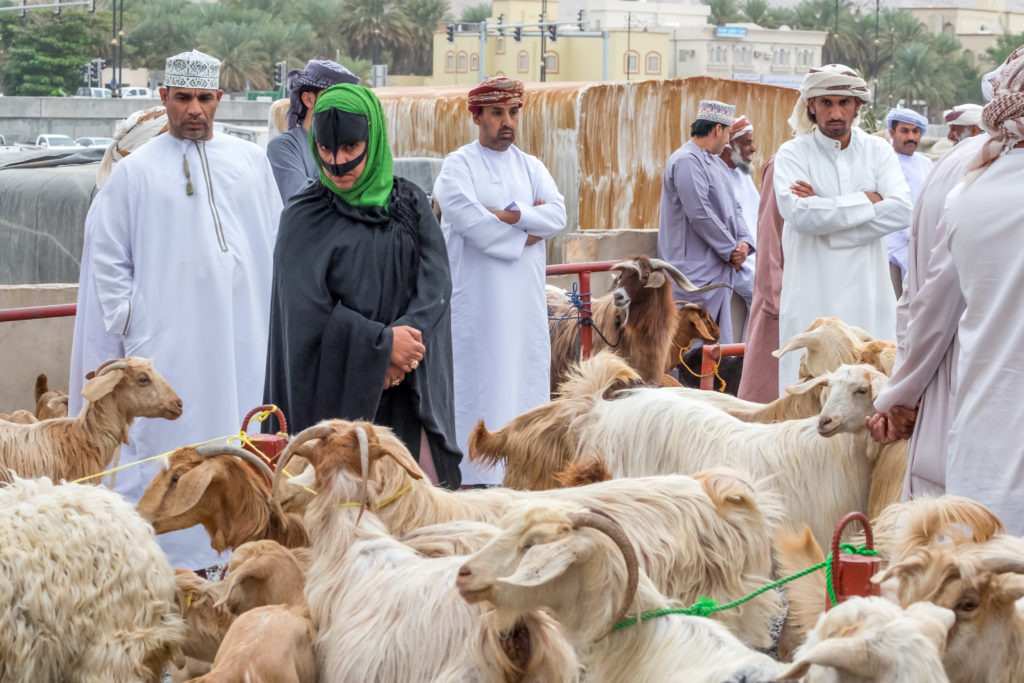
Nizwa, about 160 kilometers from Muscat, is the historic center of the interior. Its round fort, built in the 17th century, is the most visited in the country. The Friday morning livestock market is a lively scene where traders gather around goats and cattle, and the souq sells silver, dates and pottery. Nearby, Bahla Fort and the mud-brick village of Al Hamra show a quieter side, and the oasis village of Misfat al Abriyyin has narrow lanes and falaj irrigation channels.
Jebel Akhdar, the Green Mountain, is a high plateau known for terraced orchards, rose water and cooler air. Jebel Shams, the highest peak in the country at about 3,000 meters, overlooks Wadi Ghul, often compared to a grand canyon. The Balcony Walk, along the canyon edge, is a popular trail, and the drive to both mountains involves steep roads, so a 4x4 and an experienced driver matter. Mornings are clearest.
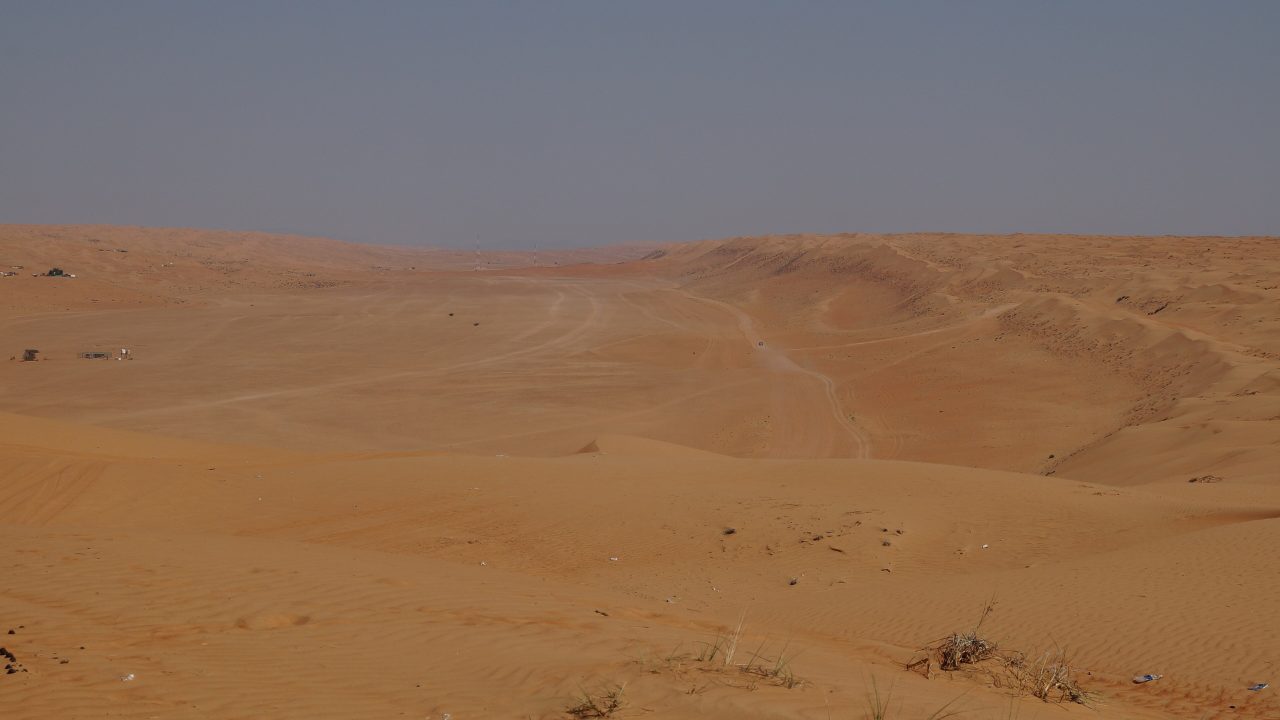
This large dune sea in the east is where many travelers spend a night in a desert camp. Dunes rise to about 100 meters and change color from gold to deep red through the day. Activities include dune driving, a camel ride and an evening around a fire. Choose a camp with proper bedding and sanitation, and visit when temperatures are mild.
South of Muscat, the coastal road passes some of the best-known swimming spots. Wadi Shab involves a short boat crossing and a walk along a gorge to turquoise pools. Bimmah Sinkhole is a limestone crater with clear green water, and a quick stop on the way to Sur. Wear water shoes and bring a swimsuit, and keep to modest cover when not in the water.
Sur is a traditional dhow-building town with a corniche and a maritime museum. Ras al Jinz, at the eastern tip, is a green turtle nesting site. Guided night visits let you watch turtles come ashore to lay eggs, and hatchlings can be seen at dawn in some seasons. Visits are controlled, so book ahead, and no flash photography is allowed.
Salalah, in the far south, is known for its monsoon season, called the Khareef, usually from June to September, when the hills turn green and mist rolls in from the sea. Outside those months it is warm and dry. Sights include frankincense trees, the UNESCO-listed Land of Frankincense sites such as Al Baleed and Sumhuram, and beaches and coastal viewpoints. Dhofar lies in the south of the country, so ask your operator how the itinerary relates to the advisory's Yemen border area and what conditions apply.
| Days | Focus | Places |
|---|---|---|
| 1 to 2 | Capital | Muscat, Grand Mosque, Mutrah |
| 3 to 4 | Interior | Nizwa, Bahla, Al Hamra, Misfat |
| 5 | Mountains | Jebel Akhdar or Jebel Shams |
| 6 to 7 | East coast and desert | Wadi Shab, Bimmah, Sur, Ras al Jinz, Wahiba Sands |
| 8 to 9 | Optional south | Salalah and Dhofar, by domestic flight |
October to April is the main season, with warm days and cooler evenings. December to February is the busiest and the most comfortable. From May to September, the north is very hot, and the interior and the desert are best avoided in the middle of the day. Salalah is the exception, with the Khareef bringing cooler weather in summer. Ras al Jinz turtles are present most of the year, with peak nesting in warmer months.
A week is enough for Muscat, the interior and the coast. Ten to twelve days adds the mountains, the desert and a flight to Salalah. A short stopover of three or four days can cover Muscat and Nizwa, though it will feel rushed.
Oman is a popular self-drive country, but the current advisory is a reason to travel with a guide and a driver. A private operator monitors conditions, chooses routes that avoid restricted areas and handles the mountain and desert driving. It also frees you to enjoy the landscapes instead of navigating them. If you want more background on why people choose Oman, our piece on why Oman should be your next journey is a good companion read.
Oman has more to offer than sand. Dolphin cruises leave from Muscat and often find large pods. Birdwatchers can look for flamingos at the Al Qurm Nature Reserve and in coastal lagoons, and Khawr Salalah attracts migratory birds in winter. Along the coast, snorkeling around the Daymaniyat Islands is a popular day trip from Muscat, and sea turtles are often seen. Check the season, since the islands are a protected reserve with limited access.
Oman is photogenic, and most places welcome cameras. Do not photograph military installations, government buildings or airports, and always ask before taking pictures of people. Drones need a permit from the civil aviation authority, and flying without one can lead to a fine or confiscation, so leave the drone at home unless your operator arranges permission.
The road up to Jebel Akhdar is steep, and a police checkpoint at the base only lets 4x4 vehicles proceed. If you are on a private tour, your driver will manage this, and a self-drive rental that is not a four-wheel drive will be turned back. Allow extra time on the way down, and keep the vehicle in a low gear on descents.
Omani food is gently spiced and built around rice, fish and slow-cooked meat. Try shuwa, lamb marinated in spices and cooked underground for a day or more, usually for festivals and special meals. Mashuai (grilled kingfish with lemon rice), harees and fresh dates with kahwa, the cardamom coffee served as a welcome, are staples. Frankincense is part of daily life, and the aroma follows you through souqs and hotels. Hospitality is central, and accepting a cup of kahwa with your right hand is polite.
Oman suits all three well. Families usually enjoy wadi swims, the turtle visit and desert camps, with children comfortable on the shorter drives. Couples and honeymooners tend to choose mountain retreats on Jebel Akhdar, a private desert camp and a few quiet nights on the coast. Because the distances are manageable, it works for multi-generational groups, though extreme heat suggests avoiding summer in the north.
The currency is the Omani rial, which is one of the highest-valued in the world, so prices can look small on paper. Cards are widely accepted in cities, hotels and larger shops, with cash useful in souqs, small villages and for tips. Mobile coverage is good along main roads and weaker in the desert and mountains. Tipping of around ten percent is appreciated in restaurants when service is not included.
For December to February, book three to six months ahead, because good desert camps and mountain hotels fill early. For shoulder months, one to two months is usually enough. Salalah in the Khareef season, from late June to September, is busy with regional visitors, so book flights and rooms early if that is your plan.
The best places to visit in Oman are a mix of calm city life, mountain forts, wadis and dunes, and they are easy to link on a one- or two-week route. The Level 3 advisory means you should plan more carefully than you would for a typical holiday, keep out of the areas it marks, and work with an operator who can explain the plan. If you do, the country repays the effort.
If you would like help, share your dates and interests, and our team will outline a private route that fits the current advisory. Explore our private Oman journeys to begin.
Your email address will not be published. Required fields are marked *