The most useful Uzbekistan travel tips for first-time visitors start with good news. The US State Department rates Uzbekistan Level 1, Exercise Normal Precautions, in an advisory updated in January 2026, and American citizens can now enter for up to 30 days without a visa under the policy that began on January 1, 2026. Add a modern high-speed rail line between the three main Silk Road cities, a growing number of well-run hotels and a long season for good weather, and traveling Uzbekistan has become far simpler than it was even a few years ago.
It still helps to know a few things before you land. Registration rules, cash habits, train booking, mosque etiquette and the gap between a city in April and a desert town in July all shape how a trip feels. This guide covers entry and safety, money, getting around, food, dress, the best months, health and a short list of common mistakes. It is written for travelers planning Uzbekistan vacations of one to two weeks who want a clear picture before they talk to an operator.
The State Department describes Uzbekistan at its lowest advisory level, which is the same category it gives to countries such as Japan and Ireland. The text of the advisory is still worth reading, because it lists the real risks a visitor is likely to meet. Violent crime is uncommon, but it can happen in larger cities at night. Pickpocketing and card-skimming attempts are the most common problems, and the Department advises using only marked taxis. It also warns about unsolicited tour offers and online scams.
Three other points deserve attention. Road conditions are hazardous, especially at night on unlit rural roads where traffic can be erratic and animals wander onto the surface. Earthquakes are a risk in the east of the country near Tashkent and the Fergana Valley. Medical care is below US standards, English-speaking staff are scarce, and the Department strongly recommends medical evacuation insurance.
Since January 1, 2026, US citizens can visit Uzbekistan without a visa for stays of up to 30 days. Rules do change, so confirm the current terms with your operator or the Uzbek government before you book flights. Your passport should be valid for the whole trip, and some airlines apply their own rules on remaining validity, so check with your carrier.
Registration is the part that surprises many first-time visitors. The State Department says foreign nationals must register with local authorities within three days of arrival, with no gaps in registration during the stay. In practice, hotels usually handle this for guests, and an online registry has largely replaced the old paper slips. Even so, keep any slip a hotel gives you, since you may be asked for it at a later hotel or at departure. If you stay in private guesthouses or homestays, ask your host how registration is handled.
The advisory also notes that rail or land travel inside Uzbekistan sometimes involves brief entries into neighboring countries. If your route does this, you may need a multiple-entry Uzbek visa and, where required, visas for those countries. A good itinerary avoids the problem, so ask your operator how each long transfer is routed.
The currency is the Uzbek som, and the numbers are large. A simple taxi ride can cost tens of thousands of som, which feels strange for the first day and easy by the third. Cards, especially Visa, are accepted by most hotels and by many upmarket restaurants and souvenir shops in the main cities. Contactless cards even work on the Tashkent metro. ATMs in the larger cities accept foreign cards, and many travelers report that withdrawing som is straightforward.
Cash still matters once you leave the main routes. Smaller guesthouses, village cafes, market stalls and taxis often prefer som, so carry a reasonable amount. Many visitors bring crisp, undamaged US dollars to exchange, along with a small reserve for emergencies. Banks and exchange counters in market areas will change money, and rates in banks are generally better than at hotel desks.
Tipping is not heavy. Many restaurants add a service charge, and where they do not, around ten percent is common. Small tips for guides and drivers are appreciated, and your operator can suggest amounts that fit the length and level of service.
Trains are one of the best things about traveling Uzbekistan. The high-speed Afrosiyob connects Tashkent, Samarkand and Bukhara, and each leg takes roughly two hours. Seats are comfortable, the stations are tidy, and the ride is far easier than a day on the road. Tickets can be booked online through the national railway e-ticket portal, and you receive a QR code that opens the station barriers. Popular departures sell out, so book a week or more ahead, and earlier in spring and autumn.
Overnight sleeper trains run to places such as Khiva and Nukus, and they are an option for travelers who like a more local experience. Khiva lies far to the west, so ask whether your route reaches it by train, by a short domestic flight or by private transfer, and how long each option takes.
In cities, the Yandex Go app is the main ride-hailing service, and fares are low by American standards. You need a local SIM or eSIM to use it, and some drivers speak only Uzbek or Russian. Cars are small, and some carry gas tanks in the trunk, which limits luggage space. If you have large bags, use a premium category or arrange a private driver. The State Department advises using marked taxis only, and if you book through an operator, transfers are arranged in advance.
Driving yourself is not recommended for first-time visitors. Roads between cities can be rough, night driving is hazardous, and signs are mostly in Uzbek Latin script with some Russian. A private driver with a guide solves all of this and makes the long desert stretches far more comfortable.
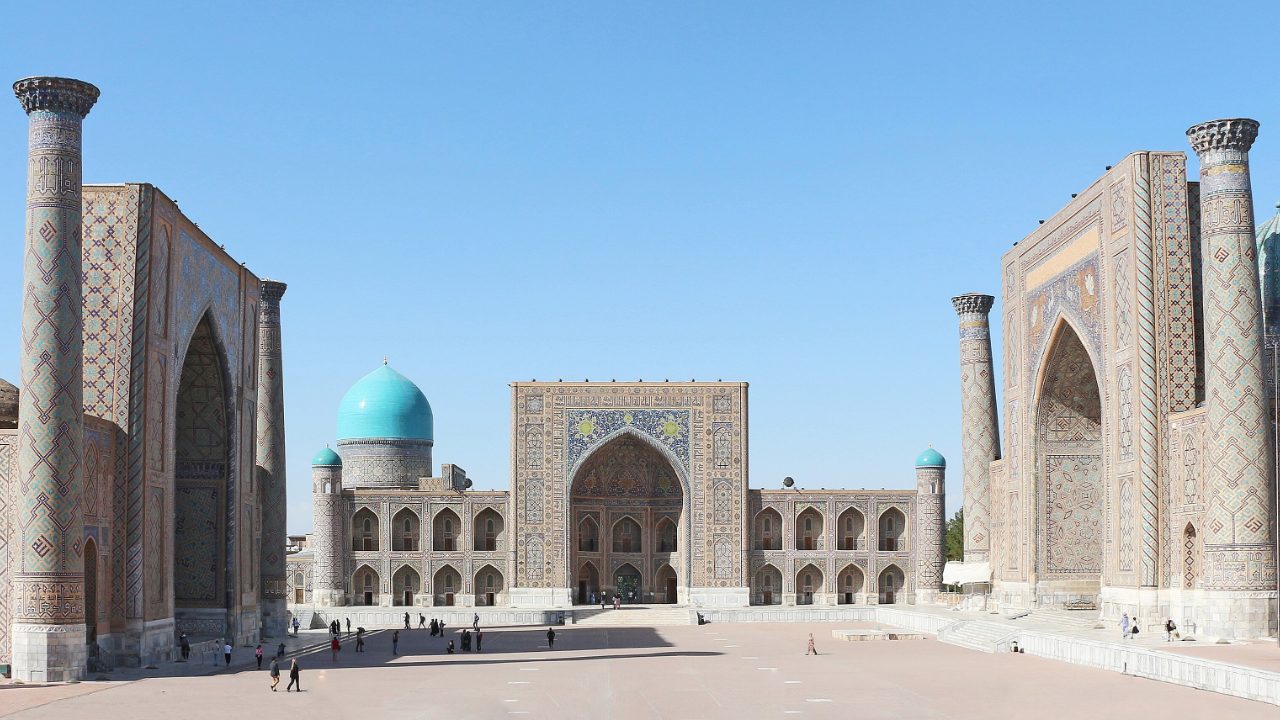
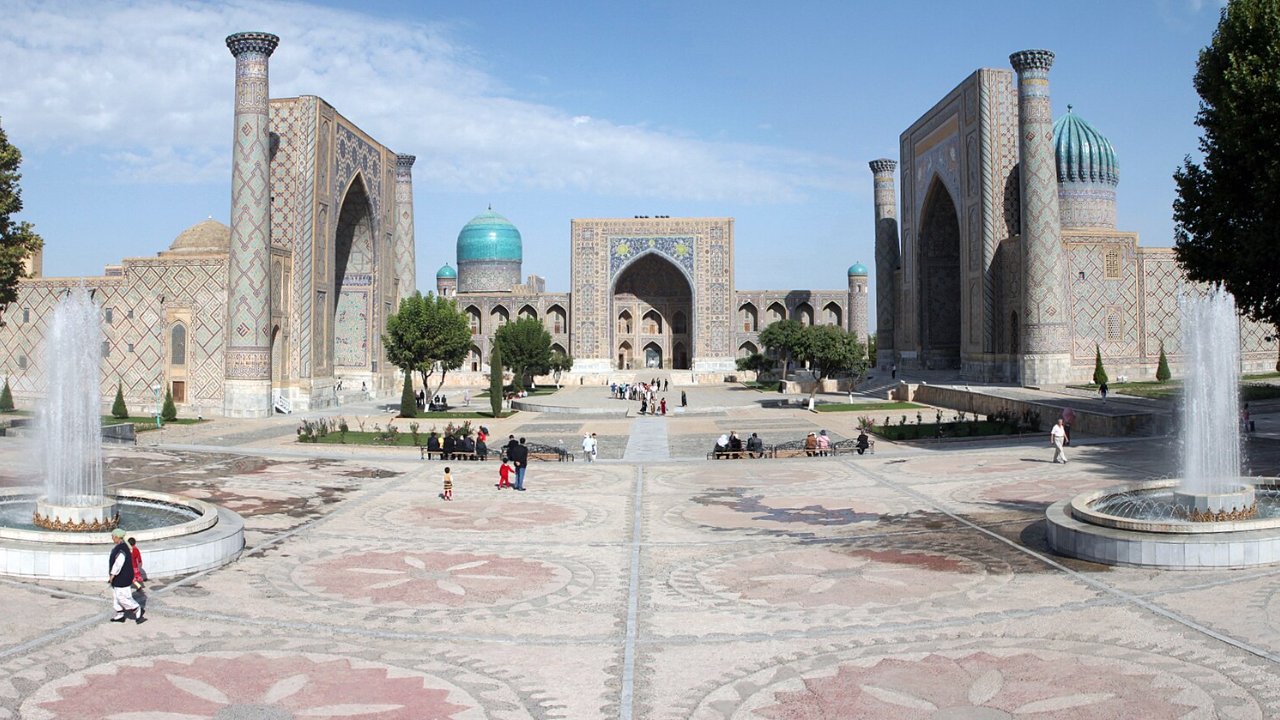
Spring and autumn are the best seasons. March to May and September to November bring comfortable days for walking the old cities and for visiting open-air sites such as the Registan in Samarkand and the fortress walls of Khiva. April is green and mild, with blossom in the gardens and cooler evenings, while October is dry and golden and a favorite for photographers.
Our guide to a ten-day route, Uzbekistan tours: a Silk Road itinerary for 7 to 10 days, shows how to match these seasons to a specific plan.
Seven days is enough for the classic triangle of Tashkent, Samarkand and Bukhara, though it is a quick pace. Ten days works better, because it allows time for Khiva and a rest day. Twelve to fourteen days opens up the Fergana Valley, the Aral Sea region or a longer stay in the desert fortresses of Karakalpakstan.
Many travelers underestimate how much the long-haul flight takes out of the first day. Plan a gentle arrival with a walk and an early dinner, and leave the heavy sightseeing for the second morning.
Samarkand is the showpiece, and the Registan, with its three tiled madrasas, is the sight most people remember. Come early or at sunset for the best light and thinner crowds. The Shah-i-Zinda necropolis, a lane of tiled mausoleums, and the Gur-e-Amir, where Timur is buried, are close by, and a guide adds a great deal to each.
Bukhara is more intimate, an old trading city with a compact center of domes, courtyards and covered bazaars. It rewards slow walking and a long lunch in a courtyard. Khiva, in the west, is a walled desert town that feels like a film set, and it is best seen at the end of the day when the sun turns the brick gold.
Tashkent is often treated as a gateway, but it is worth a half day. The metro stations are decorated with chandeliers and mosaics, the Chorsu Bazaar is a lively food market, and the old town has several museums that explain the country's Soviet and Timurid history. For a deeper look at all of these places, see our private Uzbekistan journey.
Uzbek food is hearty and built around meat, bread and tea. Plov, a rice dish cooked with carrots and lamb or beef, is the national dish and is often eaten at lunchtime. Shashlik and kebabs are common, and chicken is usually available. Lagman, a noodle soup, and mastava, a rice and meat soup, are good on cooler days. Bread, called non, is torn by hand rather than sliced, and many meals come with a salad of tomato, cucumber and onion.
Vegetarians can eat well with some planning, since there are lentil soups, vegetable dishes, dumplings and fruit, though menus are meat heavy. Tell your operator about any dietary needs in advance so they can brief restaurants. Tea is central to every meal, and green tea is served in small bowls. Alcohol is available in hotels and restaurants, though it is less central than in neighboring Georgia, and tap water is not recommended, so drink bottled or filtered water.
Uzbekistan is a secular country with a mostly Muslim population, and the dress code is relaxed in the main cities. Women can travel comfortably without overthinking wardrobes, though short skirts, tank tops and tight leggings are best avoided, and shoulders and knees should be covered at religious sites. In the more conservative Fergana Valley, cover arms and legs. A light scarf is useful for entering active mosques and shrines, and men should avoid shorts in these places.
English is not widely spoken outside tourist hotels, so a few words of Uzbek or Russian help. Hello, thank you and numbers are enough to ease most small exchanges, and a translation app with offline language packs is a good back-up.
Bring any prescriptions in their original packaging, along with a letter from your doctor if you carry controlled medicines. Pharmacies in the larger cities are well stocked, though brand names differ. A stomach remedy, sun protection, lip balm and a reusable water bottle are small items that make a difference, and hand sanitizer is useful in markets and rest stops.
Month-long tourist SIM cards are available from local providers such as Beeline and Ucell, and eSIM options are available too. Data is useful for maps, translation and ride-hailing, and coverage is good in cities and along the main rail routes. Power sockets take the two-pin European plug, so bring an adapter, and a small power bank is useful on long train days.
Uzbekistan can be done independently, and many travelers do. The trains are easy, the hotels are good and the cities are walkable. A private journey adds value in specific ways: a licensed guide who explains the madrasas and mausoleums, a driver for the long desert transfers, hotels chosen for location and quiet, and a plan for registration and train tickets that is handled for you.
This matters most for older travelers, families and anyone with limited time. A guide turns a blue-tiled facade into a story about astronomers, merchants and conquerors, and a driver removes the stress of long road days. If you would like a calm pace and a trip tailored to your interests, our team can build an itinerary around your dates. Travelers who prefer a slower rhythm may also find our guide to tours for seniors across Asia and the Middle East useful, and our small group departures are an option for those who like company.
Uzbekistan rewards preparation, and the preparation is short. A Level 1 advisory, visa-free entry for Americans, fast trains between the main cities and a long spring and autumn season make it one of the most approachable Silk Road countries. Carry some cash, keep your registration slips, book trains early, dress respectfully and avoid the summer heat, and the rest takes care of itself.
To plan a trip around your own dates and pace, share your travel window and interests with our team, and we will shape a private route. Explore our private Uzbekistan journey to begin.
Your email address will not be published. Required fields are marked *