Armenia tours from the USA are built around a country that is small enough to cover in a week and old enough to fill a year. The US State Department rates Armenia Level 2, Exercise Increased Caution, in an advisory issued on September 5, 2025, because of areas of potential armed conflict, and it tells travelers not to go to the border region with Azerbaijan for any reason. The Yerevan area, the monasteries, Lake Sevan and the main southern route to Tatev sit outside those restricted zones, which is why most visitors cover them without difficulty. American citizens can currently enter without a visa.
This guide is for travelers who are comparing Armenia tours and want to know what the advisory means in practice, which sites to prioritize, how many days to allow, when to go and what to ask an operator. It also explains how Armenia combines with Georgia and how a private journey differs from a group departure.
The advisory is a Level 2 for the country as a whole, with Level 4 for the border region with Azerbaijan. It also lists some areas where US Embassy employees and their families cannot travel for non-essential reasons, including parts of the Gegharkunik region east of Vardenis and parts of Syunik east of Goris and south of Kapan. It notes that travel through the village of Yeraskh in the Ararat region is allowed under conditions.
What this means for a typical trip:
The border situation can change quickly. Read the current advisory before you book, and ask your operator how it would adjust the route if conditions changed.
US citizens can currently stay in Armenia without a visa for up to 180 days. You need a valid passport, and border officials may ask about your plans. Rules can change, so confirm them with the Armenian authorities or your operator before departure.
For a first trip, May, June, September and October are usually the most comfortable.
The capital is built of rose-colored volcanic tuff and has a lively cafe culture. Plan time for Republic Square, the Cascade complex with its city views, the Matenadaran, a museum of ancient manuscripts, and the Tsitsernakaberd memorial to the victims of the 1915 genocide. The Vernissage open-air market is a good place for crafts and local brandy. Two nights is the minimum, and three allows day trips.
These two sites are often combined in one morning. Garni is a first-century Hellenistic temple, the only standing pagan temple in Armenia, set above a gorge. Geghard is a monastery partly carved from the rock, with chambers that echo with the sound of choirs. Both are close to Yerevan and give a first sense of the country's layers of history.
Khor Virap, near the Turkish border, offers one of the classic views of Mount Ararat, and it is tied to the story of Armenia's conversion to Christianity in the early fourth century. Noravank, further south in a red-cliff canyon, is a medieval monastery with a distinctive two-story church. The best light is in the morning and late afternoon.
Lake Sevan is one of the highest large lakes in Eurasia, and it is a popular summer stop for swimming and lakeside walks, with the Sevanavank monastery on a peninsula. Dilijan, a forested town to the northeast, has been called the Switzerland of Armenia, and offers shaded trails and a restored old quarter.
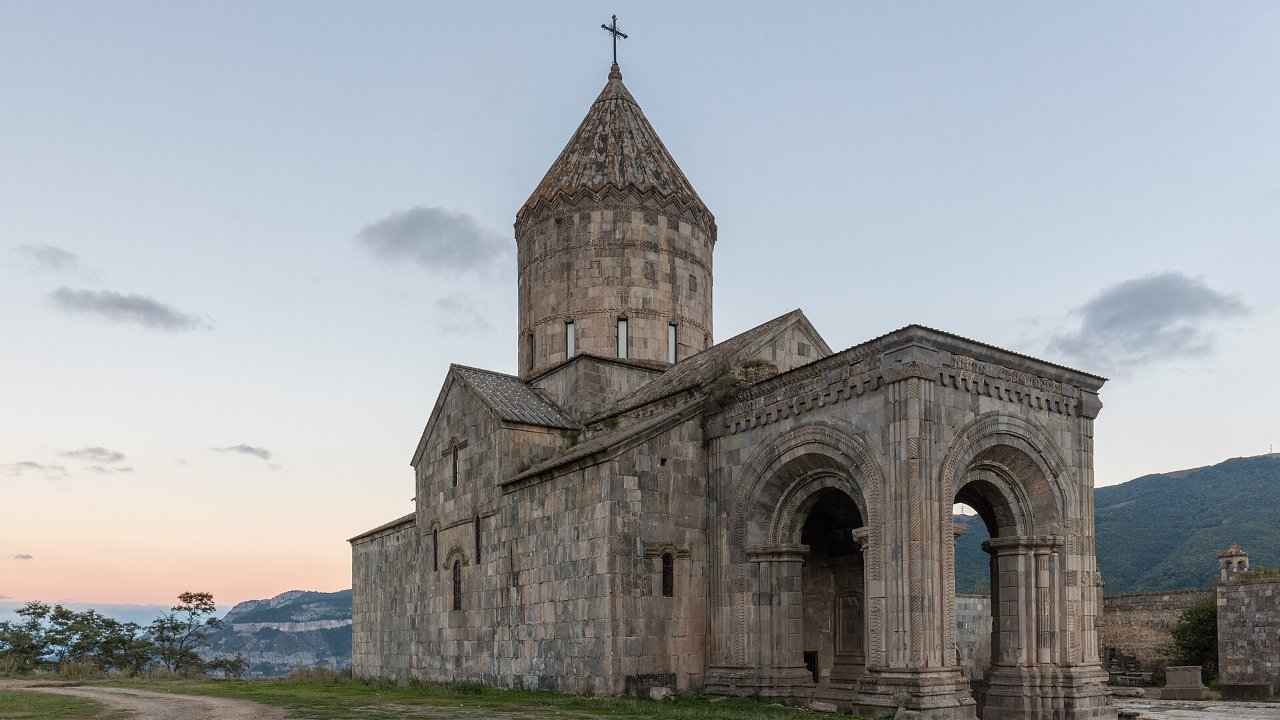
Tatev Monastery, a ninth-century complex above the Vorotan Gorge, is reached by the Wings of Tatev, a reversible aerial tramway that is among the longest in the world. Goris and Khndzoresk, with its old cave dwellings, are common stops on the way. The area is scenic, and it is also the part of the country closest to the border zone, so confirm the route and any restrictions before you go.
Haghpat and Sanahin, two medieval monasteries in Lori province, are UNESCO-listed and quieter than the sites near Yerevan. They fit naturally on a route to or from Georgia.
Seven to ten days gives you time for Yerevan, the main monasteries, Lake Sevan and the countryside. A shorter trip of five days can cover Yerevan, Garni, Geghard and Khor Virap. A longer journey adds Tatev, Noravank and the north at a more relaxed pace, or links with Georgia. The journeys on our Armenia tours page show how those pieces fit together.
Armenian food centers on grilled meats, fresh herbs, cheeses and flatbread. Lavash, the thin bread baked in underground ovens, is recognized by UNESCO. Try khorovats (barbecue), dolma, gata (a sweet pastry) and dried apricots, which the country is known for. Armenian brandy has a long history, and wine is increasingly good, with a new wave of producers near Areni. Vegetarians will find plenty, especially at lunch.
Armenia and Georgia share a border and a long road, and many travelers visit both in one trip. The northern route through Haghpat and Sanahin leads naturally to Tbilisi. Our guide to Georgia tours from the USA covers the other half of that route. We also run longer Caucasus journeys, such as The Caucasus: Three Kingdoms, One Grand Journey, which includes Baku in Azerbaijan. Azerbaijan carries a separate, higher advisory, Level 3, issued on April 28, 2026, and the land border between Armenia and Azerbaijan has been closed to ordinary travel, so ask any operator how a three-country route is organized and where you cross.
A group tour gives you a fixed itinerary. A private tour lets you change the pace, stay longer at a monastery or add a winery lunch. Because distances are short and roads vary, a private driver and guide also help you adapt to weather and to any change in the security picture. Families and travelers with specific interests, such as church architecture or food, often prefer that flexibility.
This route covers the core sites at a comfortable pace and stays on the standard visitor circuit.
Travelers who want Tatev would extend the trip by two days and confirm the road and any restrictions in advance.
Armenia is often described as the first country to adopt Christianity as a state religion, traditionally dated to the year 301. The Armenian Apostolic Church remains central to national identity, and Echmiadzin, near Yerevan, is the seat of its head, the Catholicos. The churches you visit are not only museums. Many are active, with candles, chant and local families, so dress modestly, speak quietly and ask before photographing services. Khachkars, carved stone crosses, appear at monasteries and roadsides across the country, and they are recognized by UNESCO as a cultural tradition.
The Tsitsernakaberd memorial and the museum beside it document the killings of Armenians in the Ottoman Empire beginning in 1915. Many Armenians consider a visit essential to understanding the country. It is a somber place, and a guide can add context, though some travelers prefer to go quietly on their own. The eternal flame and the memorial wall are the focus, and visitors typically lay a flower. Plan the visit for a time when you are not rushed.
Armenia has one of the oldest known winemaking traditions, and archaeologists found a very early winery complex in a cave near Areni. Today, boutique producers in the Vayots Dzor region make wines from indigenous grapes such as Areni Noir, and many welcome visitors for tastings with lunch. Pair a cellar stop with Noravank and Khor Virap for a full day on the southern road. Dried fruit, nuts and fruit leather, called pastegh, make good gifts to take home.
Armenia suits families and older travelers because distances are short and many sights are close to Yerevan. Some monasteries involve stone steps and uneven ground, and Tatev and the southern roads mean longer drives. A private vehicle with a driver and a guide allows rest stops, flexible start times and shorter days. Tell your operator about any mobility concerns so they can plan accordingly.
Good buys include Armenian brandy, dried apricots, hand-woven carpets, ceramics and small khachkar replicas. The Vernissage market in Yerevan is the best place for crafts, and you can bargain gently. Antique carpets and old items may need an export certificate, so ask the seller and your guide before buying anything old or valuable.
The currency is the Armenian dram. Cards work in Yerevan and larger towns, while cash is useful in villages and markets. Armenian has its own alphabet, and Russian is widely understood, with English common in Yerevan's tourism sector. Mobile data is cheap, and SIM and eSIM cards are simple to arrange on arrival. Tipping of about ten percent is normal in restaurants.
Armenia tours reward travelers who like history, food and mountain scenery in a compact package. The Level 2 advisory is a reason to plan carefully, not a reason to stay away, and most of the best-known sites are well away from the restricted zones. Choose May, June, September or October if you can, and keep the route flexible in the south.
If you would like help, share your dates, group size and interests, and our team will outline a private route. Explore our private Armenia journeys to begin.
Your email address will not be published. Required fields are marked *