Pakistan tours from the USA need an honest first paragraph. The US State Department rates Pakistan Level 3, Reconsider Travel, in an advisory issued on June 16, 2026, citing armed conflict, terrorism, crime and kidnapping, and it tells Americans not to travel to Balochistan Province, Khyber Pakhtunkhwa (including the former tribal areas) or the immediate vicinity of the Line of Control. That is a serious rating, and anyone who plans a trip should read it in full. It is also true that Pakistan's best-known tourist circuits, the Karakoram valleys of Gilgit-Baltistan and the historic cities of Punjab and Sindh, sit outside the Level 4 areas, and that the country has become more popular with travelers who want mountains and heritage without the crowds.
This guide is for travelers who are seriously researching a private Pakistan tour. It covers what the advisory means in practice, the main routes, when to go, how the visa works, the security questions to ask an operator and how many days to allow. It does not minimize the risks, and it explains why a private, well-organized trip is the only sensible way to go.
Level 3 means the Department asks Americans to reconsider travel. It is not a ban, and it is not the same as Level 4, Do Not Travel. The advisory sets out the risks by region, and the sensible approach is to treat it as the starting point for an itinerary, not a footnote.
An experienced operator should be able to explain, in writing, where your route runs relative to those areas. One question matters more than any other: how do you travel between Islamabad and the northern valleys? Some travelers fly to Skardu or Gilgit, which avoids long road sections. Overland routes along the Karakoram Highway pass through parts of Khyber Pakhtunkhwa, so ask exactly which road is used and what the alternative is if it closes.
Americans need a visa for Pakistan. Most travelers apply online through the official Pakistani visa system and may need an invitation letter or tour operator reference. Fees and processing times change, so confirm them on the official portal or with your operator close to your travel date. Your passport should be valid for at least six months. Carry printed copies of your visa and itinerary, since you may be asked for them at checkpoints.
Pakistan tours fall into two broad families, and many travelers choose between them. Our Pakistan tours page shows the three journeys we run.
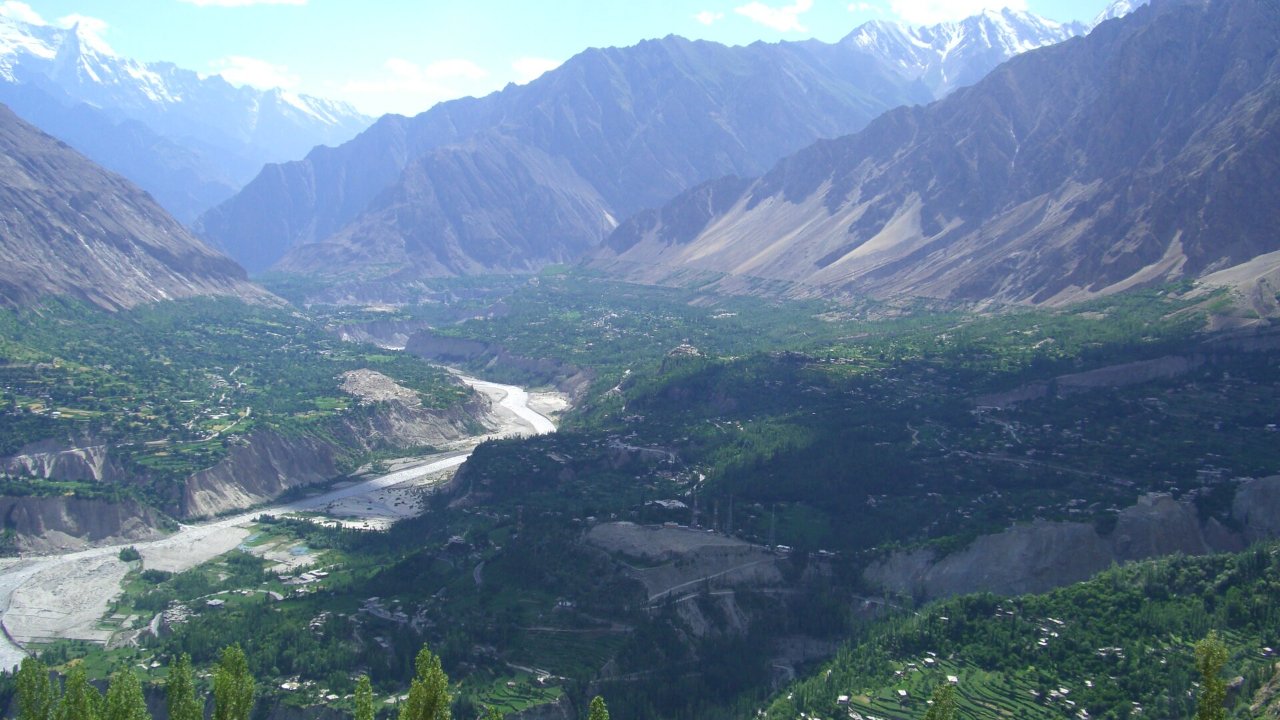
The Karakoram is one of the great mountain ranges on Earth, and it holds several of the world's highest peaks. The 12-day Valleys Beyond the Clouds journey runs from Islamabad to Skardu and Shigar, then Hunza, Hoper, Upper Hunza and Fairy Meadows, and returns through Gilgit. Highlights include the Baltit and Altit forts in Hunza, the old Shigar Fort, the glacier views at Hoper and the walk toward Fairy Meadows, which looks across to Nanga Parbat. The scenery is the main draw, and the pace is built around views and short walks, not summit climbs.
The 15-day Southern Civilisations journey follows the Indus valley, from Karachi through Hyderabad, Larkana, Sukkur and Bahawalpur to Multan, Lahore and Islamabad. This is the heritage side of Pakistan: Mohenjo-daro, the Bronze Age city, the shrines of Multan and Uch Sharif, the Mughal-era Lahore Fort and the Badshahi Mosque. A third route, the 14-day Arabian Sea to Karakorams journey, links both halves for travelers who want the full range.
Some of the Sindh sites, such as the shrine at Sehwan, have been targets of attacks in the past. Ask your operator how they handle security at shrines, and be ready to follow their instructions on timing and route.
The south is very hot from May to August, so heritage trips are best planned for the cooler months, and mountain trips for summer or early autumn.
Ten to twelve days covers the northern valleys at a comfortable pace, including a buffer for weather delays. The southern heritage circuit needs about two weeks. A combined route runs to around two weeks or more. Domestic flights to Skardu and Gilgit are weather dependent, so keep a spare day at the end of any northern trip.
The northern valleys sit at moderate to high altitude. Skardu is at roughly 2,200 meters, Hunza's main villages at about 2,400 meters, and some viewpoints and trails reach well above that. Most people manage with a slow pace, but you should plan for a rest day, drink plenty of water and tell your guide about headaches or dizziness. If you have a heart or lung condition, speak with your doctor before you commit.
Pakistan is a conservative country, and hospitality is central to daily life. Dress modestly, with long sleeves and trousers or loose clothing for both men and women, and carry a scarf for women. Ask before you photograph people, especially women. Public displays of affection are discouraged, and alcohol is not generally available. Tea is offered everywhere, and refusing politely is fine. Friday is the main day of prayer, and some sites have different hours.
Pakistani food varies sharply by region. In Lahore, expect rich dishes such as nihari, haleem and charcoal-grilled kebabs, along with sweets and lassi. In Hunza, the diet leans on apricots, walnuts, buckwheat noodles and fresh bread. In Sindh, fish and biryani are common. Eat where your guide recommends, and drink bottled water.
For a country at Level 3, a private operator is a safety decision, not only a convenience. A good one monitors conditions daily, adjusts routes, chooses accommodation with security in mind and has local contacts who can act when something changes. It also means your guide and driver stay with you throughout, which reduces the risk of making a poor decision on your own.
Insurance deserves its own check. Some travel policies exclude destinations under a Level 3 or Level 4 advisory, so read the exclusions and ask your insurer in writing before you pay.
Travelers who enjoy the Karakoram often look at other Himalayan journeys. Our guide to trekking in Nepal compares how lodge-based walking works across the border, and our Asia Pacific journeys page lists other options in the region.
The exact order depends on flight timing and road conditions, which is why a private plan keeps a spare day near the end.
Speak with a travel clinic four to six weeks before departure. Routine vaccinations should be up to date, and typhoid, hepatitis A and tetanus are commonly discussed for Pakistan. Pakistan is among the countries still reporting wild poliovirus, and travelers may be required to show polio vaccination proof when leaving the country. Ask your clinic and your operator about current requirements. Drink bottled or filtered water, be careful with raw salads and ice, and carry a small medical kit. Hospitals in Islamabad and Lahore are good, and care in the mountains is limited.
Many women travel in Pakistan with private guides and report warm treatment, especially in Hunza and the north, where the culture is relatively relaxed. Modest clothing, a scarf and a guide who can manage unwanted attention help a great deal. Solo travel is not advisable at Level 3. If you travel alone, join a private tour with a guide and driver throughout, and ask whether a female guide or a small group is possible.
Foreign cards are not reliably accepted outside major hotels in cities, and ATMs can be unreliable in the mountains, so carry enough cash in rupees and keep it secure. Your operator can explain what is prepaid and what you need to bring. Mobile service is good in cities and patchy in the valleys, and some regions have restrictions on data at times. Tell family your itinerary and agree how you will check in.
Days start early, often with breakfast around seven, a drive of two to four hours on winding roads, a stop for tea and a short walk or fort visit, then lunch at a local restaurant or a family home. Afternoons are for viewpoints and villages, and dinner is usually at your hotel. Roads in the Karakoram are spectacular and slow. Rockfalls, roadworks and weather can add hours, so the schedule has to bend. A relaxed attitude is the best packing item.
Pakistan tours are not for every traveler, and the Level 3 advisory is a good reason to think carefully. For those who go, the rewards are real: some of the world's great mountain scenery, ancient cities and a level of hospitality that surprises almost every visitor. Read the advisory, choose a region and a season that match your fitness and your risk comfort, check your insurance and travel only with an operator who can explain the plan in detail.
If you would like to discuss a route, share your dates, group size and any concerns, and our team will answer them plainly. Explore our private Pakistan journeys to begin.
Your email address will not be published. Required fields are marked *