Libya tours from the USA are possible, but they are unlike almost any other trip an American can book. The country holds five UNESCO World Heritage Sites, including the best preserved Roman city on the Mediterranean, yet the US government advises against all travel there. Visitors do not simply buy a flight and wander. They travel on a pre-approved route, with a licensed local operator, a guide, a driver and an official escort. This guide explains how Libya tours work for American travelers, what the safety advisory means in practice, how the visa and permits fit together, when to go, what to budget and how to decide whether the trip is right for you.
If you want to see the route we run, our private Libya tour through Leptis Magna, Ghadames and Cyrene sets out the stops, and the sections below explain what sits behind it.
The US State Department lists Libya at Level 4, Do Not Travel. Its advisory cites armed conflict, terrorism, kidnapping, crime, unexploded landmines and ordnance, civil unrest and very limited health care. The US Embassy in Tripoli has been closed since 2014, so American officials can offer only very restricted help to citizens inside the country. Many other governments carry similar warnings, and the British Foreign Office advises against all travel to most of the country, with narrow exceptions.
That is the official position, and any honest Libya tour company should open with it. Some travelers read it and decide the trip is not for them, which is a sound decision. Others choose to go with full awareness, because the tour industry has operated in parts of the country in recent years, ceasefire arrangements have held in many areas since 2020, and visitor numbers to sites such as Leptis Magna and Sabratha have been reported to rise. Neither view is wrong. The point is that you decide with the facts in front of you, and read the current advisory on the State Department site close to your departure date, since it can change.
Standard travel insurance often excludes countries under a Level 4 advisory, so specialist cover is needed. Tell family where you are going and what your route is. Enroll in the State Department's Smart Traveler Enrollment Program before leaving, and keep copies of your passport and itinerary with someone at home.
Yes, in a controlled way. Libya introduced an online e-visa system in 2024, and travelers from many countries have used it for tourism. The visa is generally linked to a booked tour with a Libyan sponsor, and independent travel is not practical. Rules for specific nationalities can shift, so your operator should confirm the current position for US passport holders before you pay a deposit. If an operator cannot explain it clearly, treat that as a warning sign.
Because the rules change, we suggest these questions at the first conversation:
Understanding the format removes most of the surprise. On a typical journey you will meet the following.
The trade-off is clear. You give up spontaneity, and in return you reach places that would be closed to an independent traveler.
Start the process at least eight to twelve weeks before you intend to travel, and avoid buying nonrefundable flights until your approvals are confirmed.
There are no direct flights from the US. Most Americans connect through Istanbul, Tunis or Cairo, and then fly onward to Tripoli's Mitiga airport. Tunis is often the simplest hub, with frequent connections from European cities and regular flights to Tripoli. Some Libyan carriers sell tickets only through local offices, so ask your operator whether they book the final leg for you. Allow a long buffer for delays and consider arriving a night early in your hub city. Land borders are mostly closed to foreign tourists, with Tunisia reported as the main exception, so flying is the reliable route.
November to March is the best window. Days are comfortable for walking through Roman ruins, and desert nights can drop close to freezing in December and January, so pack warm layers for Ghadames and the Sahara. June to September is very hot, with long afternoons that make sightseeing hard. Spring brings wildflowers along the Jebel Akhdar near Cyrene, which is a highlight for many visitors. Plan around Ramadan too, since opening hours and meals change.
Libya has two broad touring regions, and the choice shapes everything from permits to flights.
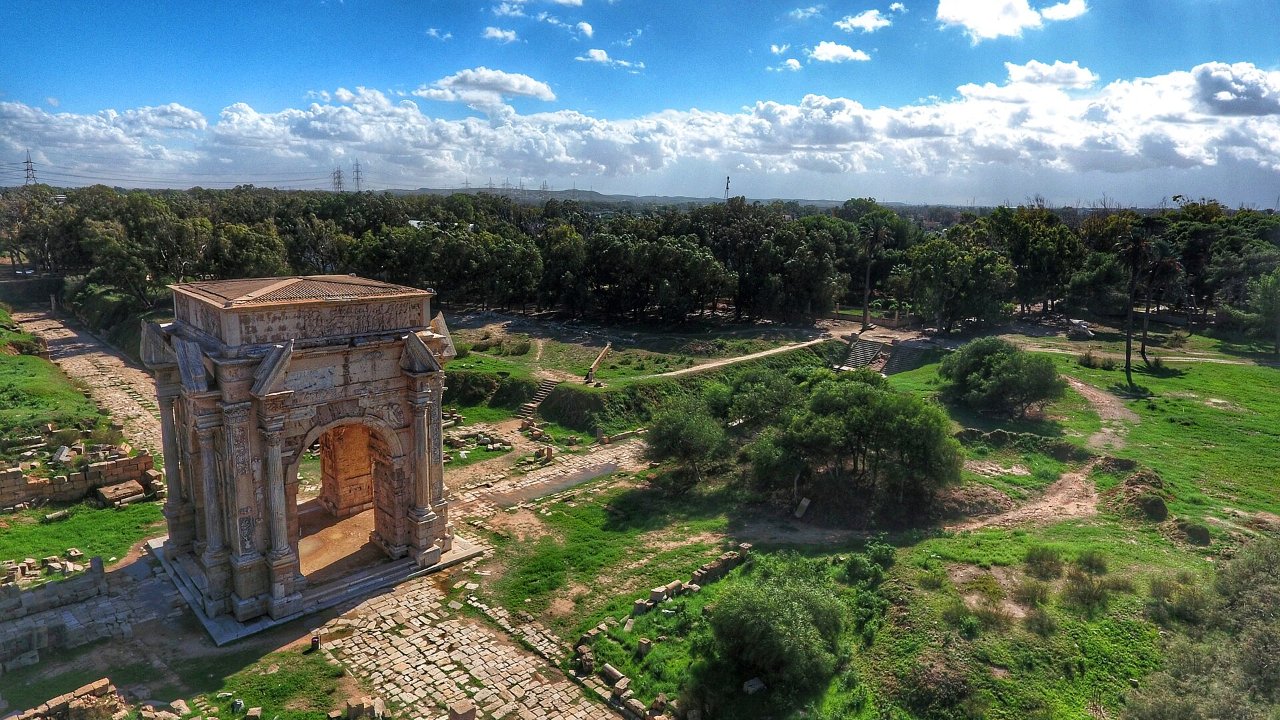
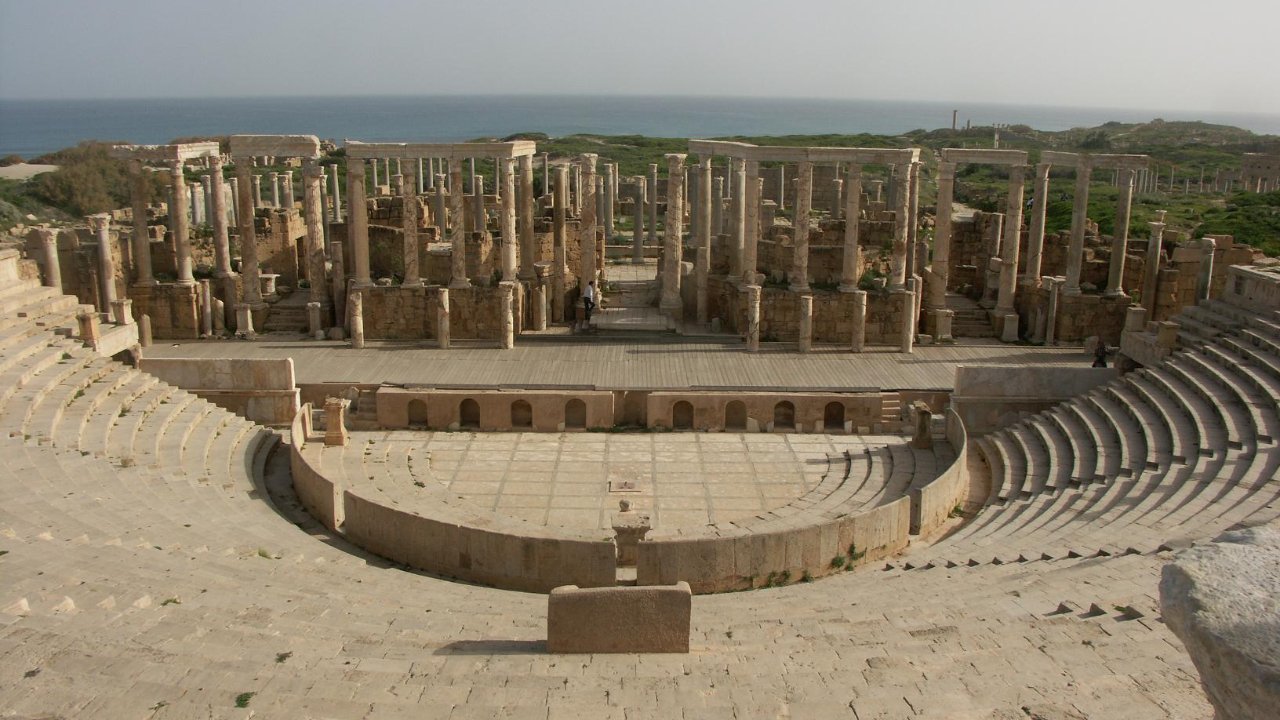
The west is the more established tourism circuit. Tripoli has an old city with Ottoman and Italian colonial layers and the Red Castle museum. Leptis Magna, the birthplace of Emperor Septimius Severus, is the standout, with a basilica, a forum, a theatre beside the sea and a well preserved market. Sabratha has a three-storey theatre facade facing the Mediterranean. Ghadames, in the far southwest, is a UNESCO-listed oasis town of whitewashed mud-brick houses linked by covered alleyways, and many visitors rank it among the most atmospheric places in North Africa.
The east is the home of Cyrene, a Greek city founded in the seventh century BC, with a sanctuary of Apollo, a temple of Zeus and a necropolis running down the hillside. Apollonia sits on the coast, with sunken ruins and Byzantine churches. Travel to the east involves its own permissions and, according to some reports, an additional entry fee, so it is best discussed with your operator at the planning stage.
The 11-day Libya itinerary through Tripoli, Ghadames and Cyrene combines both regions, and our operators can also build a shorter western-only version.
Every detail depends on approvals and local conditions at the time, and a responsible operator will say so up front.
Prices vary widely with group size, route and the level of service. Libya has little tourism infrastructure, so costs per person are often higher than for similar trips in neighboring countries. The main drivers are the escort and permits, private vehicles, limited hotel supply and the distances involved. Group departures cost less per person than private trips. Operators in the market commonly quote several thousand US dollars per person for a week or more, and private, well-appointed itineraries sit above that. Always ask for a written breakdown.
Items that are usually priced separately include international flights, the e-visa fee, specialist insurance, tips and personal spending. Because cards are rarely accepted, carry cash for small purchases, and ask your guide what is customary for tipping drivers and escorts.
Hotel supply is limited. Tripoli has a handful of established international and business hotels, including a large property that has long hosted diplomats and delegations. In Ghadames the main option is a traditional-style government hotel, and in the east options are small and few. Some stops use guesthouses, which can be simple. Meals are generally good and hearty, with grilled meats, couscous, fish on the coast, dates and strong tea, and Libya has been alcohol-free since 1969. If you have dietary needs, tell your operator early. Wi-Fi is unreliable, so buy a local SIM at the airport, and fuel shortages can affect long drives, so ask how your operator handles them.
Libya is socially conservative. Dress modestly with covered shoulders and knees, and women should bring a light scarf, especially in religious sites and smaller towns. Public displays of affection are best avoided. Ask before photographing people, government buildings, checkpoints or anything that looks military. Political discussion is best left to your guide's lead. Hospitality is a strong tradition, and an invitation to tea is often a highlight of the trip.
This trip suits experienced travelers who have already visited difficult destinations, who are comfortable with a structured itinerary and who understand the advisory. It is not a good fit for travelers who want flexibility, who need reliable medical facilities close by, or who would be uneasy being accompanied by an official. If you have serious health conditions, talk to your doctor and your insurer before booking. If you want the Roman and desert experience with fewer constraints, a trip through neighboring countries such as Tunisia or Algeria may be a better first step.
Some travelers combine Libya with a longer Saharan journey. Our Libya and Mauritania combination links Roman cities with desert towns, and a standalone Mauritania journey is possible for those who want to add a second country. Broader ideas across the region are collected under journeys across the Middle East and Africa.
Begin with a conversation, not a payment. Talk through your dates, your health, your comfort with the format and the current advisory. Ask for a written itinerary, a list of inclusions, the cancellation terms and the details of the security arrangements. If you prefer to travel with other people, ask about small group departures, and if you want your own pace, a bespoke Libya itinerary can be built around you. For questions about a luxury level of service, read about what luxury means on a Libya tour for realistic expectations.
A Libya tour from the USA is a considered decision. The Roman cities, the Greek ruins of Cyrene and the mud-brick streets of Ghadames are among the great sights of the Mediterranean world, and few travelers have seen them. The trade-offs are a Level 4 advisory, a controlled itinerary, limited comfort and higher costs. If you go, go with a licensed operator, specialist insurance, flexible flights and a clear understanding of the rules. To talk through your dates, reach out through our contact page.
Your email address will not be published. Required fields are marked *